
Social change requires the emergence of a collective subject that can foster solidarity within and across national boundaries. But how can such a collective come together in our current era of liberal individualism and the pursuit of maximum profit? In The Politics of the Have-Nots, Hae Yeon Choo theorizes how this collective might cohere and … [Read More]

Booklist: Politics and Current Affairs
Unruly Rites: Christianity, Ritual Politics, and the Making of Religious Difference in Modern Korea, 1884-1945 [forthcoming]

When Western missionaries first introduced Protestant Christianity to Korea in 1884, Korean converts adopted beliefs and practices that defied prevailing Confucian norms, including distinct faith-based rituals. By the turn of the twentieth century, during the final years of the Chosŏn dynasty, competing cultural and religious viewpoints started to roil Korean society with frenzied—even life-and-death—controversies over … [Read More]
Everything but the Bomb: South Korea’s Nuclear Hedging Strategy [forthcoming]

Amid North Korea’s advancing nuclear capabilities and the declining credibility of U.S. extended deterrence, South Korea has a strong motive to pursue its own nuclear deterrent. With its advanced nuclear energy program, South Korea possesses the means to develop nuclear weapons indigenously. However, its opportunity to do so is constrained by the prohibitive economic, security … [Read More]
Privileged but Powerless: How North Korean Elite Grievances Reveal the Regime’s Greatest Weakness [forthcoming]

A compelling examination of North Korea’s elites, their hidden discontent, and the role they may play in shaping the regime’s future Jieun Baek’s second book on North Korea is a deeply researched and sharply analytical account of the grievances harbored by the country’s elite. Drawing on hundreds of hours of in-depth interviews with escapees from … [Read More]
Standardizing Empire: The US Military, Korea, and the Origins of Military-Industrial Capitalism

How the US military origins of global capitalism facilitated both South Korea’s “economic miracle” and the decline of US industrial might The US military has become a ubiquitous part of modern economic life. The Cold War prompted the first permanent overseas deployment of US troops and the creation of a global network of US military … [Read More]
Reactionary Politics in South Korea: Historical Legacies, Far-Right Intellectuals, and Political Mobilization

In December 2024, South Korean president Yoon Seok-yeol stunned the world by declaring martial law. More puzzling was that Yoon’s insurrection unexpectedly gained substantial support from the ruling right-wing party and many citizens. Why do ordinary citizens support authoritarian leaders and martial law in a democratic country? What draws them to extreme actions and ideas? … [Read More]
The Sensational Proletarian: Leftist Cultures in Colonial Korea
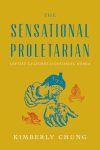
Starving ghosts, anguished farmers, and grieving mothers. Floating heads, gaunt bodies, and masses of bodily fluids. Such are the visceral sensations, exaggerated affects, and suffering subjects that characterized leftist Korean cultural production in the 1920s and 1930s. In popular fiction, print cartoons, reportage, and other emergent forms of mass culture, scenes detailing the spectacular bodily … [Read More]
Against Abandonment: Repertoires of Solidarity in South Korean Protest
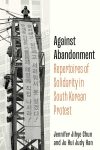
Across the world, protest has become a much-debated tactic in struggles against inequality, political corruption, and ecological disaster. In South Korea, protest is a ubiquitous and essential form of political expression. In 1987, mass protests forced reforms that led to democratizing government. In 2017, the Candlelight movement removed the sitting president. Beyond these spectacular national … [Read More]
Cinema under National Reconstruction: State Censorship and South Korea’s Cold War Film Culture
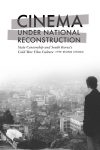
Cinema under National Reconstruction calls for a revisionist understanding of state film censorship during successive Cold War military regimes in South Korea (1961–1988). Drawing upon primary documents from the Korean Film Archive’s digitized database and framing South Korean film censorship from a transnational perspective, Hye Seung Chung makes the case that, while political oppression/repression existed inside … [Read More]
The Postdevelopmental State: Dilemmas of Economic Democratization in Contemporary South Korea

Examining the struggle to align high-growth economic models with the egalitarian promises of democracy. Over the last 25 years, South Korea has witnessed growing inequality due to the proliferation of non-standard employment, ballooning household debt, deepening export-dependency, and the growth of super-conglomerates such as Samsung and Hyundai. Combined with declining rates of economic growth and … [Read More]
The Politics of South Korea: A Comprehensive Introduction
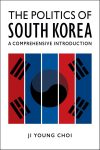
Once an impoverished, autocratic country, in just a few decades South Korea has transformed itself into a vibrant democracy with a highly developed economy. Using a comparative perspective to look at the factors behind South Korea’s dynamism, Ji Young Choi provides a comprehensive, balanced, and accessible introduction to the country’s politics, economy, and international relations. … [Read More]
Civic Activism in South Korea: The Intertwining of Democracy and Neoliberalism

In recent decades, neoliberalism has transformed South Korean society, going far beyond simply restructuring the economy. In response, a number of civic organizations that emerged from the democratization movement with a conscious emphasis on social change have sought to address socioeconomic and political problems caused or aggravated by the neoliberal transformation. Examining how “citizens’ organizations” … [Read More]
The Dawn of War in South Korea (1947-1950): The South Korean Workers’ Party and the April Third Massacre

This book offers an analytical account of the April Third Massacre in Korea, a bloody confrontation between supporters of the Syngman Rhee Administration and those suspected (largely incorrectly) of being Communists, or members of the South Korean Workers’ Party―the second largest Communist Party after Korea’s liberation from Japanese colonial rule. As a result, some 80,000 … [Read More]
The Constitution of South Korea: A Contextual Analysis

The constitutional system of South Korea is a work in progress, and this volume fleshes out and makes intelligible to foreign readers that process within the specific political and historical context of modern South Korea. The current South Korean Constitution of 1987 is the culmination of decades-long efforts by the South Korean people to achieve … [Read More]
Cornerstone of the Nation: The Defense Industry and the Building of Modern Korea under Park Chung Hee
Cornerstone of the Nation is the first historical account of the complex alliance of military and civilian forces that catapulted South Korea’s conjoined militarization and industrialization under Park Chung Hee (1961–1979). Kwon reveals how Park’s secret program to build an independent defense industry spurred a total mobilization of business, science, labor, and citizenry, all of … [Read More]
Late Industrialization, Tradition, and Social Change in South Korea

Examines how primary social ties fueled economic growth South Korea’s rapid industrialization occurred with the rise of powerful chaebǒl (family-owned business conglomerates) that controlled vast swaths of the nation’s economy. Leader Park Chung Hee’s sense of backwardness and urgency led him to rely on familial, school, and regional ties to expedite the economic transformation. Late … [Read More]