
This book is an economic history of the Chosŏn dynasty (1392-1910). The Chosŏn dynasty is not only known for managing the northeastern regions of Asia for 500 years as the exemplars of Confucianism, their kingdom was also one of the greatest so-called “agricultural states under Heaven.” The Chosŏn dynasty has been briefly explored academically by … [Read More]

Booklist: Pre-modern texts - non-fiction (page 2)
A Korean Scholar’s Rude Awakening in Qing China: Pak Chega’s Discourse on Northern Learning
From the publisher’s website: Two years after Adam Smith’s Wealth of Nations was published in 1776, Pak Chega’s (1750–1805) Discourse on Northern Learning appeared on the opposite corner of the globe. Both books presented notions of wealth and the economy for critical review: the former caused a stir across Europe, the latter influenced only a modest group of Chosŏn … [Read More]
A Place to Live: A New Translation of Yi Chung-hwan’s T’aengniji, the Korean Classic for Choosing Settlements

From the publisher’s website: A Place to Live brings together in a single volume an introduction to Yi Chung-hwan’s (1690–1756) T’aengniji (Treatise on Choosing Settlement)—one of the most widely read and influential of the Korean classics—and an annotated translation of the text, including the author’s postscript. Yi composed the T’aengniji in the 1750s, a time when, despite King Yŏngjo’s (r. … [Read More]
The Foresight of Dark Knowing: Chŏng Kam Nok and Insurrectionary Prognostication in Pre-Modern Korea

From the publisher’s website: Korea has long had an underground insurrectionary literature. The best-known example of the genre is the Chŏng Kam nok, a collection of premodern texts predicting the overthrow of the Yi Dynasty (1392–1910) that in recent times has been invoked by a wide range of groups to support various causes and agendas: from leaders … [Read More]
The Aphorisms of Yi Deok-mu: Musings of a Grateful Reader
From the publisher’s website: This volume brings together excerpts from Seongyuldang nongso [蟬橘堂濃笑: The Inexorable Glee of Master Seongyuldang] and Imokgusimseo [耳目口心書: First-hand Observations] by the 18th-century scholar Yi Deok-mu. Seongyuldang nongso is a collection of Yi’s observations about life. In Imokgusimseo, Yi writes about what he heard, saw, said, and felt in the day-to-day. … [Read More]
Doctrine and Practice in Medieval Korean Buddhism: The Collected Works of Ŭich’ŏn

From the publisher’s website: Ŭich’ŏn (1055-1101) is recognized as a Buddhist master of great stature in the East Asian tradition. Born a prince in the medieval Korean state of Koryŏ (960-1279), he traveled to Song China (960-1279) to study Buddhism and later compiled and published the first collection of East Asian exegetical texts. According to … [Read More]
Numinous Awareness is Never Dark: The Korean Buddhist Master Chinul’s Excerpts on Zen Practice
From the publisher’s website: Numinous Awareness Is Never Dark examines the issue of whether enlightenment in Zen Buddhism is sudden or gradual—that is, something intrinsic to the mind that is achieved in a sudden flash of insight or something extrinsic to it that must be developed through a sequential series of practices. This “sudden/gradual issue” was … [Read More]
The Analects of Dasan – A Korean Syncretic Reading (five volumes)
From the publisher’s website: With extensive research and creative interpretations, Dasan’s Noneo gogeum ju (Old and New Commentaries of the Analects) has been evaluated in the academia of Korean Studies as a crystallization of his studies on the Confucian classics. Dasan (Jeong Yak-yong: 1762-1836) attempted through this book to synthesize and overcome the lengthy scholarly tradition of … [Read More]
Classical Writings of Korean Women

This work is a collection of essays travelogues written by women during the Joseon Dynasty (1392-1910). The work ranges from a eulogy for a broken needle to a travelogue describing various trips to scenic spots on the Korean peninsula, including to the Keum-Gang Mountains. Now available in English, this collection gives us a sampler of … [Read More]
Seeking Order in a Tumultuous Age: The Writings of Chŏng Tojŏn, a Korean Neo-Confucian

From the publisher’s website: Chŏng Tojŏn, one of the most influential thinkers in Korean history, played a leading role in the establishment of the Chosŏn dynasty (1392–1910). Long recognized for his contributions to the development of Neo-Confucianism in Korea, Chŏng was both a prodigious writer and an influential statesman before being murdered in a political … [Read More]
A Chinese Traveler in Medieval Korea: Xu Jing’s Illustrated Account of the Xuanhe Embassy to Koryŏ

From the publisher’s website: “The king and ministers, superior and inferior, move with ritual and refinement. When the king goes on an inspection tour, everyone has the correct ceremonial attributes and the divine flag [troops] gallop in front while armored soldiers block the road. The soldiers of the Six Divisions all hold their attributes. Although … [Read More]
A Korean Confucian Way of Life and Thought: The Chasŏngnok (Record of Self-Reflection) by Yi Hwang (T’oegye)

From the publisher’s website: Yi Hwang (1501–1570)—best known by his literary name, T’oegye—is one of the most eminent thinkers in the history of East Asian philosophy and religion. His Chasŏngnok (Record of self-reflection) is a superb Korean Neo-Confucian text: an eloquent collection of twenty-two scholarly letters and four essays written to his close disciples and junior colleagues. … [Read More]
Korea’s Great Buddhist-Confucian Debate: The Treatises of Chŏng Tojŏn (Sambong) and Hamhŏ Tŭkt’ong (Kihwa)

This volume makes available in English the seminal treatises in Korea’s greatest interreligious debate of the fourteenth and fifteenth centuries. On Mind, Material Force, and Principle and An Array of Critiques of Buddhism by Confucian statesman Chŏng Tojŏn (1342–1398) and Exposition of Orthodoxy by Sŏn monk Kihwa (1376–1433) are presented here with extensive annotation. A substantial introduction provides a summary and … [Read More]
A Handbook of Korean Zen Practice: A Mirror on the Sŏn School of Buddhism

From the publisher’s website: Sŏn (Japanese Zen) has been the dominant form of Buddhism in Korea from medieval times to the present. A Handbook of Korean Zen Practice: A Mirror on the Sŏn School of Buddhism (Sŏn’ga kwigam) was the most popular guide for Sŏn practice and life ever published in Korea and helped restore Buddhism to … [Read More]
The Annals of King T’aejo: Founder of Korea’s Chosŏn Dynasty
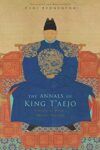
From the publisher’s website: Never before translated into English, this official history of the reign of King T’aejo—founder of Korea’s long, illustrious Chosŏn dynasty (1392–1910 CE)—is a unique resource for reconstructing life in late-fourteenth-century Korea. Its narrative of a ruler’s rise to power includes a wealth of detail not just about politics and war but … [Read More]
A Korean War Captive in Japan, 1597–1600: The Writings of Kang Hang

Kang Hang was a Korean scholar-official taken prisoner in 1597 by an invading Japanese army during the Imjin War of 1592–1598. While in captivity in Japan, Kang recorded his thoughts on human civilization, war, and the enemy’s culture and society, acting in effect as a spy for his king. Arranged and printed in the seventeenth … [Read More]