
The first, and possibly only, seminar of the new term: Empire by Association: The Re-Organization of the Rural Economy in Modern Korea, 1870-1945 Dr Holly Stephens (University of Edinburgh) Friday 26 April 2019, 5:15 – 7:00pm SOAS Brunei Gallery Room B104 | Registration required via SOAS website Abstract The late-nineteenth and early-twentieth centuries were a … [Read More]
Category: History (page 5)
2018 travel diary 3 – The Smile of Baekje

10 – 11 November 2018. My trips to Korea are usually preceded by a hurried piece of research on the Cultural Heritage Administration (CHA) website trying to find out what notable items of tangible or intangible heritage, or what other historic or scenic sites there might be, to attract an inquisitive traveller to the places … [Read More]
SOAS seminar: Remembering a dissident Confucian Monk

This is a seminar I’m particularly looking forward to, as I’ve been interested in the story of King Danjong since I came across the burial site of his placenta a few years ago. Remembering a dissident Confucian Monk: How Kim Sisŭp became Sŏlcham, and Sŏlcham the Boyi of Korea Dr Dennis Wuerthner (Ruhr-University Bochum) Friday … [Read More]
SOAS seminar: the Failure of the US-Soviet Joint Commission, 1946 – 1947

An interesting-looking session which may help us to see current developments through an historical lens. Ominous Clouds over Korea: The Failure of the US-Soviet Joint Commission, 1946—1947 Prof Mark E Caprio (Rikkyo University) Friday 8 March 2019Time: 5:15 pm – 7:00 pm | Register via SOAS website Venue: SOAS | Russell Square | College Buildings … [Read More]
Eleanor Hyun on Korean Munbangdo Paintings (OCS members + guests)
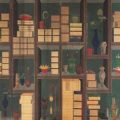
A special lecture given by the BM’s Eleanor Hyun for the Oriental Ceramics Society: Picturing Possession: Korean Munbangdo Paintings A lecture by Dr. Eleanor Soo-ah Hyun, curator of Korean collections at the BM Tuesday 12th February: The annual Sonia Lightfoot Memorial Lecture 5:45 for 6:15 pm with welcome drinks sponsored by Woolley & Wallis Society … [Read More]
Carlo Rossetti’s photographs as social and historical narratives

Continuing this term’s series of seminars at SOAS: Carlo Rossetti’s photographs as social and historical narratives about Korea at the beginning of the 20th century Assistant Professor Giuseppina De Nicola (Sapienza University of Rome) 1 February 2019, 5:15 – 7:00 PM SOAS, Brunei Gallery Room: B104 | Online Registration required Abstract Italy first established its … [Read More]
Early Korean Cinema season at the BFI and KCC

Tickets for the Early Korean Cinema season at the BFI, which was announced as last year’s London korean Film festival came to an end, go on sale on 15 January. The organisers particularly direct our attention to two screenings: THU 7 FEB, 18:00 – OPENING SCREENING WITH LIVE PERFORMANCE + INTRO: Crossroads of Youth 청춘의 … [Read More]
BFI, KOFA and KCCUK announce archive exchange

Something to look forward to in February 2019: BFI, KOFA and KCCUK announce archive exchange to mark the centenary of the birth of Korean cinema More than ten of Korea’s oldest surviving films to screen to UK audiences for the first time in February 2019 at BFI Southbank and the KCCUK BFI restorations to show … [Read More]
John Lee and the Kingdom of Pines

Not a write-up of John Lee’s fascinating recent talk at SOAS – more a place to store a couple of images of the translations of relevant sources that he talked about so that I don’t lose them. I for one am looking forward immensely to seeing this material fully discussed in his upcoming monograph, Kingdom … [Read More]
Book review: Blaine Harden – King of Spies

Blaine Harden: King of Spies – The dark reign of America’s spymaster in Korea Mantle, 2018, 272 pp The character of the maverick cop, or even maverick spy, delivering outstanding results through unorthodox means and despite a disregard for hierarchy, is a familiar one in crime and spy fiction. Blaine Harden, who worked with Shin … [Read More]
Kingdom of Pines: State Forestry and the Making of Korea, 1392-1910

Part of the Autumn 2018 season of seminars at SOAS: Kingdom of Pines: State Forestry and the Making of Korea, 1392-1910 John Lee (Manchester) Friday 23 November 2018, 5:15 – 7:00pm SOAS Brunei Gallery Room B211 Abstract For almost every society before the twentieth century, the forest ecosystem was the main source of fuel, construction … [Read More]
November literature night: Mary Lynn Bracht’s White Chrysanthemum

A break from tradition this month. November’s book for discussion is a novel written in English, rather than one translated from the Korean. We’ll be there because we rather liked the book. White Chrysanthemum: A discussion with author Mary Lynn Bracht Wednesday 28 November, 19.00-21.00 Venue: Korean Cultural Centre UK Entrance Free – Booking Essential. … [Read More]
Book review: Mary Lynn Bracht — White Chrysanthemum
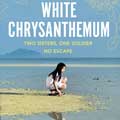
Mary Lynn Bracht: White Chrysanthemum Penguin Random House 2018, 320pp White Chrysanthemum, the debut novel from Mary Lynn Bracht, tells the story of two sisters, brought up on Jeju Island, who were tragically separated in the last years of the Second World War. The elder sister, Hana, is abducted into sexual slavery by a Japanese … [Read More]
RIP Bill Speakman VC
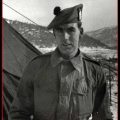
The funeral was held this week for Bill Speakman, the so-called Beer Bottle VC. The ceremony was held on 19 July in the Wren Chapel at the Royal Hospital, Chelsea, where Speakman was a pensioner. He died peacefully at the Hospital on 20 June 2018, aged 90, surrounded by members of his family. Obituaries can be … [Read More]
New books for the summer
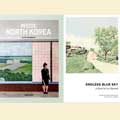
A couple of new books to take with you on your summer break – or, more likely in respect of the first on the list, to adorn your coffee table when you return. First, fulsomely reviewed by Andrew Salmon in Asia Times, comes Inside North Korea by The Guardian‘s architecture and design critic Oliver Wainwright … [Read More]
1987: When the Day Comes (1987, 2018) review: a vital chronicle of Korea’s path to democracy
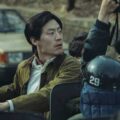
1987: When the Day Comes is an exquisitely realised, multi-layered true-life depiction of life and activism in 80s Korea, and the fact that the events portrayed are far less spoken about than the Gwangju massacre but were equally important to the ultimate democratisation of the country makes the film all the more required viewing. [Read More]