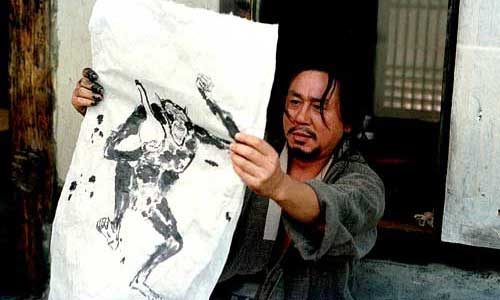
The second in the London East Asia Film Festival’s KCinema 100 series is Chihwaseon by the veteran director Im Kwon-taek, which tells the story of iconoclastic Joseon Dynasty artist Jang Seung-eop (pen name Owon). It will be screened at the National Gallery. Chihwaseon (취화선) Dir: Im Kwon-taek (2002, 116 mins) Cast: Choi Min-sik, Ahn Sung-ki … [Read More]
People: Ahn Sung-ki
KCC Screening: Mandala

The fifth screening in the Rebels with a Cause season: Mandala (만다라) Director: Im Kwon-taek (1981, 112 mins) Cast: Ahn Sung-Ki, Jeon Moo-song, Bang Hee, Gi Jeong-su Thursday, 16 August 2018 7:00 pm @KCCUK | Book tickets Set in contemporary Korea, Mandala follows two rather different characters: Pob-un, a young Buddhist monk who has decided … [Read More]
Screening: White Badge + Ahn Jung-hyo Q+A

Jeong Ji-yeong’s adaptation of Ahn Jung-hyo’s Vietnam War novel is the third in the KCCUK’s Korean Novels on Screen season of screenings. Director Jeong came to London back in 2010 to talk about this movie. LKL’s write-up can be found here. White Badge (하얀전쟁) Director: Chung Ji-young (1992, 124 mins) Cast: Ahn Sung-ki, Lee Gyoung-young, … [Read More]
Festival film review: Bae Chang-ho’s The Dream
Bae Chang-ho’s The Dream is based on a story from the Samguk Yusa, a story that Yi Kwang-su worked up into a short novel. Although the tale is set in the late Silla dynasty, its message is timeless. The story starts with a weary and impoverished traveller (played by Ahn Sung-ki) trudging through the snow … [Read More]
Festival film review: Bae Chang-ho’s Whale Hunting

Based on a story by long-standing collaborator Choe In-ho, Whale Hunting is one of Korea’s seminal road movies. Hunting the whale, in the dark days of the dictatorship, was symbolic for yearning for things beyond the day-to-day. In Bae Chang-ho’s 1984 movie it represented the search for the things that give life meaning; in a … [Read More]
Festival film review: Bae Chang-ho’s People of the Slum
Bae Chang-ho’s debut feature, People of the Slum (1982), is based on a semi-autobiographical novel by Lee Dong-chul. The film tells the story of a complicated love triangle. Myeong-sook, played by Kim Bo-yeon, lives with her second husband, the idle and dissolute Tae-seop (played by Kim Hui-ra). Living in the same house in the run-down … [Read More]
Brief festival film review: Eoh Woo Dong
Lee Chang-ho (이장호) Eoh Woo Dong (어우동, 1985, 110 mins). Review by Robert Cottingham. Eoh Woo Dong translates as “entertainer,” a rough approximation of the duties of 14th-century Korean courtesan Eoh Yoon Chang. After a lifetime “in service,” Eoh Yoon Chang retires to a faraway village. Meanwhile, her powerful father, ashamed of his daughter’s lifestyle, … [Read More]
Festival film review: Zhang Lu’s Love And…

Two years ago the revered Korean film critic Tony Rayns asked Moon Sori an awkward question. The question was followed by a sharp intake of breath from the audience who couldn’t believe what they had just heard, and by a few false starts at a response by Ms Moon before she answered fluently. At the final … [Read More]
An introduction to “Love And…” — LKFF’s closing gala film

The London Korean Film Festival’s choice for the closing gala is an interesting one: Zhang Lu’s Love And… (the literal meaning of the Korean title, 필름시대사랑, is “Love of the Film Era”), which only recently opened at the Korean box office. Closing galas over the years have included blockbusters and mainstream movies such as Masquerade … [Read More]
Revivre (화장, 2014) review: between duty and desire

Im Kwon-taek’s Revivre is a powerful story of a man, whose wife is terminally ill, who begins to fantasise about a sexual relationship with a much younger woman. Deftly contrasting traditionalism and modernity within the characters themselves, Revivre’s strengths ultimately lie in the painful, poignant realism on show, in spite of one rather questionable character motivation. [Read More]
The London Korean Links Awards 2014

Our regular unscientific seasonal post which recognises some of the people, books, films and events which made 2014 an outstanding year. Personality of the Year This year there seem to have been more anti-heroes than heroes – examples to avoid rather than emulate. Villains we loved to hate this year have included the reclusive photographer, … [Read More]
LKFF 2014: the conversations
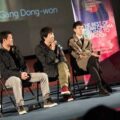
The London Korean Film Festival is not just about getting acquainted with the latest in Korean movies. It is also an opportunity to meet some of the people behind those movies – actors, directors and producers. Opportunities for engaging with these film professionals vary: for an ever-growing group of aficionados there is the offer of round-table … [Read More]
Ahn Sung-ki interview: a life in acting

Ahn Sung-ki reflects on Korean cinema’s roots in historical trauma, its role in addressing social issues, and his career choices under censorship and change. He discusses long collaborations with Im Kwon-taek, the importance of scripts and emotional depth, evolving acting freedoms, international productions, and his belief that cinema’s power lies in moving hearts rather than scale or fame. [Read More]
Festival Film Review: Hwajang / Revivre

Well, I was right. Ahn Sung-ki confessed in the Q+A which followed the screening of Hwajang that one of his most difficult tasks in portraying Oh Sang-moo, a senior executive in a cosmetics company, was to project certain aspects of being old – of being blocked inside because of the swollen prostate, of being more … [Read More]
Im Kwon Taek’s Hwajang selected to close 2014 LKFF

It’s tremendously good news that the closing gala screening of the London Korean Film festival 2014 is Im Kwon Taek’s 102nd film, Hwajang (western title: Revivre). It synchronises nicely with the KCCUK’s focus on literature this year, as it is based on a short story by Kim Hoon. More importantly, it’s a film that has … [Read More]
Im Kwon-Taek’s Village in the Mist — affairs on an Anonymous Island
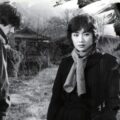
Han Su-ok, a young schoolteacher, arrives in an isolated mountain village to take up her first job in an elementary school. As she gets off the bus, the village initially seems deserted, like a ghost town, hemmed in by the high forbidding walls of the surrounding mountains like a prison. You wonder what sort of … [Read More]