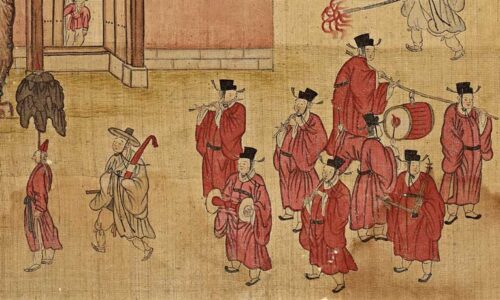
Experience a unique live event celebrating Korean music, singing and dance in dialogue with objects from Korea and around the world.
The British Museum collection provides a stunning backdrop to, and inspiration for, these performances, which blend centuries of cultural history with the energy and immediacy of live shows.
From traditional Korean instruments such as daegeum (a kind of large bamboo flute) and gayageum (a 12-stringed instrument similar to a zither) to traditional and contemporary dance, as well as a soprano singer – each performance is inspired by a carefully selected object, creating connections between art, heritage and the global stories held within the collection.
Programme
(Subject to change)
1 Bridging myth and tree: connecting cultures through daegeum
Korean daegeum flutist: Hyelim Kim
Sangnyeongsan and Cheongseonggok — Korean traditional song for daegeum solo (arranger: Hyelim Kim)
The myth of Manpasikjeok, the Korean flute (daegeum), speaks of a breath that calms the waves of the world, symbolising its struggles and conflicts. This myth is intertwined with two world trees: the totem pole from North America, embodying memory and heritage, and the Bodhi tree from India, representing shelter and awakening. These traditional melodies breathe life into the powerful spirit of these world trees, connecting nature, culture and peace.
2 The sounds of gayageum
Korean traditional harpist: Ji Eun Jung
Korean traditional percussion player (accompanist): Kangsan Lee
Video creator: Edith Kim
Full Moon Dance (composer: Ji Eun Jung, recorded and produced by West One Music Company)
Inspired by a Joseon moon jar, the piece reflects the full moon’s brightness, purity and roundness, unfolding through three distinct rhythms.
Genesis (composer: Ji Eun Jung, jang-gu accompanist: Kangsan Lee)
Based on The Enuma Elish (also known as The Seven Tablets of Creation), the piece depicts the final stage of God creating humans, beginning from the heart. Incorporating samdo seoljanggu (a traditional three-part drum rhythm), it evokes the pulse of life, culminating in Adam coming to life and dancing.
3 Side by side: Korea and the West in song
Soprano: Haegee Lee
Pianist (accompanist): Leah Park
Composer: Il Hoon Son
Song of Spring Morning from Obu Sashi Sa: the fisherman’s calendar – shijo poetry cycle verses 1, 3, 4 by Yun Sondo (composer: Il Hoon Son)
Sweeter than Roses (composer: Henry Purcell)
A Joseon-era Korean landscape painting, with rivers, mountains and mist, accompanies the music. Il Hoon Son preserves the traditional shijo rhythm and reinterprets the five-tone scale in a contemporary style. Alongside Purcell’s Baroque aria, painting and music resonate together, evoking the beauty of spring and human renewal.
Saetaryeong: Song of Birds (composer: Cho Du-nam)
Le Colibri: The Hummingbird (composer: Ernest Chausson)
A traditional Korean painting of flowers and birds is displayed alongside the music. Cho Du-nam preserves the lively rhythms and humour of Korean folk song, while Chausson’s Le Colibri depicts a hummingbird in delicate harmonies. Together, painting and music highlight the vitality of nature, uniting Korean folk vibrancy with French art-song refinement.
4 Gwantong (Penetration)
Contemporary/Korean traditional dancer: Ye Rin Lee
Composer: Seayool
This solo dance work connects the cosmic order of the East, symbolised by the Korean guardian paintings featuring the Southern and Northern heavenly kings, with the architectural ideals of the West, represented by the Greco-Roman Nereid Monument. The performance centres on a core narrative: the guardian spirit within the two-dimensional painting ‘penetrates’ its flat confines to journey toward the three-dimensional Monument. In doing so, Eastern cosmic energy and Western physical perfection converge in the dancer’s body, realising a new aesthetic fusion at their intersection.
About the artists
 Hyelim Kim is a Korean daegeum flutist and ethnomusicologist, holding a PhD from SOAS, University of London. Specialising in traditional Korean music, she regularly collaborates with international orchestras, including the Orchestre de Paris and Orchestre National de Montpellier, and has performed at prominent festivals such as the London Jazz Festival and the K-Music Festival. She is the founder and artistic director of the Shilla Ensemble(Opens in new window), a London-based group dedicated to Korean traditional music and dance.
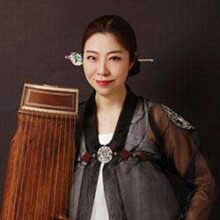 Ji Eun Jung did her BA in Korean traditional music at Ewha Womans University and MA in Asian Music at Dongguk University in Korea, and she’s an initiator of Korea’s Important Intangible Cultural Asset No.23, Sanjo in the style of Jook Pa Kim. Since she settled in London in 2005, she has been actively performing, composing music, teaching gayageum and organising music events in the UK and Europe. She was a chairwoman of Korean Artists Association UK and is currently leader of the KAYA crossover music band.
 Haegee Lee is trained at Seoul National University and the Conservatoire National de Région Pierre Barbizet, Marseille. Between 2017 and 2019, Lee was a member of the Jette Parker Young Artists Programme at the Royal Opera House, Covent Garden. Since her graduation, Lee’s engagements have included the Welsh National Opera, Longborough Festival Opera, English National Opera, Chelsea Opera Group, Irish National Opera, Korea National Opera, Opéra national de Paris and a return to the Royal Ballet and Opera, London.
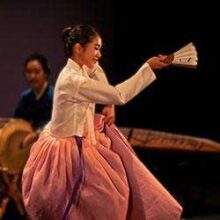 Ye Rin Lee is a London-based Korean traditional dancer and screendance artist. Her extensive career spans two decades of performing and choreographing diverse Korean traditional and contemporary dance works that address social and political issues. Ye Rin completed her PhD in dance from the University of Roehampton, with her research focusing on screendance activism and political performance. She is currently a lecturer and module leader at London Studio Centre, where she shares her studies and expertise with students.
Kangsan Lee is a Korean traditional percussionist specialising in Yeonhui (folk theatrics). A graduate of the Korea National University of Arts, he is currently pursuing an MA in Culture, Policy and Management at City, University of London. His work spans performance, education, and traditional mask dance.
Leah Park is a pianist specialising in Romantic repertoire and collaborative performance. She has performed widely across the UK and Europe, including at the Barbican and Southbank Centre, and currently teaches at King’s College London. Park studied at the Royal Academy of Music and The Purcell School.
Il Hoon Son is a Korean composer educated at the Korea National University of Arts and the Royal Conservatory of The Hague. His works have been performed by major orchestras and ensembles, including the National Orchestra of Korea and Nieuw Ensemble, blending tradition with contemporary sound.
Objects in the performance
- Totem pole carved from solid cedar wood, Kayang, Masset, Queen Charlotte Island, British Columbia, Canada
The Great Court, Northeast Corner - Sculpture with Bodhi Tree carved in limestone from the great Buddhist shrine of Amaravati
India: Amaravati (Room 33a), The Asahi Shirnbun Gallery - Moon jar, glazed white porcelain
Korea (Room 67), The Korea Foundation Gallery - Mesopotamian epic of creation clay tablet
Mesopotamia 1500-539 BC (Room 55) - The Adam and Eve seal
Mesopotamia 6000-1500 BC (Room 56) - Landscape drawing
Korea (Room 67), The Korea Foundation Gallery (currently not on display) - Hanging scroll with birds and flowers
Korea (Room 67), The Korea Foundation Gallery (currently not on display) - Guardian-King of the North painting
Korea (Room 67), The Korea Foundation Gallery - The Nereid Monument
Nereid Monument (Room 17)
