Park Chan-wook’s latest offering, No Other Choice, is, as expected of the legendary director, a dark and morally complex exploration of its subject matter – in this case, the subject matter is overtly the state of the contemporary job market, and covertly cycles of generational trauma and violence. It is dark and violent, as to be expected of any Park Chan-wook film, but it is also at times deeply funny.
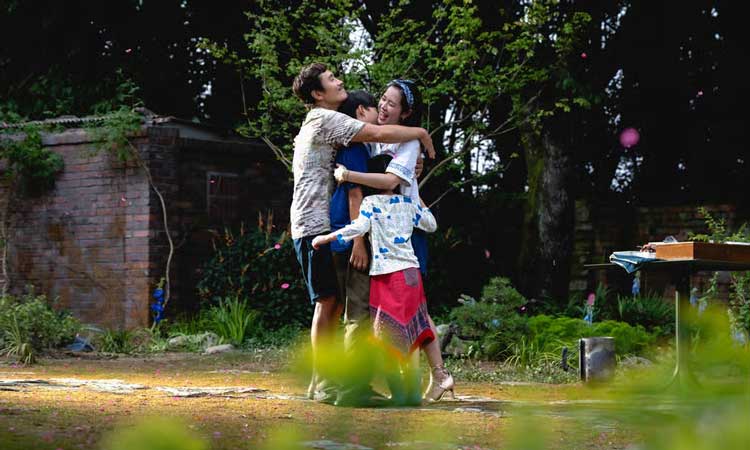
The film follows the character of Man-su (Lee Byung-hun), a man recently fired from his job that affords him a life he loves, but also a character burdened by his alcoholism and the legacy of his Vietnam veteran father. No Other Choice serves as a commentary on the inherent violence and desperation of the jobs market. As the film’s characters pithily point out, the violence inherent in phrases like “get the chop” and “to be axed” make literal the suffering that losing employment can cause – and then the film’s plot arc follows this violent undercurrent to its most extreme. Even the paper industry, which seems so inoffensive and is constantly exonerated throughout the film, is ultimately made violent in the film’s final scene, where we watch in brutal detail the deforestation of the trees that the paper industry subsists on. Park Chan-wook is nothing if not deliberate.
The film also powerfully portrays the loneliness and isolation of the jobs market – the othering of the nameless applicants you’re pitted against, the numbers game. It reminds us that for every job we do get, there are another 10 people that don’t, and that the cycle of desperation continues. It does so by putting a face and a story to the CVs and accolades – what would otherwise go unseen. Man-su finds a strange kinship with each of the men, in particular their relationships to themselves and their masculinity. Whether that is trying to save Bum-mo (Lee Sung-min) from the humiliation of his wife’s infidelity (a fear he faces with his own wife), or bonding with Si-jo (Cha Seung-won) over having a daughter. Man-su even repeats Bum-mo’s words to his own wife, linking these men.
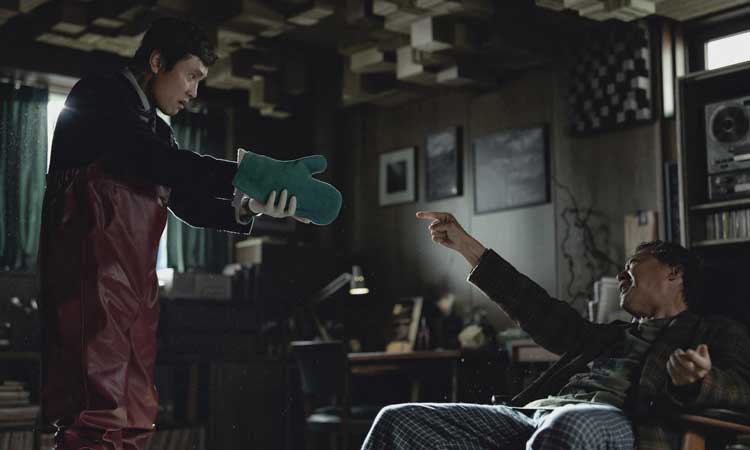
Themes of masculinity are central, with Man-su declaring “we’re at war” and rallying his son to protect the family. He both loathes and idolises Sun-chul (Park Hee-soon), his final victim and current holder of the job he desires, a man who we see engages in stereotypically posturing masculine activities, smoking cigars and drinking whisky. In fact, it is only after his wife emasculates Man-su by dancing with another man that we see him finally able to follow through with an act of violence, highlighting the precarious role of the man in the family and the relationship this has to one’s job, and one’s sense of self.
Director Park also comments on the changing world: even when Man-su does get a job, it is not a fulfilment – the world is changing, and his colleagues have been replaced by AI. It is all hollow.
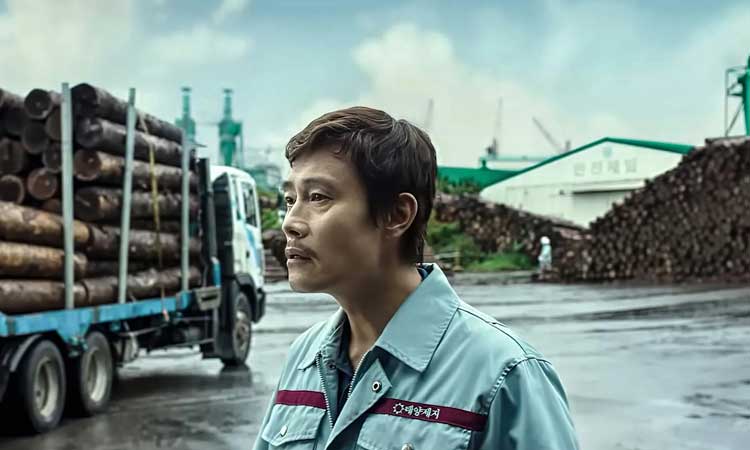
The film also uses the premise of losing one’s job as a mechanism to also explore the family, and hereditary cycles of violence. Man-su, the son of a Vietnam war veteran, buries Sun-chul and his other victims much like he recounts his own father burying pigs on his farm. His wife (Son Ye-jin) and son (Kim Woo-seung) also become unwilling witnesses to his violence, choosing to remain in a sort of half-denial, which is deeply pessimistic. This leaves us to ponder: Was there no other choice? What is the inevitability in this story – is it the hereditary cycles of violence, that buried darkness in Man-su’s nature symbolised by his rotting tooth, or is it the natural human response to desperation?
Masterfully shot, violent imagery underpins everything. A scene that resonated particularly, and one I saw on the internet long before watching the movie, shows A-ra (Yeom Hye-ran) scrolling through guns on an iPad to identify the murder weapon of a crime she committed, with the framing of her reflection in the iPad showing each of the barrels pointed at her forehead. Whilst the film did occasionally feel too long, particularly towards the end, this was propped up by the classically Park Chan-wook showcase of compelling visuals, unique angles and vivid colours. It is a film that you come away thinking about long after the final credits have rolled.
No Other Choice (어쩔수가없다, 2025)
Director: Park Chan-wook
Main Cast: Lee Byung-hun, Son Ye-jin, Park Hee-soon, Lee Sung-min
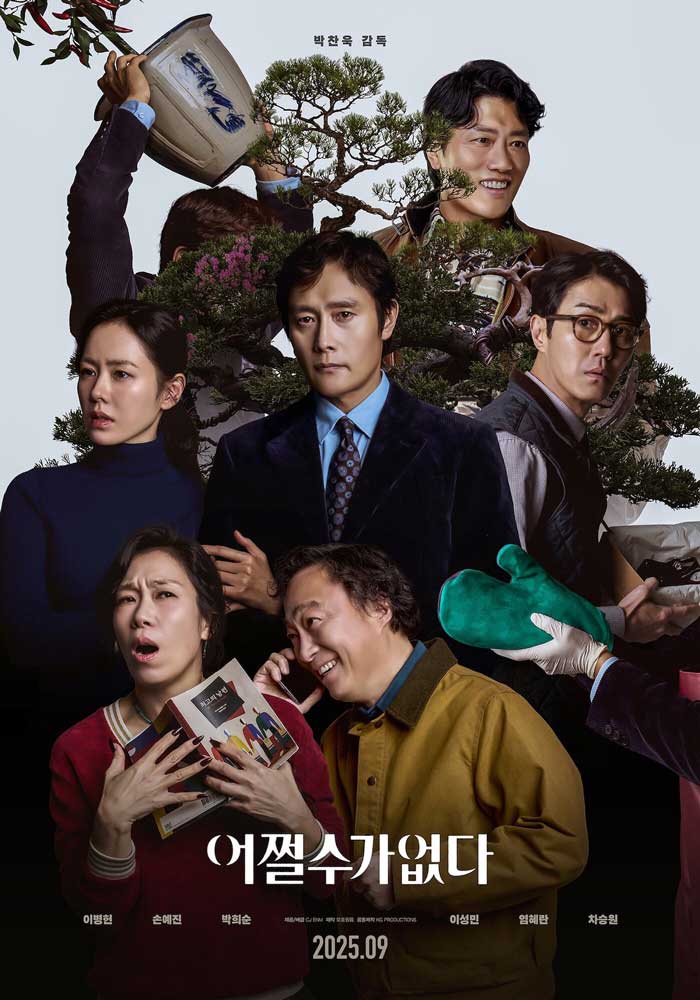
You should still be able to find No Other Choice screening in some cinemas