
While ‘Melo’ is on the surface a dark tale of love, sex and trust (or the lack thereof) told largely through a young woman’s perspective, it also serves as a dissection of selfishness and self-perception; ultimately detailing the twisted path down which personal need placed above all else can lead. [Read More]
Category: Film reviews and comment (page 17)
Miss Longlegs (키다리 아가씨, 2012) review: seeing the women behind the glass

Miss Longlegs is, at its core, a simple story but one which is also deceptively so and, like the characters themselves, its underlying depth is far, far greater than that assumed from a cursory glance. Ultimately, what Miss Longlegs deftly states will stay with you almost infinitely longer than its 21-minute running time. [Read More]
Perfect Number (용의자X, 2012) review: a nuanced Korean reimagining of a Japanese thriller

Based on the best-selling novel ‘The Devotion of Suspect X’ by Keigo Higashino, ‘Perfect Number’ asks what one man is prepared to do for love. An in-depth yet nuanced thriller at its core and a romance in part, ‘Perfect Number’ ultimately answers the question of whether heart or mind will win in a battle between the two. [Read More]
Azooma (공정사회, 2012) review: a gritty if unbalanced critique of social injustice and patriarchal apathy

At its core, Azooma is a critique of Korean society at large, a dissection of injustices in the name of procedure, and lingering patriarchy. But the decision to focus the narrative culmination on suddenly chosen revenge, almost as catharsis, leaves Azooma teetering between being an overly rushed revenge genre film and an insightful dramatic thriller. [Read More]
My P.S. Partner (aka Whatcha Wearin’, 나의 P.S. 파트너, 2012) review: redefining the Korean rom-com
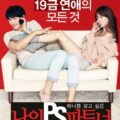
My P.S. Partner is as warmly romantic as any love story of recent years, as genuinely funny as almost any comedy you care to mention, and as sexy (and naughty) as any real-life relationship should be. Frank and groundbreaking in concept, but also comfortably genre-familiar, My P.S. Partner is the romantic comedy of 2012, period [Read More]
Stoker fails to impress FT
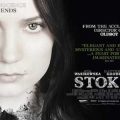
Oh dear. The FT really doesn’t like Park Chan-wook’s Stoker. “Stoker aims for enigmatic but bulleyes incoherent instead,” says Raphael Abraham, reviewing the DVD release in the Weekend edition on 6 July 2013. “Park Chan-wook constructs every shot with maximum flourish while plotlines appear fitfully and then die from neglect,” he adds, concluding that “after … [Read More]
The Berlin File – so slick it’s really rather dull

A plot which involves a dodgy international arms deal, a secret multibillion dollar bank account belonging to the extended family of Kim Jong-il and a power struggle in the wake of Kim Jong-un’s succession. A list of characters which includes operatives from the CIA, Mossad, and both North and South Korean security agencies, plus would-be … [Read More]
Lovable (다슬이, 2011) review: art, autism, and wonder

An utterly exquisite, poignant and ultimately uplifting film – told largely from a child’s perspective – telling the tale of a little girl’s love for a snowman. Lovable deftly strips away the veil of illness to show how intelligent, creative and inspiring autistic children truly can be. [Read More]
The Tower (타워, 2012) review: high-spectacle disaster and classic genre thrills

The Tower is a visually breathtaking high-spectacle disaster movie that, in spite of predictability, ultimately succeeds in being more entertaining and exciting than many films of its genre; remaining engaging throughout and even managing to be somewhat moving, on occasion… [Read More]
The Berlin File (베를린, 2013) review: a high-octane journey through espionage, loyalty and humanity

‘The Berlin File’ is at once a tale of political intrigue and a dissection of North and South Korean attitudes to humanity, morals and freedom all wrapped up in a high-octane thriller. While the ultimate narrative destination can largely be predicted, in this case the journey is equally as important, if not more so. [Read More]
Confession of Murder (내가 살인범이다, 2012) review: an action-packed tale of fame and revenge

Brutal at times, humorous at others, Confession of Murder is a thoroughly engaging serial killer tale though it could be said that both its narrative and execution borrow ever so slightly too much from a number of classic, and famously noteworthy, Korean thrillers. [Read More]
Young Gun in the Time (영건 탐정사무소, 2012) review: love, loss, laughter, and lo-fi time travel

Young Gun in the Time uses classic Korean cinema genre merging to be at once science fiction, mystery thriller, action, romance and comedy. Though it is low budget through-and-through, that is in fact one of the many charms of this warm, engaging and gently funny film. [Read More]
Sweet Dream aka Death’s Lullaby (미몽 / 죽음의 자장가, 1936) review: the fallen woman in early Korean cinema

Sweet Dream uses its dark tale of a woman choosing her own needs over her familial responsibilities to critique the modernisation of Korean society in the 30s. Pulling no punches, Sweet Dream serves up a classic Korean cinema narrative arc complete with what would later become almost requisite melodramatic elements. [Read More]
John Sweeney in BBC Panorama North Korea Undercover

“I compromised the LSE and my tour guides, and all I could produce was a lousy tourist video,” would be a suitable slogan for the T-shirt of tonight’s BBC Panorama programme. OK, so they also interviewed BR Myers, John Everard and a defector or two, but really it was not worth all the hype and … [Read More]
Hahaha – the first Hong Sang-soo film I’ve enjoyed without trying

OK, it was the second time I had seen it. The first time, I had slept through it. But that was because I had been entering into the spirit rather too much by indulging in a drinking session of Hongian proportions beforehand. The second time round, there was the anticipation of seeing the lead actress … [Read More]
“This bad movie is more fun than anything else”

“In a bad movie week, this bad movie is more fun than anything else” – the FT’s verdict on GI Joe: Retaliation. The first one was such fun and such nonsense that really you’ve got to go and see this one too. [Read More]