
Following a North Korean defector scraping by in South Korea, The Journals of Musan is without question an incredibly dark affair, but it never fails to touch the heart and ultimately stands as a fitting tribute to a gentle man who was never given the chance he truly deserved. [Read More]
Category: Film reviews and comment (page 22)
Missing (실종, 2009) review: predictable but unsettling
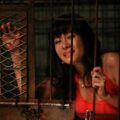
Though largely predictable and unevenly paced, Kim Sung-hong’s slasher thriller Missing still manages to be unsettling and even moving at times, and while it may not be the best example of its genre, it stands its ground fairly well, all the same. Moon Sung-Keun performs well as the bad guy. [Read More]
Metamorphoses (변신 이야기, 2011) review: a menacing, humorous, shape-shifting cautionary tale
Initially appearing as a gently humorous story of one man’s unrequited love for a beautiful woman, Metamorphoses mirrors its theme of “nothing is as it first appears”, to ultimately become a brutal, menacing, bloody, and extremely funny, “careful what you wish for” cautionary tale. [Read More]
Re-encounter (혜화, 동, 2011) review: an adoption kept in shadow

Re-encounter explores the emotional aftermath of a couple reunited by the discovery that their supposedly deceased child was secretly adopted. A dark and beautifully bleak affair, Re-encounter is a dissection of grief, guilt and regret that ultimately asks if it really is darkest before the dawn. [Read More]
Daytime Drinking (낮술, 2008) review: a road movie of self-inflicted misadventure
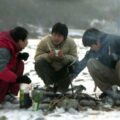
Daytime Drinking is a low-budget independent film about Hyuk-jin, whose low self-esteem and alcohol overindulgence lead to a series of self-inflicted predicaments. It’s such a gently paced, deeply eccentric and genuinely funny road movie that once you’ve had even a tiny taste of it, you’ll want to drink it to the very last drop. [Read More]
Woochi: The Demon Slayer (전우치, 2009) review — witty wizardry across time
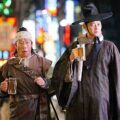
Numerous film genres blending seamlessly with top notch action, well-realised special effects and genuinely likeable characters add up to Woochi: The Demon Slayer being out and out spectacular entertainment from beginning to end. [Read More]
I’m A Cyborg, but that’s OK (싸이보그지만 괜찮아, 2006) review: warm-hearted whimsy from Park Chan-wook

Set in a psychiatric hospital, I’m a Cyborg is a warm-hearted film that blends surreal fantasy, romance and dark humour to explore belief, love and acceptance. If you were to cross One Flew Over The Cuckoo’s Nest with Amelie and add a healthy dose of Terminator you would come pretty close to getting I’m A Cyborg. [Read More]
The Crucible aka Silenced (도가니, 2011) review: silenced voices and the struggle for justice

Based on the true story of innocent children physically and sexually abused at a school for the deaf, The Crucible is a brutal, visceral and ultimately heartbreaking tale serving as proof (if proof were needed) that real life can be far more cruel than fiction. [Read More]
Reality and fiction intertwine in E J-yong’s deliciously amusing fake documentary Actresses

“Which one did you think is the most beautiful?” It was one obvious conversation opener at the bar after the screening of E J-yong’s Actresses, in which six of Korea’s top actresses aged from their early 20s to their 60s, gather for a Vogue photoshoot in a film which its director calls “part reality show, … [Read More]
Moss (이끼, 2010) review: power, corruption and secrets in a closed community

Based on an internet comic of the same name, Moss’s underlying references to power, corruption, revenge and guilt, as well as sin and redemption, create a veritable labyrinth of elements within the narrative, ultimately allowing the film to be far more worthy than one might initially imagine. [Read More]
Asako in Ruby Shoes – E J-yong’s least accessible but possibly most interesting film
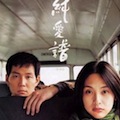
Asako in Ruby Shoes (Sunaebo, 순애보, 2000) is the one E J-yong feature that the KCC hasn’t managed to fit in to its February focus on the director’s work. By coincidence, it’s also the E J-yong film that Hancinema hasn’t, to date, loaded up into its database. But despite its poor showing at the box … [Read More]
Night Fishing (파란만장, 2011) review: PARKing CHANce’s haunting iPhone short

Ignore the fact that Night Fishing was made using the iPhone4. Even if you took all the best elements from Park Chan-wook’s previous films, wrapped them up within a gripping narrative and added the beyond exemplary cast performances seen here, you still wouldn’t come even close to creating a film as astounding as this. [Read More]
One year, 12 directors, 59 films, 12 Q&As. What could be better?
The KCC have announced their lineup for their much anticipated “Year of the Twelve Directors” – a season unimaginable a few years ago. A very simple concept: four films by the same director, each month giving a mini-retrospective, followed by a Q&A with the director. And a very well-balanced programme it is, featuring veteran directors … [Read More]
Invasion of Alien Bikini (에일리언 비키니, 2010) review: a flawed sci-fi B-movie genre mashup
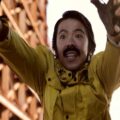
Sci-fi B-movie pits a chaste vigilante against a sexually assertive alien seeking pregnancy using gender-role reversals to satirise tradition versus modernity. Starting out as genuinely funny and stylishly brutal, Invasion of Alien Bikini is sadly marred by one rather misogynistic, mean-spirited scene and, to my mind, never fully manages to recover its early promise. [Read More]
On rewatching some favourite films: An Affair and Secret Sunshine

Last week, I re-watched two of my all-time favourite Korean films. Or at least, I thought they were. Film number one: E J-yong’s An Affair (1998), which was in the first dozen of Korean films I ever saw. I caught it at the 2001 London Korean Film Festival (yes, there have been Korean Film Festivals … [Read More]
The Vegetarian (채식주의자, 2010) review: a dark, haunting exploration of desire, mental illness and art

The Vegetarian is a brooding, unsettling drama that follows Yeong-hye, a woman whose refusal to eat meat spirals into profound mental and emotional transformation. Anchored by Chae Min-seo’s astounding performance, the film navigates themes of desire, family pressure and artistic obsession, delivering a slow-burning, psychologically intense story that adapts Han Kang’s prize-winning novel [Read More]