
This is the year that Korean music has really started to appear on iTunes, making it a lot more accessible. It’s also a year which has seen a continued emphasis on girl bands, with the Wonder Girls keeping a foothold in the US and Girls Generation and Kara slugging it out in Japan. Some of … [Read More]
LKL articles by Philip Gowman (page 142)
Nial Moores talks about nature in the DMZ

Interesting podcast by British conservationist Nial Moores, director of Birds Korea, about conservation in and around the DMZ (HT Michael Rank). On Talking Naturally. http://bit.ly/dKRHix #. Nial goes birding on the islands near the Northern Limit Line and near the DMZ. [Read More]
Pop art or car crash? Kimchi Burger is the latest London foodie fad

So soon after Nigella Lawson adopted gochujang as a must-have condiment, now the London foodie scene is embracing the kimchi burger. Hawksmoor, a swish new steak joint in Seven Dials, Covent Garden, has the broadsheet restaurant reviewers lining up to visit. First came the Indie, next the Grauniad. Finally the Times this week, blogger style, … [Read More]
Kahoidong campaign in the NYT

David Kilburn's Kahoidong hanok campaign makes it to the New York Times. Saving a Korean Courtyard House District: http://nyti.ms/hUITBL # [Read More]
Cosmetic surgery not the most common surgery

So you thought cosmetic surgery was the most common form of surgery in Korea? Wrong. It’s piles. http://bit.ly/eI4W1L #. The Korea National Health Insurance Corp gives the statistics in the Korea Times. [Read More]
Things that brightened Koreans’ lives in 2010

This year, Twitter, novellist Lee Oi-soo and Cambridge economist Ha-joon Chang brightened Koreans’ world – according to the Korea Green Foundation http://bit.ly/hvf11m # [Read More]
Kim Young-ha in Amazon bestseller list

Kim Young-ha’s Your Republic is Calling You made it to #38 in Amazon’s bestseller list – the first Korean novel in the top 100. http://bit.ly/eLFkhL #. Joongang Ilbo article on Korean authors getting foreign recognition also mentions Shin Kyung-sook, Jo Kyung-ran and Hwang Sok-yong. [Read More]
Sarah Chang’s Lloyd Webber collaboration

Is this one crossover too far? Actually Sarah Chang playing Lloyd Webber’s Phantom of the Opera concerto sounds good. http://amzn.to/gUcPmv. EMI has also just re-released her recording of Shostakovich and Prokofiev concertos with Simon Rattle: # [Read More]
Book review: Jinhee Choi — The South Korean Film Renaissance

Jinhee Choi: The South Korean Film Renaissance Local Hitmakers, Global Provocateurs Wesleyan University Press, 2010 There seems to be an ever-growing pile of available books of Korean film, with more to come over the next two years. This is testament to the established interest in Asian film and the growth of media studies as an … [Read More]
Kim Hye-ja voted Best Actress

The Los Angeles Film Critics Association votes Kim Hye-ja Best Actress 2010 – in a poll which includes Hollywood and English language films. Mother is voted the #2 foreign film http://bit.ly/ewCEQx # [Read More]
KoME interviews Nah Youn Sun

KoME had a chance to interview Nah Youn Sun after a performance at the Ramada Hotel in Aalen, Germany, on 6 November. http://is.gd/iRwV1 “I hope that the Metallica fans won’t kill me!” she says, of her Enter Sandman cover. It’s a nice write-up. [Read More]
The genealogy of gayageum sanjo
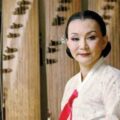
Interesting article on the genealogy of kayageum sanjo in an interview with Yang Seung-hee, holder of Korea’s intangible cultural property #23. Yang is striving to pass down the legacy of Kim Chang-jo, who is considered the father of modern sanjo. http://bit.ly/gqrO5k # [Read More]
3rd Line Butterfly and W&Whale in private London gigs

They came, played a private gig, and went away again. There will be a podcast coming out of it, but otherwise 3rd Line Butterfly might as well not have been here. Same with W & Whale. Monocle completely blocked access. # [Read More]
British sausage success in Seoul

Congratulations to Gavin Mackay, a British sausage manufacturer in Seoul, who has won the best ‘small and medium-sized business prize’ at the ‘5th KOR-EU Industry Cooperation Day’ event. http://bit.ly/UnVA0Z. Via @UKinKorea [Read More]
Wakesidevision’s top music of 2010

Chris Park at @wakesidevision reveals his top music of 2010 http://bit.ly/igkE6v #. The Korean albums in the top ten are: 프렌지 (Frenzy) – Nein Songs 한희정 (Han Heejeong) – 잔혹한 여행 태양 (Taeyang) – Solar/Solar International Yellow Monsters – Self-titled 리미 (Rimi) – Rap Messiah There’s a nice overview of 2010 in Korean music there … [Read More]
New Adoptee study: The Dance of Identities
Recently published by University of Hawai’i Press: The Dance of Identities: Korean Adoptees and Their Journey toward Empowerment Author: Palmer, John D. Korean adoptees have a difficult time relating to any of the racial identity models because they are people of color who often grew up in white homes and communities. Biracial and nonadopted people … [Read More]