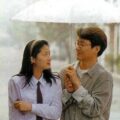
Hur Jin-ho’s landmark melodrama eschews gushing sentimentality for a delicate, understated exploration of love and mortality. One of his most accessible films, and his most famous, Christmas in August is a heartfelt, poignant and affecting story of love and loss, in which the words “I love you” never need to be said. [Read More]
LKL articles by Hangul Celluloid (page 21)
The Scarlet Letter (주홍글씨, 2004) review: desire, deception and the cost of temptation

The Scarlet Letter is an utterly gripping work showing the darker side of love and the consequences of surrendering completely to lust and temptation, using explicit sexuality in a tragic study of identity, power and consequences. It also serves as a tribute to the talent of the late Lee Eun-joo. [Read More]
Secret Love (비밀애, 2010) review: fate, twins, and a contrived melodrama

Elements of thriller and suspense drama, sadly, cannot save Secret Love from essentially being a melodrama with little heart, and an all too familiar, overly contrived, and clumsily executed, plot simply begs the question of whether Secret Love should, perhaps, have remained secret, after all… [Read More]
Secret Sunshine (밀양, 2007) review: grief, faith, and defiance in Milyang

Secret Sunshine is both a study of grief and a dissection of faith and religion. Like director Lee Chang-dong’s previous work the film doesn’t shy away from showing the disintegration of a human being as a result of uncontrollable events and the actions those events elicit. [Read More]
Shadows in the Palace (궁녀, 2007) review: secrets, power and death in Joseon Korea

As layered as it is intricate, as bleak as it is visceral, Shadows in the Palace is a beautifully complex and intelligent period thriller; a twisted story of secrets, lies, power and hidden sexuality made all the stronger by the avoidance of sexually explicit visual imagery and titillation… [Read More]
Seopyeonje (서편제, 1993) review: pansori, sacrifice and modernity

A masterpiece of Korean Cinema, Seopyeonje details the trials and tribulations of both the film’s characters and historical Korea itself, with the words mournful and hypnotic serving to describe both Seopyeonje, the pansori music, and Seopyeonje, the film. [Read More]
Sorum (소름, 2001) review: haunted spaces and the psychology of despair

With its slow, brooding and genuinely unsettling narrative, Sorum isn’t a film which everyone will savour, but its uncompromisingly bleak depiction of the vicious depths to which human beings are capable of sinking certainly allows it to stand out from standard horror movie fare. [Read More]
Spider Forest (거미숲, 2004) review: memory, guilt and the labyrinth of the mind

A man awakens from a coma and returns to a forest where murder and betrayal unfolded. A combination of thriller, horror story and ghostly tale, Spider Forest details one man’s attempts to uncover his forgotten memories, and serves as a thought provoking study of loss, betrayal, regret and self-destruction. [Read More]
Teenage Hooker Became A Killing Machine review: art film pretentions, agonisingly overstretched content

With painfully slow pacing, unfocused themes and appalling performances, Nam Ki-woong’s B-movie sadly squanders the opportunity presented by one of the most provocative titles in recent memory, stretching a ten minute music video plot out to a laboured sixty minutes… [Read More]
Welcome to Dongmakgol (웰컴 투 동막골, 2005) review: humanity found beyond the battlefield
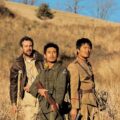
An uplifting and gently funny tale, told with genuine affection and served up with copious amounts of popcorn (watch the film and you’ll understand what I mean), Welcome To Dongmakgol reminds us that, whatever our beliefs and whatever the causes for which we fight, we should never forget our humanity. [Read More]
Wet Dreams (몽정기, 2002) review: adolescent awkwardness with innocence and heart

A coming-of-age comedy that approaches adolescent desire with warmth, humour and surprising innocence. Wet dreams blends familiar genre elements with genuine charm, playful innuendo and nostalgic honesty, standing apart from cruder sex comedies through its good-natured tone and affectionate look at youthful confusion. [Read More]
Windstruck (내 여자친구를 소개합니다, 2004) review: echoes of My Sassy Girl without the same spark

A rather lacklustre script and jolting switches between genres diminish what would otherwise be an engaging story, and the constant mirroring of elements from My Sassy Girl are an ever-present reminder of all the things that Windstruck would have liked to have been… [Read More]
Happy End (해피엔드, 1999) review: explicit and unmissable cautionary tale

An explicit marital drama about infidelity, obsession and quiet desperation. As a neglected husband uncovers his wife’s affair, Happy End is an uncompromising look at the human heart and how its desires, if unchecked, can rule the head with cataclysmic results. A cautionary tale which is both explicit and unmissable. [Read More]
A Tale of Two Sisters (장화, 홍련, 2003) review: psychological horror meets visual beauty

This exploration of family trauma, abuse and mental instability has slow-building tension, unreliable perceptions, layered symbolism, and narrative twists which reward repeat viewing. A lot of horror films are described in dark, brooding terms but very few could be described as beautiful; A Tale of Two Sisters is a sumptuously beautiful film [Read More]