
‘All hail Samsung Electronics’ says the Lex column in the Financial Times on the 28th of January. The news (reported fully here) that Samsung Electronics has overtaken Hewlett Packard as the world’s largest technology company may come as a surprise, especially to those who regard Samsung as a poor relation of the erstwhile dominant Japanese … [Read More]
LKL articles by Matthew Jackson (page 3)
Kimchipedia Part 2 – Obesity, Cancer and Global Pandemics

Kimchi’s anti-cancer properties are a focus of growing interest. Professor Park of Pusan University injected a Kimchi extract into mice with cancer cell transplants. After one month, the control set had an average tumor weight of 4.3 grams, whereas the group that were fed with Kimchi extract had an average tumor weight of 2.0 grams. … [Read More]
Kimchipedia Part 1 – Everything you wanted to know about Kimchi, but were too polite to ask

Introduction Kimchi has been eaten in the Korean peninsula for over 2,000 years. The modern Korean consumes about 30 kilograms of it per annum. It is credited with keeping obesity at bay in the country, and is believed to combat stress and to slow the ageing process, as well as fighting cancer and a wide … [Read More]
E-Government in Korea – The Spirit of Sillok Lives On!

The forthcoming publication ‘Leveraging e-government at a time of financial and economic crisis’ from the United Nations reveals the Republic of Korea to be at the top of both E-Government Development and E-Participation Indices. The website where the new report is introduced remarks: While technology is no substitute for good policy, it may give citizens … [Read More]
Before Babylon There Was…Pyongyang
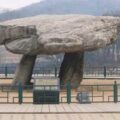
Two thirds of the world’s dolmens are contained in the Korean peninsula. The Gochang, Hwaun, and Ganghwa dolmen sites can be found on the UNESCO World Heritage list. This probably begs the question, from me at least – what are dolmens exactly? They are stone monuments, generally consisting of two supporting stones and a cover stone … [Read More]
MacGyver and the Imjin War

I was puzzled when I learned that Koreans regard the time bomb as a proud addition to their list of inventions. This is because I associate the time bomb with incidents involving James Bond and MacGyver, in which the emphasis is on defusing the bomb and foiling the plans of an evil terrorist. Although it has … [Read More]
The Turtle Ship

There is a story that when the nascent Korean shipping industry was attempting to raise capital, Barclays asked what the Koreans could provide in the way of security for the loan. The Korean executive is said to have taken a 500 won bill from his pocket, which featured the turtle ship of Yi Sun-sin, and … [Read More]
Golden Earrings of Silla

Along with the famous Golden Crown of Hwangnam, the tombs of Silla contained many other, less immediately eye-catching objects of beauty. An example is the golden earrings, one of the literally thousands of accessories such as necklaces, rings, belts and shoes that were buried with the dead kings and queens in Kyongju, capital of the … [Read More]
The Shining Fortress part 2: its remarkable story.

by Matthew Jackson The story which surrounds the building of the Hwaseong fortress is an extraordinary one. The fortress was originally built as part of the new Suwon city, a project initiated by King Chongjo. King Chongjo (or King Jeongjo, depending on your preferred romanization) had been greatly devoted to his father, Sado Seja, who … [Read More]
The Shining Fortress part 1: its construction

by Matthew Jackson The official report by the advisors to UNESCO’s World Heritage Committee concluded that the Suwon Hwaseong Fortress “represents the pinnacle of 18th century military architecture, incorporating the best of that from Europe and from the Far East. As such it has a unique historical importance”. What makes Hwaseong special? Following the editor’s … [Read More]
Chongganbo – Sejong’s Musical Alphabet
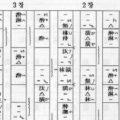
By Matthew Jackson King Sejong is most famous for his invention of the Korean alphabet. His other achievements, in social and legal reform, science and art, are less well known. The Chongganbo (정간보), which could be regarded as a musical alphabet, is one such achievement. The five-line staff notation that we use in modern music … [Read More]
Making History Part 3 – Uigwe

By Matthew Jackson It occasioned the UNESCO inspectors no little surprise when they came to inspect the restoration of the Hwaseong fortress, in order to verify its resemblance to the original complex. They were shown an exhaustive eight volume report documenting its original construction, prepared at the time it was built around two hundred years … [Read More]
Making History Part 2 – Diaries of the Royal Secretariat

By Matthew Jackson After the invasion of Kanghwa Island in 1886, a French navy officer remarked that he was surprised to find that even the poorest Koreans he met lived in companionship with books. There was a strong culture of writing as well as reading in Korea, particularly following the adoption of Hangul. It was … [Read More]
Making History: Part 1 – The Sillok
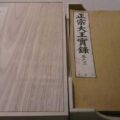
In the first of three articles, Matthew Jackson looks at the ways that the official history of the Joseon dynasty was written. At most Korean events I have been to, there has generally been a Korean studiously taking photographs throughout, for reasons that were not immediately obvious to me. I once asked, and was told … [Read More]
Movable metal type part 2 – the move to Lead
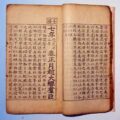
By Matthew Jackson After the invention of movable metal type, the next stage in the evolution of printing in Korea was improving the type itself. The era of Gutenberg (1397~1468) and his achievements in Germany interestingly coincided with the life and reign of King Sejong the Great (1397~1450) in Korea. Not only were a large … [Read More]
Movable metal type, part 1a – Jackson fights back

Following on from some comments on his previous article about moveable metal type, which expressed some doubts as to the justification behind its hallowed status amongst Koreans, Matthew Jackson investigates further, and returns to his original conclusion that it is a unique and extraordinary contribution to world history. 1. Mechanized versus non-mechanized To say that … [Read More]