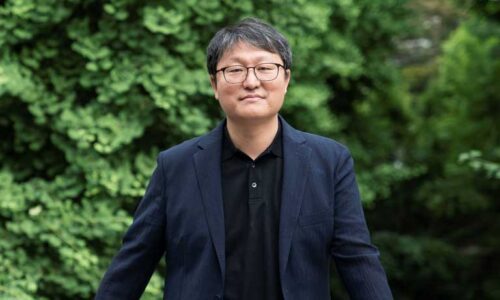
Director Cho Jungrae discusses his deep personal connection to Pansori, his hands-on role shaping the music “The Singer”, and the film’s dialogue between tradition and modernity. In this wide-ranging interview with Hangul Celluloid and LKL, he reflects on legacy, influence, and how traditional sound can still resonate with audiences today. [Read More]
Category: Movie & TV features
Bong Joon-ho’s and Tilda Swinton’s Q+A after Snowpiercer

After the success of Parasite, BFI held the first major UK public screening of Snowpiercer on 1 March. Here is the BFI’s video of the Q+A that followed the screening. [Read More]
Parasite: a non-review

What can one say about a movie that has won Best Picture at Cannes and the Oscars, that has won best screenplay at the Oscars and BAFTAs, best edited drama feature at the Eddies, and best ensemble performance at the Screen Actors Guild? A movie that has been seen more widely in this country, and … [Read More]
Bong Joon-ho’s BAFTA talk has now been uploaded

Bong Joon-ho’s BAFTA lecture at the Curzon Mayfair on 12 December 2019 has now been uploaded to the BAFTA Guru Youtube channel. The talk was part of a lecture series that “exists to celebrate screenwriters’ authorial contribution to film and gives esteemed writers a platform to share highlights and insights from their careers with an … [Read More]
Kim Sol group interview: letting emotion breathe

Kim Sol talks about Scattered Night, her collaboration with co-director Lee Ji-hyeon, minimal use of music, directing child actors, and portraying divorce with empathy and restraint. [Read More]
Shim Hye-jung group interview: caring for those whom society forgets

Shim Hye-jung talks about her debut feature A Bedsore, exploring elder care, migrant labour, family conflict, feminism, and the realities of making independent Korean cinema. [Read More]
Lee Byeong-hyeon group interview: from indie roots to 1,000 screens

Director Lee Byeong-hyeon discusses the creative process behind Extreme Job, from writing strong female characters and choreographing action-comedy to the realities of budgets, influences and Korea’s changing film industry. A candid and insightful conversation about humour, filmmaking and navigating commercial success. [Read More]
Park Ki-yong interview: implication, independence and time in Korean cinema

The veteran director discusses restrained portrayals of sexuality, lessons in economical filmmaking, the pressures facing independent Korean cinema, education and animation at KAFA, improvisation versus scripting, and how Old Love links personal memory with contemporary politics, generational reflection, and Korea’s recent historical moments. [Read More]
Lee Myung-se interview: love, action and creative freedom in filmmaking

Le Myung-se reflects on his 1990s love stories, the shift to action in Nowhere to Hide, and his dedication to creative autonomy. He discusses remakes, music choices, visual storytelling, and concerns over data-driven filmmaking, emphasizing the interplay of narrative, visuals, and emotional expression as central to his films. [Read More]
Kim Yang-hee and Yang Ik-june: a softer way of seeing

Director Kim Yang-hee and actor Yang Ik-june discuss The Poet and the Boy as a gentle portrayal of same-sex affection, shifting social attitudes toward homosexuality in Korea, and resisting fixed labels. They address casting risks, performance choices, poetry as emotional structure, and the role of film in reflecting gradual human-rights change. [Read More]
Jeon Go-woon interview: fragility, freedom and refusing norms

Director Jeon Go-woon discusses Microhabitat as a story about choosing personal values over stability. She explains Miso’s refusal of conventional comfort, the symbolism of ex-musicians and youth, male vulnerability, collaborative character-building with actors, and the realities of making independent films within tight economic and emotional constraints. [Read More]
Recording: Screen talk with Lee Chang-dong at BFI London Film Festival 2018

In case like me you couldn’t get tickets to the Screen Talk with Lee Chang-dong as part of the BFI London Film Festival, here’s the recording on the BFI YouTube channel. The interview took place on 20 October 2018, the day of an anti-Brexit demonstration in London – which is mentioned more than once in … [Read More]
Bae Chang-ho retrospective: the highlight of LKFF 2017

For me, the highlight of this year’s London Korean Film Festival was the brief retrospective of some of Bae Chang-ho’s early output. I’ve had a soft spot for Director Bae’s work for over 15 years now: My Heart was one of the first Korean movies I saw, back in the London Korean Film Festival in 2001. … [Read More]
Lee Wan-min and Kim Sae-byuk interview: Jamsil — memory, feminism, and independent Korean cinema

Director Lee Wan-min discusses Jamsil’s use of colour, memory, fragmented time, feminism, and the realities of making independent films amid funding and industry barriers. Actress Kim Sae-byuk reflects on choosing meaningful stories, balancing independent and commercial work, and the collaborative relationship at the film’s core. [Read More]
Bae Chang-ho interview: censorship, change, and life stories in Korean cinema

Director Bae Chang-ho reflects on the evolution of his film-making career and developments in the industry and audience preferences. He discusses changes in his style, a focus on ordinary lives and love, collaborations with his wife Kim Yoo-mi, investor-driven constraints, and why his films’ sincerity was shaped by hardship rather than budget or freedom. [Read More]
Kang Yoon-sung interview: real crime, action and commercial storytelling
Director Kang Yoon-sung discusses The Outlaws, from its real-life origins and research-driven realism to stripped-back characterisation and action-led storytelling. He explains casting choices, humour and violence balance, colour-coded gangs, funding challenges, and how editing, choreography, and true stories shaped his approach to commercial Korean cinema. [Read More]