
Along with the famous Golden Crown of Hwangnam, the tombs of Silla contained many other, less immediately eye-catching objects of beauty. An example is the golden earrings, one of the literally thousands of accessories such as necklaces, rings, belts and shoes that were buried with the dead kings and queens in Kyongju, capital of the … [Read More]
Post Series: Korea's Treasures (page 2)
Korean heritage at UNESCO

Korea is rightly proud of some of its heritage, much of which has been given official recognition by UNESCO. For those of you who like lists, here are the various items of Korea’s tangible and intangible heritage which have been so listed. Also included below are links to any LKL articles on these treasures. (1) … [Read More]
The Shining Fortress part 2: its remarkable story.

by Matthew Jackson The story which surrounds the building of the Hwaseong fortress is an extraordinary one. The fortress was originally built as part of the new Suwon city, a project initiated by King Chongjo. King Chongjo (or King Jeongjo, depending on your preferred romanization) had been greatly devoted to his father, Sado Seja, who … [Read More]
The Shining Fortress part 1: its construction

by Matthew Jackson The official report by the advisors to UNESCO’s World Heritage Committee concluded that the Suwon Hwaseong Fortress “represents the pinnacle of 18th century military architecture, incorporating the best of that from Europe and from the Far East. As such it has a unique historical importance”. What makes Hwaseong special? Following the editor’s … [Read More]
A scientific look at ancient Korean art

Jennifer Barclay reports on the Anglo-Korean Society evening at the Korean Cultural Centre, 16 June 2009 Short documentaries on some of Korea’s ancient cultural artefacts were shown at the Korean Cultural Centre on 16 June, presented by members of the non-profit Korean Spirit and Cultural Promotion Project. Matthew Jackson and Hang-Jin Chang, who graduated together … [Read More]
Chongganbo – Sejong’s Musical Alphabet
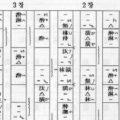
By Matthew Jackson King Sejong is most famous for his invention of the Korean alphabet. His other achievements, in social and legal reform, science and art, are less well known. The Chongganbo (정간보), which could be regarded as a musical alphabet, is one such achievement. The five-line staff notation that we use in modern music … [Read More]
Making History Part 3 – Uigwe

By Matthew Jackson It occasioned the UNESCO inspectors no little surprise when they came to inspect the restoration of the Hwaseong fortress, in order to verify its resemblance to the original complex. They were shown an exhaustive eight volume report documenting its original construction, prepared at the time it was built around two hundred years … [Read More]
Making History Part 2 – Diaries of the Royal Secretariat

By Matthew Jackson After the invasion of Kanghwa Island in 1886, a French navy officer remarked that he was surprised to find that even the poorest Koreans he met lived in companionship with books. There was a strong culture of writing as well as reading in Korea, particularly following the adoption of Hangul. It was … [Read More]
Making History: Part 1 – The Sillok
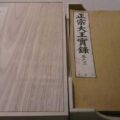
In the first of three articles, Matthew Jackson looks at the ways that the official history of the Joseon dynasty was written. At most Korean events I have been to, there has generally been a Korean studiously taking photographs throughout, for reasons that were not immediately obvious to me. I once asked, and was told … [Read More]
The Gwanghwamun and its many rebirths

When General Yi Song-gye founded the Joseon dynasty and moved Korea’s capital to Seoul, he needed a palace of suitable magnificence. The Gyeongbokgung (경복궁) was carefully sited by the royal geomancers to benefit from the perfect Pung Su (풍수), and at its southernmost point, in direct alignment with the main throne room, the Gwanghwamun (광화문 … [Read More]
Movable metal type part 2 – the move to Lead
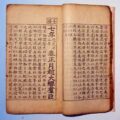
By Matthew Jackson After the invention of movable metal type, the next stage in the evolution of printing in Korea was improving the type itself. The era of Gutenberg (1397~1468) and his achievements in Germany interestingly coincided with the life and reign of King Sejong the Great (1397~1450) in Korea. Not only were a large … [Read More]
Movable metal type, part 1a – Jackson fights back
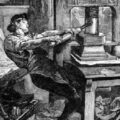
Following on from some comments on his previous article about moveable metal type, which expressed some doubts as to the justification behind its hallowed status amongst Koreans, Matthew Jackson investigates further, and returns to his original conclusion that it is a unique and extraordinary contribution to world history. 1. Mechanized versus non-mechanized To say that … [Read More]
An introduction to Hangeul – part 2

By Matthew Jackson. Despite the technical merits of Hangeul, it is hard to get beyond the fact that it is, after all, just a phonetic alphabet, albeit a unique one. As with other treasures of Korea, the real value of Hangeul lies in the story behind it. Its creator, King Sejong the Great, worked very … [Read More]
An introduction to Hangeul – part 1
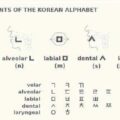
By Matthew Jackson. I heard a few years ago there was a plan to make Hangeul (1) Korea’s National Treasure No.1. Given that there are a number of candidates for this position, I was puzzled, although aware that Hangeul’s technical merits are not disputed in the world of linguistics. John Man, for example, in his … [Read More]
Movable Metal Type – another world-beating Korean technology
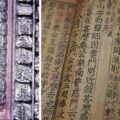
Matthew Jackson continues his series of features on treasures from Korea’s past. It was arguably the most far-reaching invention since the wheel. Whereas the wheel enabled greater ease in transporting people and physical objects, the invention of metal type printing enabled the speedy transportation of ideas. The new technology was introduced in Korea 200 years … [Read More]
The World’s Oldest Woodblock Print
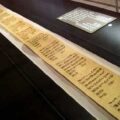
Matthew Jackson explores another of Korea’s contributions to world culture The first printing presses were made out of wood. The process of woodblock printing emerged in the East during the 8th century. For some time, the earliest woodblock print was believed to be a copy of the Diamond Sutra, discovered at Dunhuang in China by … [Read More]