
Director Oh In-chun discusses Metamorphoses as a hybrid of action, horror, and comedy, shaped by cinematic influences and limited resources. He explores themes of desire, hidden truth, and transformation, explains his visual and casting choices, reflects on Korean cinema’s global perception, and outlines ambitions for future genre-driven projects. [Read More]
LKL articles by Hangul Celluloid (page 17)
Kim Han-min interview: history, resistance and the Korean spirit

Kim Han-min talks in depth about Arrow: The Ultimate Weapon, exploring Korean history, genre balance, sound design, and the recurring themes linking his work to Paradise Murdered and Handphone. [Read More]
The Chaser (추격자, 2008) review: relentless pursuit in a brutal serial killer thriller
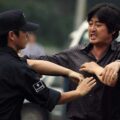
An ex-cop turned pimp races to save a woman from a confessed serial killer before police incompetence sets him free. If Old Boy and Memories of Murder had an illegitimate love child it would be The Chaser. That said, the plot still grippingly supplants expectations. [Read More]
Yellow Hair (노랑머리, 1999) review – controversy, desire and rebellion
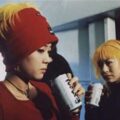
While Yellow Hair could never be described as subtle, and though its narrative depth is less involved than it could perhaps have been, this dark and twisted tale is nonetheless far more worthy of merit and discussion than the description “adult thriller” would suggest… [Read More]
Double Agent (이중간첩, 2003) review: loyalty, ideology and the cost of devotion

Set against Cold War tensions between North and South Korea, Double Agent examines absolute ideological loyalty, personal sacrifice and betrayal. Though flawed, Double Agent resolutely shows that it doesn’t need CGI pyrotechnics or secret agent gadgets to be an engaging spy thriller throughout. [Read More]
Kim Kkobbi interview: Flowerain – finding the characters within herself

Kim Kkobbi talks candidly about Breathless, her approach to acting, violence in Korean cinema, working across film and theatre, and her creative life beyond acting in this wide-ranging interview. [Read More]
The Fox with Nine Tails (구미호, 1994) review: gumiho folklore meets modern melodrama

With the age-old Korean folklore of a fox spirit attempting to become human at its core, The Fox with Nine Tails merges fantasy, horror, romance and melodrama to create a tale with a moral worthy of the legend on which it’s based. Also notable as the first Korean feature to use CGI. [Read More]
The Yellow Sea (황해, 2010) review: Na Hong-jin’s visceral tale of desperation and chaos

The Yellow Sea is a fast-paced, violent and bloody rollercoaster ride which details its numerous narrative threads in such a heart-pounding manner that it virtually guarantees audiences will be left exhilarated and perhaps even breathless… [Read More]
The Trip (여행, 2009) review: three lives at a crossroads on Jeju Island

Set on Jeju Island, The Trip weaves three interconnected stories of love, loss and self-discovery. From tentative first love, to a daughter seeking her absent mother, to a woman reclaiming her identity, the film explores life’s turning points across generations against a striking natural backdrop. [Read More]
71 Into the Fire (포화 속으로, 2010) review: courage, sacrifice and the cost of war

Based on a true story, ’71 – Into The Fire’ tells its tale with gusto throughout, using breathtaking visuals within epic battle scenes to show the chaos and carnage of war and the ultimate price it demands, albeit in a slightly predictable manner in places. [Read More]
Natali (나탈리, 2010) review: a failed experiment in 3D eroticism

If you’re in need of a film with an engaging, heartfelt storyline, then watch an insightful drama; if you’re looking for a sex film, watch a sex film. Despite its marketing, Natali fits into neither of these categories, and the most positive thing that can be said is that it’s in 3D. [Read More]
John H Lee interview: balancing emotion and intellect

Director John H. Lee discusses “71 – Into the Fire”, balancing ambition and budget in large-scale war scenes, the film’s global reception, and commemorating the Korean War. He also reflects on “A Moment to Remember”, casting Son Ye-jin, director’s cuts, and social themes shaping his films. [Read More]
Sad Movie (새드무비, 2005) review: when heartbreak becomes overkill

Interweaving four relationships with richly drawn characters and strong performances that invite empathy, Sad Movie initially succeeds as an engaging romantic drama with genuinely funny comedic elements, but ultimately pushes too many heartbreaks too far. [Read More]
Poetry (시, 2010) review: memory, moral awakening and the search for beauty

Poetry is the story of one woman’s search for meaning, beauty and expression in a life peppered with pain and long lost dreams. By the time the credits roll, viewers will have witnessed an utterly unforgettable, gentle yet gripping and poetic story which is equally as uplifting as it is poignant. In short, life is Poetry. [Read More]
Love, Loss and Laughter in Korean Cinema

Paul Quinn explores how Korean cinema weaves love, loss, and laughter – especially through romantic comedies – using melodrama, gender role shifts, and humour to reflect social change, historical trauma, and national identity, with films often mirroring Korea’s turbulent past alongside evolving views on romance, family, and sexuality. [Read More]
The Servant (방자전, 2010) review: a Joseon-era love triangle with echoes of Untold Scandal

Billed as an “erotic rom-com”, The Servant serves its purpose as a sensual and funny romance relatively well, but character depth and audience empathy suffer as the myriad of layers begin to build, and even the sumptuous visuals cannot rescue The Servant from ultimately failing to live up to its early promise… [Read More]