
A melancholy, yet darkly beautiful, film, Paju asks whether ignorance really is bliss, or if it simply brings a different set of heartaches to those brought by knowledge. A film which not only needs to be seen, but deserves to be seen more than once. [Read More]
LKL articles by Hangul Celluloid (page 18)
Bedevilled (김복남 살인사건의 전말, 2010) review: a brutal, poignant exploration of abuse, apathy and revenge

Set on an isolated island ruled by brutality and social complicity, Bedevilled charts one woman’s relentless abuse and another’s refusal to intervene. A slow burning film which racks up the tension incrementally, Bedevilled builds to unleash violent, bloody retribution within a tale which is ultimately powerful, poignant and deeply moving. [Read More]
The Harmonium In My Memory (내 마음의 풍금, 1999) review: first love, music and long summers

Set in 1960s rural Korea, this coming-of-age romance explores a tender love triangle between a young teacher, his colleague and a schoolgirl discovering first love through her journal. At the same time sad, funny, moving and uplifting, The Harmonium In My Memory is what everyone’s first love should be. [Read More]
The Humanist (휴머니스트, 2001) review: botched ransom plot meets gross-out comedy

Dark comedic thriller with grotesque, amoral characters, about a botched killing and ransom scheme spiralling into chaos, co-written by Park Chan-wook. Though somewhat flawed and erratically paced, The Humanist still has a lot to offer fans of wilfully tasteless, yet genuinely funny, humour. Just don’t let your local nun watch it. [Read More]
I Saw The Devil (악마를 보았다, 2010) review: a visceral descent into the emptiness of revenge

A visceral, brutal yet at times beautiful film, I Saw The Devil pits a sadistic serial killer against a grieving secret agent, and shows that no closure, appeasement or fulfillment is to be found in the act of revenge, with only emptiness and the unforeseen consequences of vengeful actions ultimately resulting from it. [Read More]
A Man Who Was Superman (슈퍼맨이었던 사나이, 2008) review: memory, empathy and a broken hero

A Man Who Was Superman is a moving character study showing the frailties of the human mind and the resultant effects of both physical and emotional trauma. A film which ultimately reminds us that though the past can’t be changed the future has not yet been written. [Read More]
My Dear Enemy (멋진 하루, 2008) review: a subtle character study straddling the line between drama and rom-com

Initially appearing to be a quirky “road movie”, My Dear Enemy ultimately proves itself to be an uplifting and multi-layered character study. Contrasting material poverty with spiritual richness, and with subtle direction and believable chemistry between lead actors, this is an engaging and gently gripping film from beginning to end [Read More]
My Mother The Mermaid (인어공주, 2004) review: a lyrical dedication to motherhood

A reluctant daughter is transported to her parents’ past, where witnessing her mother’s youth reshapes long-held resentment into empathy. Featuring masterful dual performances by Jeon Do-yeon, My Mother The Mermaid is a simple story, beautifully conceived. Dedicated “To mother”, it, in fact, stands as a dedication to motherhood itself. [Read More]
My Wife Got Married (아내가 결혼했다, 2008) review: monogamy, polygamy, and modern taboos

On the surface, a discussion of monogamy vs. polygamy, My Wife Got Married also serves as a critique, and subversion, of stereotypical male/female roles in relationships, all wrapped up within a gently humourous (albeit, erratically paced) romantic tale… [Read More]
Im Sang-soo interview: power, patriarchy and provocation in The Housemaid

Director Im Sang-soo discusses his reimagining of the 1960 classic The Housemaid, exploring the intersection of class structure and patriarchal power. He addresses the functional role of graphic sexuality in his films, the serendipitous symbolism of an actress’s scar, and his defiant stance toward commercial expectations and critical reception in the Korean film industry. [Read More]
Kim Ji-woon interview: the utter emptiness of revenge

Kim Ji-woon discusses I Saw the Devil, the controversy over its extreme violence, his approach to revenge and human darkness, casting Lee Byung-hun and Choi Min-sik, and his upcoming Hollywood project. He also reflects on scripting, genre, and how psychological and emotional truths shape his films. [Read More]
The Housemaid (하녀, 1960) review: Kim Ki-young’s classic Hitchcockian thriller of desire and moral decay

Kim Ki-young’s 1960 thriller charts a middle-class family’s collapse after hiring a predatory maid. A claustrophobic, yet gripping, morality tale, The Housemaid is as vital today as it was on its release fifty years ago. No wonder that both Bong Joon-ho and Park Chan-wook have cited it as a major influence on their work. [Read More]
The Housemaid (하녀, 2010) review: Im Sang-soo’s lavish and ruthless reimagining

Though not as subtly stated, socially accurate, or downright claustrophobic and creepy as its illustrious predecessor, The Housemaid still stands its ground as a well realised and gripping thriller which deftly shows that power can easily become as addictive as a drug… [Read More]
Time (시간, 2006) review: identity, insecurity and the limits of reinvention
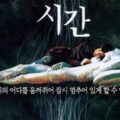
More a discussion of perception than a depiction of the increasing trend for plastic surgery, Time ably shows that a physical change in appearance only scratches the surface, literally, of who a person is and the mental issues they have. [Read More]
Kill Me (킬 미, 2009) review: a hitman, a deathwish, and an unlikely romantic comedy

While the concept of a hardened hitman gradually falling in love with his intended target is certainly nothing new, director Yang Jong-hyeon brings a freshness to the idea by turning it completely (and literally) on its head, allowing the film successfully to step away from predictability to become something much more original and memorable. [Read More]
Open City (무방비 도시, 2008) review: striking visuals, but predictable crime plot and thin characterisation

Despite its high-end cinematography and contemporary soundtrack, this crime thriller is undermined by an unimaginative plot and cartoon-like characterisations. While Son Ye-jin provides a nuanced performance as a sharp-witted gang leader, the film’s reliance on melodrama, unbelievable character motivations, and repetitive action tropes prevents it from achieving any genuine emotional or narrative depth. [Read More]