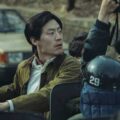
1987: When the Day Comes is an exquisitely realised, multi-layered true-life depiction of life and activism in 80s Korea, and the fact that the events portrayed are far less spoken about than the Gwangju massacre but were equally important to the ultimate democratisation of the country makes the film all the more required viewing. [Read More]
LKL articles by Hangul Celluloid (page 4)
Moon Young (문영, 2017) review: a succinct and nuanced study of solitude and connection

While just 64 minutes in duration, Moon Young never feels anything less than a full feature. A nuanced, succinct yet in-depth narrative insightfully speaking of both urban isolation and connection, and exploring abusive homes and guarded identities, Moon Young is without a single moment’s unnecessary meandering. [Read More]
The Vanished (사라진밤, 2018) review: eerie morgue mystery and gripping psychological duel

Based on the 2012 Spanish film El Cuerpo, The Vanished is exemplary, gripping and unpredictable throughout to the extent that you would never for a second think this is Lee Chang-hee’s debut feature unless you were aware of that fact in advance. [Read More]
Steel Rain (강철비, 2017) review: action, politics, and trust across the Korean divide

While Steel Rain’s action set pieces are always exemplary, often visually breathtaking, it is the growing trust between the two main characters from either side of the Peninsula that is the film’s true and lasting strength; speaking of humanity’s similarities across a seemingly insurmountable divide, problems with accents and the English language notwithstanding… [Read More]
Along with the Gods: The Two Worlds (신과함께, 2017) review: a spectacular odyssey of post-mortem trials

Along with the Gods: The Two Worlds is a star-studded tale of actions and consequences, guilt and forgiveness wrapped up within a visually stunning journey through the seven Hell trials of the Afterlife. Like it or not, it’s one of the biggest box office smashes in Korean film history. [Read More]
Yongsoon (용순, 2017) review: adolescent anger, grief, and the cost of defiance

With Yongsoon, director Shin Joon presents a story of a young woman with such realism that viewers who have dealt with sometimes sullen, often surly adolescents in their own lives will almost feel they’ve actually met the titular character before… [Read More]
Sea Fog (해무, 2014) review: desperation and the fog of self-interest

Based on a real life shocking tragedy, Sea Fog is a truly dark tale both gripping and shocking, and having been co-written by Bong Joon-ho frankly guaranteed the narrative would also be thematically rich with social commentary and indeed critique. [Read More]
A Woman Judge (여판사, 1962) review: gender, power, and a pioneering voice in Korean cinema
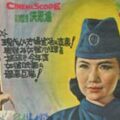
Hong Eun-won’s A Woman Judge examines a professional woman’s struggle against entrenched gender expectations in Golden Age Korea. Though tonally divided, the film remains a vital, forward-thinking work—made all the more significant as only the second Korean feature directed by a woman. [Read More]
Memoir of a Murderer (살인자의 기억법, 2017) review: unreliable memory, moral ambiguity
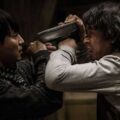
Director Won Shin-yeon takes Kim Young-ha’s story of an ex-serial killer suffering from dementia and successfully elicits both viewer sympathy for the character in his fight to retain his memories and indeed himself and empathy, to as much a degree as possible, for him in his battle against an even greater monster. [Read More]
One Day (어느날, 2017) review: a nuanced and affecting study of grief and abandonment
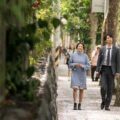
With One Day, director Lee Yoon-ki uses his almost trademark ability of showing characters’ innermost thoughts and emotions within outwardly simple stories to create an intelligent, nuanced and genuinely affecting tearjerker that deftly discusses abandonment, both perceived and actual. Understated performances and minimal special effects complement this classic melodrama. [Read More]
Lee Wan-min and Kim Sae-byuk interview: Jamsil — memory, feminism, and independent Korean cinema

Director Lee Wan-min discusses Jamsil’s use of colour, memory, fragmented time, feminism, and the realities of making independent films amid funding and industry barriers. Actress Kim Sae-byuk reflects on choosing meaningful stories, balancing independent and commercial work, and the collaborative relationship at the film’s core. [Read More]
Bae Chang-ho interview: censorship, change, and life stories in Korean cinema

Director Bae Chang-ho reflects on the evolution of his film-making career and developments in the industry and audience preferences. He discusses changes in his style, a focus on ordinary lives and love, collaborations with his wife Kim Yoo-mi, investor-driven constraints, and why his films’ sincerity was shaped by hardship rather than budget or freedom. [Read More]
Does the Cuckoo Cry at Night (뻐꾸기도 밤에 우는가, 1980) review: innocence, desire and a changing Korea

Jung Jin-woo’s classic film, following the idyllic but threatened lives of a charcoal maker and his wife, dissects themes of traditional versus modern Korea, while its veiled eroticism predates the more overt “Three S” cinematic period. Its use of cuckoo symbolism to reveal the protagonist’s tragic family legacy is inspired. [Read More]
Kang Yoon-sung interview: real crime, action and commercial storytelling

Director Kang Yoon-sung discusses The Outlaws, from its real-life origins and research-driven realism to stripped-back characterisation and action-led storytelling. He explains casting choices, humour and violence balance, colour-coded gangs, funding challenges, and how editing, choreography, and true stories shaped his approach to commercial Korean cinema. [Read More]
The Villainess (악녀, 2017) review: spectacular action, limited character depth

While the action set pieces of The Villainess are frankly incredible, a lack of character depth largely prevents the film from saying much thematically. The character of Sook-hee is certainly on a vengeance trip but she’s a person seeking revenge who just happens to female, rather than speaking specifically of female revenge in Korean cinema… [Read More]
Snowy Road (눈길, 2017) review: friendship, trauma and survival under the Japanese military

Originally a two-part television production, subsequently spliced together into a full length feature release, Snowy Road is a hugely emotional and indeed important story which uses social commentary to deftly create layer upon layer within an already in-depth and gripping narrative. [Read More]