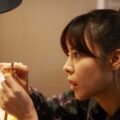
My Dear Girl, Jin-young deftly stands as one of the latest cinematic examples to show just how far the Korean Romantic Comedy genre has come over the years in its depictions of relationships, social issues and sexuality; the film’s intelligently realised themes beautifully wrapped up in a warm and genuinely funny, zombie filled tale. [Read More]
LKL articles by Hangul Celluloid (page 9)
An Atrocity (잔학기, 2013) review: blue pills and female revenge
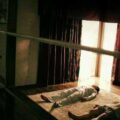
Despite its short running time, ‘An Atrocity’ not only easily stands alongside the majority of feature length Korean thrillers detailing female revenge but also by means of its female directed perspective serves as a much needed antithesis to recent male-created (and some would say misogynistic) cinematic offerings, while being portrayed in an equally brutal fashion. [Read More]
Dear Dictator (친애하는 지도자동지께, 2014) review: subverting the spy genre to expose South Korea’s invisible poverty
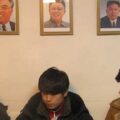
Even for those familiar with director Lee Sang-woo’s earlier work, ‘Dear Dictator’ is bleak to a level that is never an easy watch. However, this is a deeply thought provoking narrative that needs to be told; being a highly original take on the spy/espionage genre, in the process. [Read More]
Doctor (닥터, 2013) review: beautiful bodies, shame about the characters
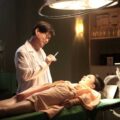
With ‘Missing’ having appeared to point to Kim Seong-hong as a director with a talent for realising visceral narratives in almost shocking but nonetheless gripping form, I was hopeful that ‘Doctor’ would further build his reputation within the horror genre. Sadly, ‘Doctor’ is indeed notable but for largely the wrong reasons. [Read More]
Go, Stop, Murder (고스톱 살인, 2013) review: murder through a mystical card game
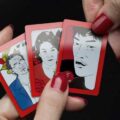
Go, Stop, Murder gives a highly original take on classic Korean Cinema ideas and themes; feeling refreshingly different while retaining an almost unconscious familiarity. An unashamedly low budget production that deftly uses its financial limitations to greatly strengthen an already intelligently written script. [Read More]
Blood and Ties (공범, 2013) review: family loyalty and a faltering moral thriller
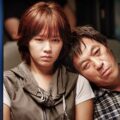
While ‘Blood and Ties’ tries to be an original take on a familiar narrative subject in its attempted dissection of familial ties, any chance of insightful commentary is marred by plot holes and predictably. Ultimately, the appearance and performances of Son Ye-jin and Kim Kap-soo are by far the strongest aspects of the film. [Read More]
Mourning Grave (소녀괴담, 2014) review: classic Korean horror with heart, humour and romance
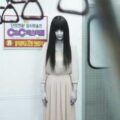
With ‘Mourning Grave’, director Oh In-chun extends his experience of blending horror and humour to include romance and melodrama; thereby not only fulfilling the almost requisite Korean cinema merging of love, loss and laughter elements in a single narrative but also resulting in the film feeling utterly classic, from the first frame to the last. [Read More]
Miss the Train (미성년, 2014) review: spirit, loss and the beauty of the journey
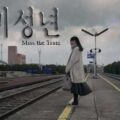
With its gently understated narrative realisation, ‘Miss the Train’ is at once a spiritual tale of destiny and a dream-like journey through love and loss, and though many will be able to anticipate its endpoint, in a film such as this the beauty and engagement of the journey itself takes precedence over any revelation at its destination. [Read More]
The Wicked (마녀, 2014) review: dark humour, shifting perceptions and creeping dread
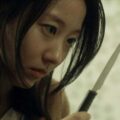
With the Korean horror genre having been somewhat in the doldrums recently – the majority of output (sadly) being rather predictable – ‘The Wicked’ comes as a breath of fresh air; refreshingly original at the same time as succeeding in being one of the most deeply creepy and wickedly humorous Korean horrors for some time… [Read More]
Seo Young-ju interview: Moebius and the power of silent performance

Actor Seo Young-ju reflects on growing from child roles into cinema-led work, favouring film over television for deeper character exploration. He discusses Juvenile Offender as a turning point, working with Kim Ki-duk on the dialogue-free Moebius, his attraction to challenging narratives, and ambitions for international acting opportunities. [Read More]
Chung Chung-hoon interview: cinematography, character and collaboration

Cinematographer Chung Chung-hoon outlines his character-driven approach to visuals, long-standing collaboration with Park Chan-wook, and balance between on-set craft and post-production. He discusses colour, contrast, technology, storyboards, working across Korea and Hollywood, and shaping imagery through drama, movement, and location. [Read More]
Thread of Lies (aka Elegant Lies) (우아한 거짓말, 2014) review: bullying, secrecy and the cost of silence

In focusing on the psychological aspects of bullying rather than the far more often seen examples of physical brutality, ‘Thread of Lies’ can delve far more deeply into the issue. An incredibly insightful and deeply poignant discussion of childhood persecution that feels utterly true to life, from start to finish. [Read More]
90 Minutes (90분, 2012) review: the price of entitlement
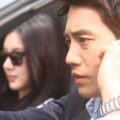
With its pulse-pounding, sexually-charged story detailing female retribution against a self-serving male guilty of flagrant sexual indiscretions and abuses, ’90 Minutes’ not only stands as an utterly gripping thriller but also serves to further the ongoing trend for depictions of strong women in Korean cinema as a whole. [Read More]
A Boy’s Sister (누나, 2013) review: rain, faith, and surrogate healing
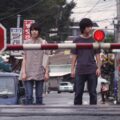
One moment moving and poignant, another brutal and difficult to watch, ‘A Boy’s Sister’ is ultimately a gripping depiction of deep-seated pain, guilt and blame and though, to my mind, one theme in particular is rather unnecessarily overstated, the film overall deftly succeeds in its goals. [Read More]
The Face Reader (관상, 2013) review: fate, power and intrigue in Joseon Korea

While The Face Reader could be said to have a somewhat simpler story overall than many of its Joseon era set contemporaries, its narrative is nonetheless as nuanced, multilayered and gripping as any; the sidestepping of any sexual/adult content serving to show that graphic sexual imagery is not a prerequisite for insightful drama. [Read More]
Park Hoon-jung interview: stories from real life

Park Hoon-jung discusses his approach to screenwriting and directing, prioritising story and character over genre, drawing inspiration from Korean society and politics, and embracing budget constraints. He reflects on violence, power structures, collaboration with directors, adapting scripts to actors, and the evolution of his craft from writer to filmmaker. [Read More]