
Director Jules Suo discusses developing Dosi from her short 528 New York, drawing on immigrant experience, multicultural New York life, and humanist cinema influences, while navigating independent production, casting across Korea and the US, and funding a first feature through Kickstarter. [Read More]
LKL articles by Hangul Celluloid (page 11)
Snowpiercer (설국열차, 2013) review: class revolt, power and survival at the end of the world

Based on the French graphic novel ‘Le Transperceneige’, ‘Snowpiercer’ can equally be viewed as an analogy to and critique of real world oppression; a hero’s journey in classic Monomyth style; or simply a gripping and exciting rollercoaster ride of entertainment. Snowpiercer will leave you both exhilarated and breathless. [Read More]
Choi Min-sik interview: “I don’t like the hammer”

Choi Min-sik reflects on screen quotas and cultural diversity, his director-led approach to choosing roles, and portraying extreme characters through empathy. He discusses violence as social commentary, collaboration with auteurs, international work, historical roles, actor responsibility, and sustaining Korean cinema beyond commercial imperatives. [Read More]
Sprout (콩나물, 2013) review: a young child’s first solo exploration

The warmth, depth and meaning with which Yoon Ga-eun so successfully infuses this gentle, sweet and simple tale not only clearly shows her sheer talent as a director and storyteller but also deftly underlines how beautiful Korean cinema truly can be. [Read More]
Antique Bakery (서양 골동 양과자점 앤티크, 2008) review: a pleasing millefeuille of genres

Initially appearing to simply be a warm and genuinely funny comedy that gently details themes of sexuality and acceptance, Antique Bakery nonetheless quickly proves itself to be so much more; deftly accenting numerous genres along its ultimately cathartic path. [Read More]
Hope (aka Wish) (소원, 2013) review: finding humanity and healing in the aftermath of unthinkable trauma

A devastating yet profoundly humane drama, Hope focuses on a young girl’s journey towards physical and emotional recovery after unimaginable trauma. Director Lee Joon-ik balances heartbreak with compassion, crafting a deeply moving film anchored by an astonishing, career-defining performance from child actress Lee Re. [Read More]
Norigae (노리개, 2013) review: power, abuse and a damning indictment of justice

Inspired by true-life tales of the sexual coercion and abuse of celebrity figures in Korea, ‘Norigae’ was guaranteed to be both controversial and shocking. It tells a story that desperately needed to be told and points an accusing finger at the free rein often afforded to the powerful at the expense of the vulnerable. [Read More]
Melo (멜로, 2012) review: love, paranoia, and the dark side of devotion

While ‘Melo’ is on the surface a dark tale of love, sex and trust (or the lack thereof) told largely through a young woman’s perspective, it also serves as a dissection of selfishness and self-perception; ultimately detailing the twisted path down which personal need placed above all else can lead. [Read More]
Miss Longlegs (키다리 아가씨, 2012) review: seeing the women behind the glass

Miss Longlegs is, at its core, a simple story but one which is also deceptively so and, like the characters themselves, its underlying depth is far, far greater than that assumed from a cursory glance. Ultimately, what Miss Longlegs deftly states will stay with you almost infinitely longer than its 21-minute running time. [Read More]
Perfect Number (용의자X, 2012) review: a nuanced Korean reimagining of a Japanese thriller

Based on the best-selling novel ‘The Devotion of Suspect X’ by Keigo Higashino, ‘Perfect Number’ asks what one man is prepared to do for love. An in-depth yet nuanced thriller at its core and a romance in part, ‘Perfect Number’ ultimately answers the question of whether heart or mind will win in a battle between the two. [Read More]
Azooma (공정사회, 2012) review: a gritty if unbalanced critique of social injustice and patriarchal apathy

At its core, Azooma is a critique of Korean society at large, a dissection of injustices in the name of procedure, and lingering patriarchy. But the decision to focus the narrative culmination on suddenly chosen revenge, almost as catharsis, leaves Azooma teetering between being an overly rushed revenge genre film and an insightful dramatic thriller. [Read More]
Min Byung-woo interview: cinema on a smartphone

Director Min Byung-woo discusses creating Cats and Dogs, Korea’s first feature-length smartphone film, blending romance with animal metaphors, using animation and webtoons, and the possibilities iPhone filmmaking offers independent cinema amid industry and budget constraints. [Read More]
My P.S. Partner (aka Whatcha Wearin’, 나의 P.S. 파트너, 2012) review: redefining the Korean rom-com
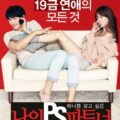
My P.S. Partner is as warmly romantic as any love story of recent years, as genuinely funny as almost any comedy you care to mention, and as sexy (and naughty) as any real-life relationship should be. Frank and groundbreaking in concept, but also comfortably genre-familiar, My P.S. Partner is the romantic comedy of 2012, period [Read More]
Lovable (다슬이, 2011) review: art, autism, and wonder

An utterly exquisite, poignant and ultimately uplifting film – told largely from a child’s perspective – telling the tale of a little girl’s love for a snowman. Lovable deftly strips away the veil of illness to show how intelligent, creative and inspiring autistic children truly can be. [Read More]
Kim Joo-il interview: a defector reflects on life in the North and on cinematic realities

Kim Joo-il reflects on his defection from North Korea and critiques South Korean cinema’s “distorted” portrayals of the North. He details the absence of concepts like “human rights” under state brainwashing, advocates for refugee status for defectors in China, and describes North Korean film as a tool for regime-led propaganda and psychological indoctrination. [Read More]
Ryoo Seung-wan interview: stars, spies and a divided city

Ryoo Seung-wan discusses star power, casting strategy and realism in The Berlin File, explaining Berlin’s symbolism as a divided city, his action-scene preparation, views on foreign markets, writing habits, limited interest in Hollywood, genre influences, and balancing commercial filmmaking with personal priorities. [Read More]