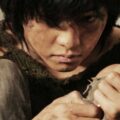
A Werewolf Boy blends romance, fantasy and Korean melodrama into a warm, gently told story of love and otherness. While beautifully shot and anchored by strong performances, its familiar themes and uneven characterisation prevent it from fully transcending genre conventions, making the film more sweet than truly heartbreaking. [Read More]
LKL articles by Hangul Celluloid (page 13)
The Concubine (후궁: 제왕의 첩, 2012) review: power, desire and matriarchal control in Joseon Korea

A sumptuous and erotically-charged period drama, both visually and in terms of narrative content, and playing with themes of patriarchy and a domineering mother as well as a volatile love triangle, ‘The Concubine’ is every bit as gripping as it is intricate; as involving as it is involved. [Read More]
Choo Chang-min and Ryoo Seung-ryong interview: Masquerade – history with a modern voice

Director Choo Chang-min and actor Ryoo Seung-ryong discuss their involvement in Masquerade, exploring the appeal of period drama, the story’s modern relevance, casting well-known and emerging actors, artistic freedom, and the different challenges posed by physically demanding versus more restrained roles. [Read More]
Lee Byung-hun interview: “if you were a king, what would you do?”

Lee Byung-hun reflects on the appeal of Masquerade’s politically open-ended story, balancing humour with seriousness, and the challenges of acting across cultures in Hollywood. He discusses star power versus emerging talent, the value of criticism, and why Korean language and culture remain his strongest creative foundation. [Read More]
Director Jung Ji-woo interview: aging, desire and society in Eungyo

Director Jung Ji-woo discusses EunGyo as a way to explore unspoken desires, aging, and social restraint in Korea. He reflects on empathy, casting authenticity, adaptation from literature and manhwa, creative freedom, working with actors, and how human difference and collision drive his filmmaking. [Read More]
Kim Yoon-suk interview: from The Chaser to The Thieves

Kim Yoon-suk discusses his decision to focus exclusively on film, his collaborations with Na Hong-jin, and the appeal of socially grounded, hardcore thrillers. He reflects on the demands of The Thieves, the limits of TV drama production, and why intense genre films travel more easily than Korean comedy on the international stage. [Read More]
Choi Dong-hoon interview: “a genius storyteller”
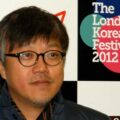
Director Choi Dong-hoon discusses his move from acting to full-time directing, his approach to genre cinema, and why character matters more than message. He explains the creative choices behind The Thieves, casting Jeon Ji-hyun and Kim Hye-soo, working beyond heist films, and balancing Korean stories with growing international audiences. [Read More]
Im Kwon-taek interview: tradition, social norms, and a life in Korean cinema
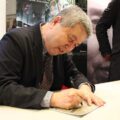
Im Kwon-taek reflects on depicting women’s suffering, Confucian traditions, and communal rituals in Korean society. He discusses pansori and cultural transmission, artistic freedom, life experience as the basis of filmmaking, his long career of 101 films, and his belief that Korean cinema evolves alongside national history. [Read More]
Crocodile (악어, 1996) review: Kim Ki-duk’s brutal debut on the banks of the Han River
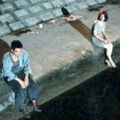
Kim Ki-duk’s debut feature, ‘Crocodile’ points to themes, narrative elements and directorial style that would become his trademarks over the years. A gripping story, both because of and despite its violence, Crocodile is a must for those who wish to see the early, burgeoning talent of one of Korea’s most controversial directors. [Read More]
Helpless (화차, 2012) review: love, lies and disappearance

A deftly layered mystery thriller with depth, Helpless initially appears as the story of one man’s desperate search for his missing fiancée, gradually morphing to detail the myriad of lies his wife-to-be has told, with the “why” being every bit as important as the wherefore. [Read More]
In Between Days (방황의 날들, 2006) review: frozen landscapes, tangled emotions

A meditative and thought-provoking film set in snowy Northern Canada which charts the inner turmoil of a girl struggling to come to terms with a new life in a new country, and navigating her changing feelings. In Between Days is beautifully filmed, superbly acted and expertly realised. [Read More]
Jeon Kyu-hwan interview: marginal lives, independent filmmaking, creative survival

Director Jeon Kyu-hwan discusses realism and graphic content, his focus on marginalised lives, and the making of low-budget films outside Korea’s commercial system. He reflects on creative independence, financial precarity, narrative experimentation, the Town trilogy, and his belief that cinema must embrace diversity beyond standardised genres. [Read More]
Lies (거짓말, 1999) review: exploring the boundaries of consent and control

An affair between an 18-year-old girl and a married older man escalates into increasingly extreme sexual territory. Uncomfortably explicit, Lies mixes voyeuristic techniques and discomforting narrative with moments of confrontational humour and fragments of meta-cinema to produce a film that is both difficult to watch and hard to turn away from. [Read More]
Man of Vendetta (파괴된 사나이, 2010) review: respectable thriller, shame about the title
While “race against time” thrillers are two-a-penny in almost any culture, not least South Korean cinema, Man of Vendetta nonetheless manages to supplant expectations on several occasions and, thankfully, steers clear of any forced upbeat moments and saccharine segments to allow for some genuine unpredictability and gravitas to be displayed. [Read More]
A Moment (모멘트, 2010) review: a haunting exploration of karma, perception and retribution
A Moment is easily as topical today as it was when it was made in 2010, and considering recent news stories from China, perhaps even more so. A dark and twisted tale which resolutely shows that an action taken in a single moment can ultimately change the lives of all concerned, irrevocably. [Read More]
Han Yeo-reum interview: Samaria, The Bow, and working with Kim Ki-duk

Actress Han Yeo-reum discusses her path into acting, roles in Kim Ki-duk’s Samaria and The Bow, performing without dialogue, female sexuality on screen, and working across film and television. She also explains her approach to controversial projects, international recognition, and selecting roles based on story, character, and collaborators. [Read More]