
While Architecture 101 covers territory similar to that seen in a plethora of incredibly well known Korean films it nonetheless manages to stand as a worthy addition to the romantic drama genre, rather than simply appearing as a derivation, as a result of the genuine beauty and believability of its gently affecting tale. [Read More]
LKL articles by Hangul Celluloid (page 14)
Director Lee Yoon-ki interview: intimate storytelling

Lee Yoon-ki discusses his unconventional path into filmmaking, his focus on quiet, time-compressed stories of relationships, and adapting short fiction. He explains his actor-centred working methods, restrained use of music, influences from American indie cinema, funding challenges for non-commercial films, and his view of cinema as a universal language. [Read More]
Leafie – A Hen into the Wild (마당을 나온 암탉, 2011) review: a hen with a heart
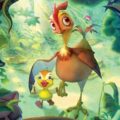
Beneath its gentle humour and warmth, Leafie explores outsiderhood, family, selfless love, and sacrifice, building toward a quietly heartbreaking yet uplifting conclusion that resonates with both children and adults. Disney once asked viewers to believe that an elephant can fly. With Leafie, you’ll believe that a hen has a heart, and a beautiful one at that. [Read More]
A Reason to Live (오늘, 2011) review: faith, forgiveness and the limits of healing

While A Reason to Live should be commended for its attempt to dissect so many serious social, and even philosophical, issues within its narrative, its overuse of rather predictable clichés, contrived plot catalysts and its somewhat laboured pace detract from what would otherwise have been a worthy, cerebral story. [Read More]
Actresses (여배우들, 2009) review: mockumentary fiction and celebrity reality

Set during a stalled Vogue photo shoot, Actresses observes six Korean stars across generations as boredom gives way to rivalry, confession and self-exposure. Described by director E J-yong as “a combination of reality show and fake documentary”, Actresses surely contains some truth hidden alongside the scripted scenes. [Read More]
Lee Hyeon-seung interview: feminism, symbolism and genre experimentation in Korean cinema

Lee Hyeon-seung discusses subconscious symbolism in Il Mare, feminism and female-centred narratives, sexuality and gender politics, and the expressive use of colour. He reflects on genre experimentation, global consciousness, industry constraints, and his return to directing with Hindsight as a blend of romance, action, and generational dialogue. [Read More]
Yi Seung-jun interview: different ways of feeling the world

Director Yi Seung-jun discusses Planet of Snail, his documentary on a deaf-blind man and his wife, focusing on alternative forms of communication, shared loneliness, love, and everyday life. He also addresses filmmaking beyond pity, differences between TV and cinema documentaries, and his ongoing work with unseen minorities. [Read More]
Planet of Snail (달팽이의 별, 2011) review: love, interdependence and life beyond disability
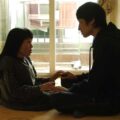
A deeply touching and poignant documentary presenting a window into the life, and world, of a gentle man who has become deaf-blind, Planet of Snail is ultimately far more a story of the strength of the human heart than of the weakness of the human body. [Read More]
Searching for the Elephant (펜트하우스 코끼리, 2009) review: overburdened by excess
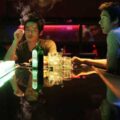
A strong narrative storyline is sadly marred by overly stylised visuals and direction that largely feels forced and predictable. While certainly not a total waste, Searching for the Elephant is ultimately far less than the gripping, explicit thriller it so easily could, and should, have been. [Read More]
Desire to Kill aka Enemy at the Dead End (죽이고 싶은, 2010) review: quirky revenge in a hospital ward
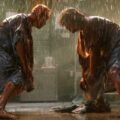
Desire to Kill references some fairly serious social themes within a quirky and genuinely funny black comedy cum psychological thriller, accenting and underlining each with copious amounts of bloody violence throughout. Just don’t, whatever you do, be so lazy as to compare it to Oldboy. [Read More]
Jeon Kye-soo group interview: from cult beginnings to box office success
In this wide-ranging interview, director Jeon Kye-soo reflects on his unconventional path from philosophy and theatre to cinema, his genre-blending debut Midnight Ballad for Ghost Theatre, mythological influences, musical inspiration, and the evolution of his work through Love Fiction and beyond. [Read More]
Lim Woo-seong interview: adapting Han Kang’s inner worlds for the screen

Director Lim Woo-seong discusses adapting Han Kang’s writing for Vegetarian and Scars, exploring trauma, patriarchal violence, desire, religion, and inner conflict. He explains visual strategies, working with actors, sexuality on screen, and portraying psychological wounds that shape identity and relationships. [Read More]
Mother is a Whore (엄마는 창녀다, 2009) review: a bleak reversal of family and moral appearances

With its intelligently written and deftly executed narrative, Mother is a Whore (written and directed by, and starring Lee Sang-woo) serves not only as a searing, bleak and unsettling tale but also as an in-depth critique of the concept of family. [Read More]
Castaway on the Moon (김씨 표류기, 2009) review: isolation, hope and black bean noodles
Castaway on the Moon combines social commentary with one of the warmest and gently funny narratives of recent memory to create what can only be described as a classic piece of Korean cinema. Only inspired filmmaking could make you believe that there is hope to be found at the bottom of a packet of black bean noodles [Read More]
Chilling Romance (aka Spellbound) (오싹한 연애, 2011) review: love, laughs and long-haired ghouls

A film that uses classic romantic comedy narrative ideas and combines them beautifully with humorous homages to, and parodies of, well know Asian horror movies, Chilling Romance, starring Son Ye-jin, may only be light-hearted entertainment at its core but entertaining it is, all the same. [Read More]
Song Il-gon – interview: from serious cinema to stories everyone can feel

Director Song Il-gon reflects on his journey from philosophical, existential cinema to more audience-focused storytelling. In this group interview, he discusses funding struggles, changing film philosophies, the balance between art and accessibility, and how music, travel, and emotion continue to shape his work. [Read More]