
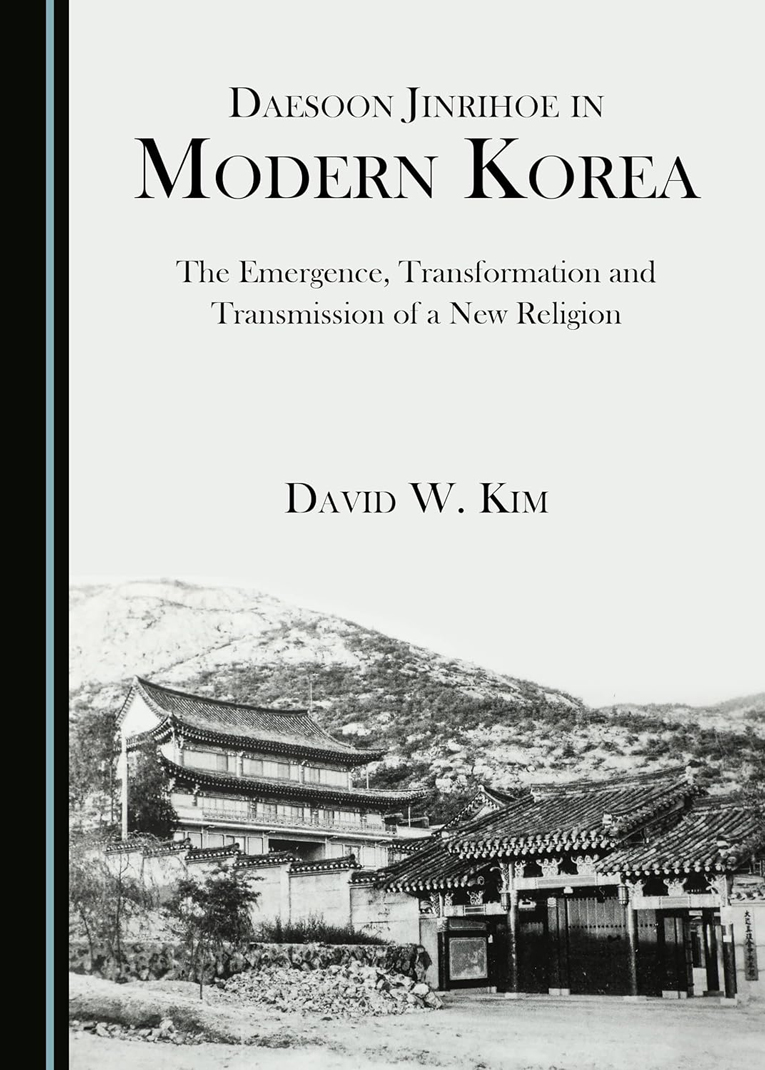
Author: David W Kim
Publisher: Cambridge Scholars, 2020
Link to online store *
East Asian nations shared a similar environment of modernisation in the nineteenth and early twentieth centuries. None had been colonised under Western imperialism, but all of them commonly became subjected to new authorities, whether directly or indirectly. This change of the political landscape also challenged religious communities, as many new religious movements (NRMs) emerged to satisfy the spiritual needs of local people in overcoming the hardship of transition. This book presents the unique case of a native Korean NRM which successfully survived, transformed, and was transmitted even into contemporary society. Among Donghak (later called Cheondogyo), Daejonggyo, and Wonbulgyo, the history of Daesoon Jinrihoe derived from the Jeungsan movement is explored here in the context of functionalism, even though the perspectives of religious philosophy and personal experiences are also regarded for the receptive and syncretic relationship with other groups. The book offers significant insight that conservative nationalistic NRMs can still survive in a digital era, rather than disappear after the death of their founders.
David W. Kim, PhD, is an Associate Professor of Asian History at the College of General Education of Kookmin University, South Korea, and a Visiting Fellow at the School of History of the College of Arts and Social Sciences at the Australian National University, Canberra. He is the Editor for Bloomsbury Studies in East Asian Religion, and is the author of Colonial Transformation and Asian Religions in Modern History (2018), Religious Encounters in Transcultural Society: Collision, Alteration and Transmission (2017), Religious Transformation in Modern Asia: A Transnational Movement (2015) and Intercultural Transmission in the Medieval Mediterranean (2012).
Source: publisher’s website