
In his poetry collection, Flatfish, Moon Tae-jun offers an aesthetic that emphasizes the author’s exploration of the inner self. At times sparse and allusive, his poems use blank space and other stylistic considerations to convey a voice and thought that ranges from the contemplative to the surreal and absurd. Moon’s poems suggest Buddhist ideologies, natural images, … [Read More]

Archives: Books (page 16)
No Hand Held Mine
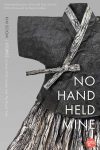
An elderly Korean woman talking about being forced into sexual slavery during World War II. A modern Korean woman extricating herself from a failing relationship with an artist. Award-winning South Korean writer Kim Soom presents us with portraits of two women who couldn’t be more different but who both show resilience and compassion. No Hand Held … [Read More]
Island Ablaze and Other Stories
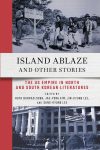
Island Ablaze and Other Stories is an anthology of thirteen stories—eleven from South Korea and two from North Korea—about their complicated relationships with their most important ally and enemy: the United States. Set in times ranging from colonial Korea to the new millennium, these stories offer a look into the many ways that the US empire shapes … [Read More]
Yun Dong-ju: A Critical Biography

Historian and novelist Song WooHye chronicles the life of Yun Dong-ju (1917-1945), one of the most beloved and important poets in the modern Korean literary canon, widely considered Korea’s “National Poet”. Beginning with the history of the North Gando region (now Yanbian, China), where Yun was born, and ending with facts behind the publication of … [Read More]
Art on Fire
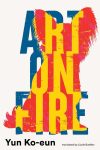
A darkly humorous and compelling satire of the art world from the author of The Disaster Tourist. An Yiji’s career had been stalling for some time when a representative of the illustrious Robert Foundation offers her a spot on their all-expenses-paid artist residency in California. The residency has launched many famous artists’ careers, so she knows … [Read More]
Perfect Happiness
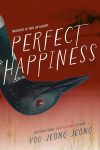
In this propulsive thriller, master of crime and suspense fiction You-Jeong Jeong, author of The Good Son, takes us to the Korean countryside in a domestic nightmare centered around the life and goals of Yuna Shin: wife, mother, sister–and covert narcissist. Everyone in Yuna’s life knows to tread carefully in her presence. Her husband dreads the … [Read More]
Lyrical Translation: The Creation of Modern Poetry in Colonial Korea

Lyrical Translation is a literary history of modern Korean poetry’s origins and its development through translation. As the use of Korean became increasingly restricted during the Japanese occupation, translation was not a choice but a necessity for higher education and intellectual labor. Yet it also had an expansive, creative function: Korean poets wielded it as an … [Read More]
Petty Lies

For readers who revelled in the toxic obsession of Butter and the addictive horror of Bat Eater Dear Jiwon, I’m writing to you regarding the murder of your son… Revenge is perhaps best served by letter. But letters get answered. And when a young tutor takes up the pen to write to her former employer … [Read More]
Failed Summer Vacation

“This summer vacation is not a complete failure quite yet – there’s still a lot left we can ruin.” The debut collection of genre-defying short stories from the Korean Literature and Society’s New Writer Award. Seven diversely wild and gripping stories – dreamy, dark, lyrical and wry – that expose the oddness of how we … [Read More]
Present Tense Complex

The poems in this fearless debut, which entangle themes of identity, family, gender, and landscape, are gorgeous, elliptical, and delightfully strange. “Her softening grip of reality. / As if capsized, hull forced into the cold / current, she was out of the blue beautiful. // No more cranes akimbo in the midst of poems / … [Read More]
A Twist of Fate
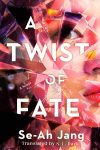
Two women meet on a train. Each is running from a deadly secret. When one disappears, the other decides to take her place—for better, or for worse. Jae-Young has just left everything she’s ever known, not that it was much: her thankless job, her infested apartment, and her abusive boyfriend—who happens to be dead on … [Read More]
Bong Joon Ho
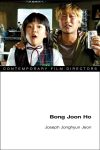
Successful cult films like The Host and Snowpiercer proved to be harbingers for Bong Joon Ho’s enormous breakthrough success with Parasite. Joseph Jonghyun Jeon provides a consideration of the director’s entire career and the themes, ambitions, techniques, and preoccupations that infuse his works. As Jeon shows, Bong’s sense of spatial and temporal dislocations creates a hall of mirrors that challenges … [Read More]
Bong Joon Ho: Philosopher and Filmmaker
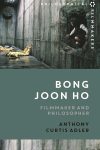
With the release of Parasite (2019), recipient of the Palme d’Or and an Academy Award for Best Picture, South Korean director Bong Joon Ho secured his place as one of his generation’s leading filmmakers. Yet while scholars and critics have long appreciated his penetrating critique of Korean society and global capitalism, his oeuvre has not … [Read More]
Korean Culture in the Global Age: K-Pop, K-Drama, K-Film, and K-Literature
Since the late 1990s, South Korean cultural products such as pop music, TV drama, and film have shaped the country’s image around the world. This book explores these three internationally best-known media of the Korean Wave global phenomenon, along with a less commonly featured aspect, K-literature. Iconic images of South Korea today include stylish music … [Read More]
Rebranding North Korea: Changes in Consumer Culture and Visual Media

“Everything for the people, everything according to the people!” —Kim Jong Un Under Kim Jong Un, North Korea has undertaken significant efforts to elevate the standard of living for its citizens. This shift has led to notable advancements in production and the quality of visual media, teaching North Koreans the “language” of consumerism and new … [Read More]
The Invention of a Language of Emptiness: The “Chojang chungga-ŭi,” the Earliest Korean Exposition of Buddhism

This volume is the first annotated translation in any language of the “Chojang chungga-ŭi” (The Meaning of the “Middle” and the “Provisional” in the “First Stanza”), a little-known text that yielded considerable influence on early East Asian Buddhism. It corresponds to the first chapter of the Taesŭng saron hyŏnŭi ki (Notes on the Four Treatises[, belonging to … [Read More]