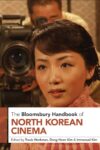
This first handbook on North Korean cinema contests the assumption that North Korean film is “unwatchable,” in terms of both quality and accessibility, refusing to reduce North Korean cinema to political propaganda and focusing on its aesthetic forms and cultural meanings. Since its founding in 1948, the Democratic People’s Republic of Korea (North Korea) has … [Read More]

Archives: Books (page 24)
To the Kennels, and other stories

An acclaimed story collection from the author of the Shirley Jackson Award–winning novel The Hole Six elephants bolt from an amusement park and vanish; where they’re found brings back memories of a forgotten dictator. A car ride on a foggy highway at night becomes a drive through hell for a young couple getting away for the … [Read More]
Shooting for Change: Korean Photography after the War

In Shooting for Change, Jung Joon Lee examines postwar Korean photography across multiple genres and practices, including vernacular, art, documentary, and archival photography. Tracing the history of Korean photography while considering what is disguised or lost by framing the history of photography through nationhood, Lee considers the role of photography in shaping memory of historical events, … [Read More]
Civic Activism in South Korea: The Intertwining of Democracy and Neoliberalism

In recent decades, neoliberalism has transformed South Korean society, going far beyond simply restructuring the economy. In response, a number of civic organizations that emerged from the democratization movement with a conscious emphasis on social change have sought to address socioeconomic and political problems caused or aggravated by the neoliberal transformation. Examining how “citizens’ organizations” … [Read More]
Grocery List

In Grocery List, the Korean writer Bora Chung reimagines the ghost story as a chilling tale of intimacy with appetite. The dividing lines of reality and thoughtforms blur as Chung takes on the ever-timely subject of food consciousness. Cutting and evocative, Grocery List is a feast for eaters of all kinds. Born in Seoul, Bora Chung is a distinct new … [Read More]
Korean Political and Economic Development: Crisis, Security, and Institutional Rebalancing
How do poor nations become rich, industrialized, and democratic? And what role does democracy play in this transition? To address these questions, Jongryn Mo and Barry R. Weingast study South Korea’s remarkable transformation since 1960. The authors concentrate on three critical turning points: Park Chung Hee’s creation of the development state beginning in the early … [Read More]
Park Chung-Hee: From Poverty to Power
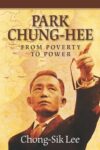
How do we explain Park Chung-Hee’s determination to push through the coup d’état in 1961 and the modernization programs afterward? How did his family’s poverty and his experiences in Manchuria, Japan, and China affect his later career as South Korea’s leader? How would he have answered his critics’ charge that he was a pro-Japanese collaborator … [Read More]
The Korean Workers’ Party: A Short History

The Korean Workers’ Party is the first in a new Hoover Institution Press series on the histories of the sixteen ruling communist parties from their inception to the present time. Dr. Chong-Sik Lee, a distinguished Asian scholar, accepted an invitation by the Hoover Institution to write a short history of the Korean Communist movement as … [Read More]
Comfort Women of the Japanese Empire: Colonial Rule and the Battle over Memory
This is an important and controversial book, hitherto available only in Korean, Japanese and Chinese, a book which has been subject to court cases attempting to have some parts of the book deleted. The author reconsiders the issue of the “comfort women”, that is the Korean women who were compelled to provide sexual comfort to … [Read More]
Buddhism, Digital Technology and New Media in Korea: Ŭisang’s Ocean Seal Diagram

Buddhism, Digital Technology and New Media in Korea introduces Ŭisang (625-702), a seminal figure in East Asian religion who founded the Korean Hwaŏm school of Buddhism from various angles and placing his thought in the interdisciplinary and transcultural context of the twenty-first century. The book presents and analyses the scope of Ŭisang’s teachings in Korean … [Read More]
The Postdevelopmental State: Dilemmas of Economic Democratization in Contemporary South Korea

Examining the struggle to align high-growth economic models with the egalitarian promises of democracy. Over the last 25 years, South Korea has witnessed growing inequality due to the proliferation of non-standard employment, ballooning household debt, deepening export-dependency, and the growth of super-conglomerates such as Samsung and Hyundai. Combined with declining rates of economic growth and … [Read More]
Critically Capitalist: The Spirit of Asset Capitalism in South Korea
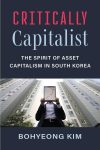
An ethnography of South Korea’s lay investors and aspiring millionaires that demonstrates how South Korea’s capitalism thrives on its critiques. Critically Capitalist presents an ethnography of South Korea’s asset seekers, including amateur stock investors, real estate enthusiasts, and money coaches, to demonstrate how financialized asset capitalism is sustained. As they hunt for profit margins, rent, and … [Read More]
The Language of Hallyu: More than Polite

The Language of Hallyu will re-examine the language of the Korean Wave by looking at popular K-content. In doing so, it will expose the meanings that get lost in translation, hidden under subtitles. Over the past decade, hallyu (the Korean wave) has exploded in popularity around the globe. K-films, K-drama, and K-pop were once small subcultures, known mostly … [Read More]
The Korean War Novel: Rewriting History from the Civil War to the Post-Cold War

Uncovers how historical novels rewrite the history of the Korean War Revisits the Korean War and the Korean War novels from a post-Cold War perspective of decolonisation Examines the dual role of East Asians as both victims and agents of the Cold War Recovers previously hidden dimensions of the conflict, including its framing as a … [Read More]
Chunja’s Nanjing
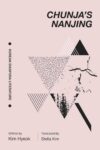
Chunja’s Nanjing explores in depth the tragic events of the 1930s dubbed the “Tragedy in Deer Valley” in Jiandao, a historical border region along the north bank of the Tumen River in China’s Jilin Province with many ethnic Koreans, in the beginning of the novel and the “Rape of Nanjing” in Nanjing, China, at the … [Read More]
Korean Art Since 1945: Challenges and Changes

Over the past decades, Korea has gradually risen to become one of the global representatives of Asian culture. Korean artists have been increasingly active at an international level, with many being invited for residencies and exhibitions all over the world. Nonetheless, for various reasons, the general understanding of Korean contemporary art remains insufficient. Although a … [Read More]