
From the publisher’s website: Converging theory and practice, this book provides a unique analysis of Korean youth’s attempts to become global celebrities within the growing K-pop phenomenon, which is rapidly becoming part of global media systems and culture. K-pop has become one of the most popular cultural forms in the global music markets, despite having … [Read More]

Archives: Books (page 82)
Korean Culture Dictionary: From Kimchi To K-Pop And K-Drama Clichés
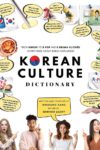
From the publisher’s catalogue: Before reading this book, you probably had some moments of curiosity in your life where you questioned certain things about Korean culture. Why is there a Pepsi logo on the Korean flag? Why do Korean kids in my class only have like… three last names (Kim, Lee, Park)? If you are … [Read More]
K-Pop Confidential

From the publisher’s website: A Korean-American girl travels to Seoul in hopes of debuting in a girl group at the same K-pop company behind the most popular boy band on the planet, in this romantic coming-of-age novel perfect for K-pop fans everywhere! Candace Park knows a lot about playing a role. For most of her … [Read More]
The Korean Buddhist Empire: A Transnational History, 1910–1945

From the publisher’s website: In the first part of the twentieth century, Korean Buddhists, despite living under colonial rule, reconfigured sacred objects, festivals, urban temples, propagation—and even their own identities—to modernize and elevate Korean Buddhism. By focusing on six case studies, this book highlights the centrality of transnational relationships in the transformation of colonial Korean … [Read More]
Empire of the Dharma: Korean and Japanese Buddhism, 1877–1912

From the publisher’s website: Empire of the Dharma explores the dynamic relationship between Korean and Japanese Buddhists in the years leading up to the Japanese annexation of Korea. Conventional narratives cast this relationship in politicized terms, with Korean Buddhists portrayed as complicit in the “religious annexation” of the peninsula. However, this view fails to account for … [Read More]
The Real Modern: Literary Modernism and the Crisis of Representation in Colonial Korea

From the publisher’s website: The contentious relationship between modernism and realism has powerfully influenced literary history throughout the twentieth century and into the present. In 1930s Korea, at a formative moment in these debates, a “crisis of representation” stemming from the loss of faith in language as a vehicle of meaningful reference to the world … [Read More]
From Domestic Women to Sensitive Young Men: Translating the Individual in Early Colonial Korea
From the publisher’s website: The notion of the individual was initially translated into Korean near the end of the nineteenth century and took root during the early years of Japanese colonial influence. Yoon Sun Yang argues that the first literary iterations of the Korean individual were prototypically female figures appearing in the early colonial domestic novel—a genre … [Read More]
Translation’s Forgotten History: Russian Literature, Japanese Mediation, and the Formation of Modern Korean Literature
From the publisher’s website: Translation’s Forgotten History investigates the meanings and functions that translation generated for modern national literatures during their formative period and reconsiders literature as part of a dynamic translational process of negotiating foreign values. By examining the triadic literary and cultural relations among Russia, Japan, and colonial Korea and revealing a shared sensibility … [Read More]
Between Dreams and Reality: The Military Examination in Late Chosŏn Korea, 1600-1894
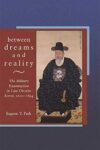
From the mid-seventeenth to the mid-nineteenth century, millions of Korean men from all walks of life trained in the arts of war to prepare not for actual combat but to sit for the state military examination (mukwa). Despite this widespread interest, only for a small minority did passing the test lead to appointment as a … [Read More]
The Proletarian Wave: Literature and Leftist Culture in Colonial Korea, 1910–1945
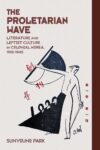
From the publisher’s website: Socialist doctrines had an important influence on Korean writers and intellectuals of the early twentieth century. From the 1910s through the 1940s, a veritable wave of anarchist, Marxist, nationalist, and feminist leftist groups swept the cultural scene with differing agendas as well as shared demands for equality and social justice. In The … [Read More]
A History of the Early Korean Kingdom of Paekche, together with an annotated translation of The Paekche Annals of the Samguk sagi
From the publisher’s website: This volume presents two histories of the early Korean kingdom of Paekche (trad. 18 BCE–660 CE). The first, written by Jonathan Best, is based largely on primary sources, both written and archaeological. This initial history of Paekche serves, in part, to introduce the second, an extensively annotated translation of the oldest history … [Read More]
The Dynamics of Confucianism and Modernization in Korean History

From the publisher’s website: This volume makes available for the first time in English a collection of the work of historian Yi Tae-Jin. Over the course of his career, he has done path-breaking research that covers virtually the entire Chosōn period (1392–1910) from the Koryō-Chosōn transition to the Kojong period and Korea’s takeover by Japan … [Read More]
State and Society in Contemporary Korea
This book moves beyond narrow economic concerns to explore spheres of civil society which have been neglected in the literature on economic development. Each chapter highlights a distinct pattern of Korean modernization, and the book covers such topics as emerging classes, historical sources of political cleavages, institutional bases of development policies, the rise of the … [Read More]
Populist Collaborators: The Ilchinhoe and the Japanese Colonization of Korea, 1896–1910
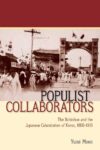
An empire invites local collaborators in the making and sustenance of its colonies. Between 1896 and 1910, Japan’s project to colonize Korea was deeply intertwined with the movements of reform-minded Koreans to solve the crisis of the Choson dynasty (1392–1910). Among those reformers, it was the Ilchinhoe (Advance in Unity Society)—a unique group of reformers … [Read More]
Under the Black Umbrella: Voices from Colonial Korea, 1910–1945
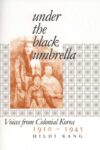
In the rich and varied life stories in Under the Black Umbrella, elderly Koreans recall incidents that illustrate the complexities of Korea during the colonial period. Hildi Kang here reinvigorates a period of Korean history long shrouded in the silence of those who endured under the “black umbrella” of Japanese colonial rule. Existing descriptions of the … [Read More]
The Massacres at Mt. Halla: Sixty Years of Truth Seeking in South Korea

From the publisher’s website: In The Massacres at Mt. Halla, Hun Joon Kim presents a compelling story of state violence, human rights advocacy, and transitional justice in South Korea since 1947. The “Jeju 4.3 events” were a series of armed uprisings and counterinsurgency actions that occurred between 1947 and 1954 in the rugged landscape around Mt. … [Read More]