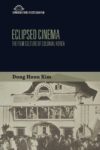
From the publisher’s website: A ground-breaking investigation into the film culture of colonial Korea In this pioneering investigation into the seldom-studied film culture of colonial Korea (1910-1945), Dong Hoon Kim brings new perspectives to the associations between colonialism, modernity, film historiography and national cinema. By reconstructing the lost intricacies of colonial film history, Eclipsed Cinema … [Read More]

Archives: Books (page 95)
Korean Horror Cinema
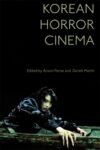
From the publisher’s website: The first detailed English-language book on Korean horror introduces the cultural specificity of the genre to an international audience, from the iconic monsters of gothic horror, to the avenging killers of Oldboy and Death Bell. Beginning in the 1960s, it traces a path through the history of Korean horror, offering new … [Read More]
New Korean Cinema
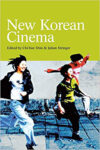
From the publisher’s website: A wide-ranging analysis of one of the world’s most important contemporary film industries Provides new insights into the relations forged between cinema and civil society since the early 1990s Considers innovative and timely areas of concern such as globalization, transnationalism and new media Contains in-depth analyses of key films like Chunhyang, … [Read More]
Im Kwon-Taek: The Making of a Korean National Cinema
From the publisher’s website: Korean cinema was virtually unavailable to the West during the Japanese colonial period (1910-1945), and no film made before 1943 has been recovered even though Korea had an active film-making industry that produced at least 240 films. For a period of forty years, after Korea was liberated from colonialism, a time … [Read More]
Cold War Cosmopolitanism: Period Style in 1950s Korean Cinema
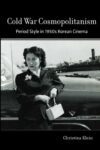
From the publisher’s website: South Korea in the 1950s was home to a burgeoning film culture, one of the many “Golden Age cinemas” that flourished in Asia during the postwar years. Cold War Cosmopolitanism offers a transnational cultural history of South Korean film style in this period, focusing on the works of Han Hyung-mo, director … [Read More]
The Aquariums of Pyongyang: Ten Years in the North Korean Gulag
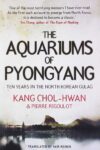
From the publisher’s website: A magnificent, harrowing testimony to the voiceless victims of North Korea. Kang Chol-Hwan is the first survivor of a North Korean concentration camp to escape the ‘hermit kingdom’ and tell his story to the world. This memoir reveals the human suffering in his camp, with its forced labour, frequent public executions … [Read More]
Symbolism in Korean Ink Brush Painting
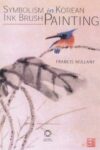
From the publisher’s website: With more than 200 colour plates, and for the first time available as a study in English, this volume explores the vast heritage of Korean ink brush painting, providing a rich panorama of information that stretches across the entire spectrum of Korean art – including painting, pottery, calligraphy and literature, which … [Read More]
Korean True-View Landscape: Paintings by Chong Son (1676-1759)
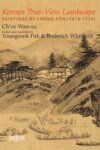
From the publisher’s website: Korean True-View Landscape: Paintings by Chong Son (1676-1759), a ground-breaking, revised and updated English-language edition of Kyomjae Chong Son chingyong sansu (The Art of Kyomjae Chong Son) by Ch’oe Wan-su, provides an unprecedented insight into the distinctive art and literati culture of Korea in the early eighteenth century. Published in two editions hardcover [9781872843711 … [Read More]
Korean Spirituality

Korea has one of the most dynamic and diverse religious cultures of any nation on earth. Koreans are highly religious, yet no single religious community enjoys dominance. Buddhists share the Korean religious landscape with both Protestant and Catholic Christians as well as with shamans, Confucians, and practitioners of numerous new religions. As a result, Korea … [Read More]
Gardens of Korea: Harmony with Intellect and Nature

From the publisher’s website: Of the three great civilizations of East Asia, Korea used to attract the least attention. Overshadowed by their neighbours in China and Japan, Koreans had trouble gaining recognition abroad for the many accomplishments of their ancestors in such fields as architecture, music, dance, and the arts. That has begun to change … [Read More]
The Secret Spirit of Korean Architecture

From the publisher’s website: The Secret Spirit of Korean Architecture is a response to the growing international interest in Korean architecture, its tangible historical and contemporary forms, and a multidisciplinary contribution to the discourse that has resulted in new writing and audiovisual materials exploring principal features and themes, materials, techniques and methodologies particular to the genre. … [Read More]
Under the Ancestors’ Eyes: Kinship, Status, and Locality in Premodern Korea
From the publisher’s website: Under the Ancestors’ Eyes presents a new approach to Korean social history by focusing on the origin and development of the indigenous descent group. Martina Deuchler maintains that the surprising continuity of the descent-group model gave the ruling elite cohesion and stability and enabled it to retain power from the early Silla (fifth century) … [Read More]
The Confucian Transformation of Korea: A Study of Society and Ideology

From the publisher’s website: Legislation to change Korean society along Confucian lines began at the founding of the Chosŏn dynasty in 1392 and had apparently achieved its purpose by the mid seventeenth century. Until this important new study, however, the nature of Koryŏ society, the stresses induced by the new legislation, and society’s resistance to … [Read More]
My Korea: Forty Years without a Horsehair Hat

My Korea: Forty Years Without a Horsehair Hat is a cultural introduction to Korea, part memoir and part miscellany, which introduces traditional and contemporary culture through a series of essays, stories, anecdotes and poems. The book seeks to tell the reader all that he or she needs to know for a full and rewarding life … [Read More]
Contentious Kwangju: The May 18th Uprising in Korea’s Past and Present
From the publisher’s website: One of the largest political protests in contemporary Korean history, the May 1980 Kwangju Uprising still exerts a profound, often contested, influence in Korean society. Through a deft combination of personal reflections and academic analysis, Contentious Kwangju offers a comprehensive examination of the multiple, shifting meanings of this seminal event and explains how … [Read More]
The Making of Minjung: Democracy and the Politics of Representation in South Korea
In this sweeping intellectual and cultural history of the minjung (“common people’s”) movement in South Korea, Namhee Lee shows how the movement arose in the 1970s and 1980s in response to the repressive authoritarian regime and grew out of a widespread sense that the nation’s “failed history” left Korean identity profoundly incomplete. The Making of … [Read More]