
From the publisher’s website: In recent decades, Korean communication and media have substantially grown to become some of the most significant segments of Korean society. Since the early 1990s, Korea has experienced several distinctive changes in its politics, economy, and technology, which are directly related to the development of local media and culture. Korea has … [Read More]

Booklist: Minorities and migrants (page 2)
Elusive Belonging: Marriage Immigrants and “Multiculturalism” in Rural South Korea

From the publisher’s website: Elusive Belonging examines the post-migration experiences of Filipina marriage immigrants in rural South Korea. Marriage migration—crossing national borders for marriage—has attracted significant public and scholarly attention, especially in new destination countries, which grapple with how to integrate marriage migrants and their children and what that integration means for citizenship boundaries and a … [Read More]
Curative Violence: Rehabilitating Disability, Gender, and Sexuality in Modern Korea

In Curative Violence Eunjung Kim examines what the social and material investment in curing illnesses and disabilities tells us about the relationship between disability and Korean nationalism. Kim uses the concept of curative violence to question the representation of cure as a universal good and to understand how nonmedical and medical cures come with violent effects that … [Read More]
Contested Embrace: Transborder Membership Politics in Twentieth-Century Korea
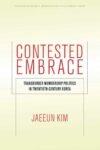
From the publisher’s website: Scholars have long examined the relationship between nation-states and their “internal others,” such as immigrants and ethnoracial minorities. Contested Embrace shifts the analytic focus to explore how a state relates to people it views as “external members” such as emigrants and diasporas. Specifically, Jaeeun Kim analyzes disputes over the belonging of Koreans in … [Read More]
Decentering Citizenship: Gender, Labor, and Migrant Rights in South Korea
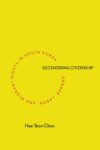
From the publisher’s website: Decentering Citizenship follows three groups of Filipina migrants’ struggles to belong in South Korea: factory workers claiming rights as workers, wives of South Korean men claiming rights as mothers, and hostesses at American military clubs who are excluded from claims—unless they claim to be victims of trafficking. Moving beyond laws and policies, … [Read More]
Nouveau-riche Nationalism and Multiculturalism in Korea: A media narrative analysis

From the publisher’s website: The unprecedented economic success of South Korea since the 1990s has led in turn to a large increase in the number of immigrants and foreign workers in Korean industries. This book describes and explains the experiences of discrimination and racism that foreigners and ‘new’ Koreans have faced in a multicultural South … [Read More]
Multiethnic Korea? Multiculturalism, Migration, and Peoplehood Diversity in Contemporary South Korea
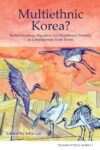
From the publisher’s website: By the late 1990s and early 2000s, South Korean government sponsorship of cultural globalization had valorized “multiculturalism” (tamunhwa), but did not dispel widespread discrimination and xenophobia against actual multiethnic and multicultural populations. This volume’s contributors employ the dual concepts of “multicultural” and “multiethnic” to make sense of an intriguing facet of recent … [Read More]
Trafficking Women in Korea: Filipina migrant entertainers
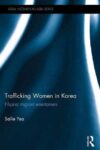
From the publisher’s website: Based on in-depth ethnographic work, this book presents a study of Filipinas trafficked to South Korea, focusing on women who entered South Korea as migrant entertainers and subsequently became deployed in exploitative work environments around US military bases there. It contributes to the extension of our knowledge about human trafficking in … [Read More]
Critical Readings on the Colonial Period of Korea 1910-1945 (4 vols)
From the publisher’s website: There has been a rapid accumulation of new scholarship on colonial Korea in particular and comparative colonialism in general within the last ten years. This volume gathers these articles from a variety of venues to allow researchers, students, and readers to access the most important scholarship on colonial Korea published in … [Read More]
Mobile Subjects: Boundaries and Identities in the Modern Korean Diaspora
From the publisher’s website: The essays in this collection offer a rich and complex picture of changing circumstances on the Korean peninsula over the past one-and-a-half centuries. By drawing attention to mobility in subjectivity—to the contested nature of subjectivity in the processes of mobility—this volume seeks to connect the experiences of the Korean diaspora with … [Read More]
Making and Faking Kinship: Marriage and Labor Migration between China and South Korea
In the years leading up to and directly following rapprochement with China in 1992, the South Korean government looked to ethnic Korean (Chosǒnjok) brides and laborers from northeastern China to restore productivity to its industries and countryside. South Korean officials and the media celebrated these overtures not only as a pragmatic solution to population problems … [Read More]
South Korean Social Movements: From Democracy to Civil Society

From the publisher’s website: This book explores the evolution of social movements in South Korea by focusing on how they have become institutionalized and diffused in the democratic period. The contributors explore the transformation of Korean social movements from the democracy campaigns of the 1970s and 1980s to the rise of civil society struggles after … [Read More]
On the Move for Love: Migrant Entertainers and the U.S. Military in South Korea

From the publisher’s website: Since the Korean War, gijichon—U.S. military camp towns—have been fixtures in South Korea. The most popular entertainment venues in gijichon are clubs, attracting military clientele with duty-free alcohol, music, shows, and women entertainers. In the 1990s, South Korea’s rapid economic advancement, combined with the stigma and low pay attached to this work, led to … [Read More]