
Those who haven’t got around to reading Shin Kyung-sook’s massively successful Please Look After Mother yet (not that you have any excuse – it’s a very easy and quick read in Kim Chi-young’s translation) can now digest it in very easy chunks before going to bed. It has been abridged and serialised for radio, and … [Read More]
London Book Fair 2014: Korea Market Focus (page 6)
Book review: Shin Kyung-sook — Please look after Mother

Kyung-sook Shin: Please look after Mother Originally published in Korean as 엄마를 부탁해, 2008 Translated by Chi-Young Kim Weidenfeld & Nicolson 2011, 272pp Can we ever really appreciate who we have in our lives until they are gone? Kyung-Sook Shin’s Please look after Mother looks through the eyes of a family united in trying to … [Read More]
The unstoppable “Please Look After Mother”
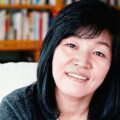
Not so long ago people were complaining that the Korean literature available in English translation wasn’t reaching out to a modern audience. Yes, there was a fair amount available, the argument went, but much of it lamented Korea’s travails during the colonial period, or explored the han-laden traumas of national division. Not something of much … [Read More]
More buzz about Please Look After Mom / Mother
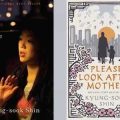
Please Look After Mom seems to be the latest hot translation. Amazon are already telling me I would like it. http://bit.ly/gPTvD3 # Guess which translated Korean novel will be BBC Radio 4’s Book at Bedtime in early June. You only get one guess. @KTLit # KTLit: lol “mom?” lklinks: Right first time. The unstoppable Shin … [Read More]
Book Review: Hwang Sok-yong – The Old Garden
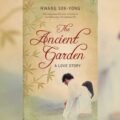
Hwang Sok-yong: The Old Garden / The Ancient Garden Originally published in 2000 English translation by Jay Oh, Seven Stories Press 2009 / Picador 2010. “More has been expected of Hwang Sok-yong than almost any other Korean writer of the past quarter century,” says Bruce Fulton (1). Having read The Guest (2002), and having watched … [Read More]
1970s: the missing decade in Korean film?
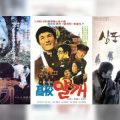
Newcomers to Korean film can sometimes get the impression that Korean cinema started with Shiri. Indeed, one contributor to the recent Korean Film Blogathon claimed “Korea’s cinema was virtually non-existing until the new millennium”. Not a sentiment with which I strongly agree. While the last decade has certainly seen more than its fair share of … [Read More]
Film review: Moss

Saharial catches up with one of 2010’s top films on the in-flight entertainment system over the Christmas break. I am liking international travel, especially when the film choices on the flight I took from Vancouver to New York had ‘Moss’ in their Asian cinema collection. Starring Park Hae-il (Memories of Murder) it is a thriller … [Read More]
Kim Young-ha in Amazon bestseller list

Kim Young-ha’s Your Republic is Calling You made it to #38 in Amazon’s bestseller list – the first Korean novel in the top 100. http://bit.ly/eLFkhL #. Joongang Ilbo article on Korean authors getting foreign recognition also mentions Shin Kyung-sook, Jo Kyung-ran and Hwang Sok-yong. [Read More]
Book Review: Your Republic is Calling You

Kim Young-ha: Your Republic is Calling You Translated by Kim Chi-young Harcourt, 2010. First published in Korean: 2006 Ki-yong, a North Korean agent, has lived undercover in Seoul for half his life. Inactive for the last 10 years, he is suddenly given an order to return home. Is the order a hoax? Is he being … [Read More]
Mot’s eAeon does trailer for Kim Young-ha novel

Missing the sound of MOT(못)? Wishing Kim Young-ha would write another book? Check out @eaeon‘s trailer for Kim Young-ha’s new novel (Nobody knows) what happened (무슨 일이 일어났는지는 아무도) # (via @indiefulrok, who has the full story here) [Read More]
Suicide Notes – a brief review of Kim Young-ha’s I Have the Right to Destroy Myself

Kim Young-ha: I have the right to destroy myself Originally published 1996 Translation by Kim Chi-young, Harcourt, 2007 An entertaining book to read, but somehow difficult to distill and digest. The narrator, who makes a macabre living as a self-employed suicide counselor, bizarrely seeks out clients whose exits he facilitates. A small and eccentric cast … [Read More]
Hwang Sok-yong: The Guest

(Seven Stories, 2005) Translated by Chun Kyung-ja and Maya West Originally published as 손님, Seoul 2001 The Guest of the title is an unwelcome foreigner: originally applied to smallpox, it is used by extension to cover the cultural imports of communism and Christianity. The theme of the book is that until the ghosts of the … [Read More]
Lee Seung-u: The Reverse Side of Life

Peter Owen, 2005, 208pp Translated by Kong Yoo-jung Originally published as 생의 이면, Seoul, 1992 A partly autobiographical novel exploring the life story of a prominent Korean writer growing up in the second half of the twentieth century. [Read More]
Yi Mun-yol: the Poet
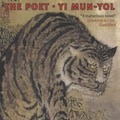
A novel based on the life of a 19th century poet, Kim Sakkat, exploring his development as an artist against the backdrop of the insurrection by Hong Kyong-rae in the north-west. I was reminded of this book when watching the Im Kwon-taek film Chihwaseon because of its storyline of a wandering artist. See also review … [Read More]
The Last Empress: spectacular but unsatisfying

The Last Empress is an original Korean musical in the style of a traditional Broadway production, and is based on the life story of Queen Min, the last Empress of the Joseon Dynasty, who was murdered by Japanese assassins in 1895. Undoubtedly patriotic in its theme, it capitalises on the popularity of the musical in … [Read More]