
Production designer Ryu Seonghie discusses shaping meaning through space, colour, and symbolism; balancing realism and fantasy; working with directors like Park Chan-wook and Bong Joon-ho; navigating gender barriers, budget limits, and collaboration; and her concerns about commercial trends, sexuality, and diminishing narrative depth in contemporary Korean cinema. [Read More]
Post Series: HC group interviews (page 2)
Ahn Sung-ki interview: a life in acting
Ahn Sung-ki reflects on Korean cinema’s roots in historical trauma, its role in addressing social issues, and his career choices under censorship and change. He discusses long collaborations with Im Kwon-taek, the importance of scripts and emotional depth, evolving acting freedoms, international productions, and his belief that cinema’s power lies in moving hearts rather than scale or fame. [Read More]
Park Chan-kyong interview: Manshin, Asian Gothic and artistic autonomy

Park Chan-kyong discusses financing Manshin outside the studio system, balancing artistic freedom with commercial pressures, and his recurring focus on shamanism, tradition and “Asian gothic” aesthetics. He reflects on collaboration with his brother Park Chan-wook, the creative value of short films, digital democratisation of filmmaking, and Korea’s layered relationship with its past. [Read More]
Cho Young-wuk interview: motifs, process and collaboration in film music
Cho Young-wuk discusses his approach to film scoring, from early motif selection and character-focused themes to team-based composition. He reflects on collaborations with Park Chan-wook, instrument choices, gender and music, avoiding self-imitation, balancing commerce and art, and adapting styles—from classical motifs to spaghetti westerns. [Read More]
Chung Chung-hoon interview: cinematography, character and collaboration

Cinematographer Chung Chung-hoon outlines his character-driven approach to visuals, long-standing collaboration with Park Chan-wook, and balance between on-set craft and post-production. He discusses colour, contrast, technology, storyboards, working across Korea and Hollywood, and shaping imagery through drama, movement, and location. [Read More]
Park Hoon-jung interview: stories from real life

Park Hoon-jung discusses his approach to screenwriting and directing, prioritising story and character over genre, drawing inspiration from Korean society and politics, and embracing budget constraints. He reflects on violence, power structures, collaboration with directors, adapting scripts to actors, and the evolution of his craft from writer to filmmaker. [Read More]
Ha Jung-woo interview: curiosity and craft, running and eating, acting and directing
Ha Jung-woo discusses his character-building process, research-driven acting, and transition into directing. He reflects on action and drama roles, collaboration with directors, balancing acting and filmmaking, painting as emotional release, and navigating independent and studio cinema, while sharing insights from films including The Chaser, The Berlin File and The Terror Live. [Read More]
Lee Joon-ik interview: clowns, kings and wounded souls
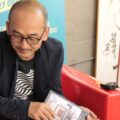
A group conversation with The King and the Clown director Lee Joon-ik on filmmaking without formal training, the role of history and humour in Korean cinema, artistic risk, and why healing human wounds lies at the heart of his work. [Read More]
Choi Min-sik interview: “I don’t like the hammer”

Choi Min-sik reflects on screen quotas and cultural diversity, his director-led approach to choosing roles, and portraying extreme characters through empathy. He discusses violence as social commentary, collaboration with auteurs, international work, historical roles, actor responsibility, and sustaining Korean cinema beyond commercial imperatives. [Read More]
Ryoo Seung-wan interview: stars, spies and a divided city
Ryoo Seung-wan discusses star power, casting strategy and realism in The Berlin File, explaining Berlin’s symbolism as a divided city, his action-scene preparation, views on foreign markets, writing habits, limited interest in Hollywood, genre influences, and balancing commercial filmmaking with personal priorities. [Read More]
Moon So-ri interview: feminism, craft and the changing landscape of Korean cinema
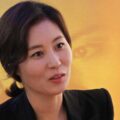
Moon So-ri reflects on choosing strong female roles, feminism in Korean cinema, and challenging performances such as Oasis. She discusses theatre versus film, physicality in acting, independent and commercial filmmaking, industry consolidation, collaboration with auteurs, and her belief in cinema’s power to broaden representation without being bound by markets or labels. [Read More]
Director Jung Ji-woo interview: aging, desire and society in Eungyo

Director Jung Ji-woo discusses EunGyo as a way to explore unspoken desires, aging, and social restraint in Korea. He reflects on empathy, casting authenticity, adaptation from literature and manhwa, creative freedom, working with actors, and how human difference and collision drive his filmmaking. [Read More]
Im Kwon-taek interview: tradition, social norms, and a life in Korean cinema
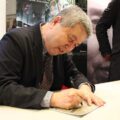
Im Kwon-taek reflects on depicting women’s suffering, Confucian traditions, and communal rituals in Korean society. He discusses pansori and cultural transmission, artistic freedom, life experience as the basis of filmmaking, his long career of 101 films, and his belief that Korean cinema evolves alongside national history. [Read More]
Jeon Kyu-hwan interview: marginal lives, independent filmmaking, creative survival

Director Jeon Kyu-hwan discusses realism and graphic content, his focus on marginalised lives, and the making of low-budget films outside Korea’s commercial system. He reflects on creative independence, financial precarity, narrative experimentation, the Town trilogy, and his belief that cinema must embrace diversity beyond standardised genres. [Read More]
Director Lee Yoon-ki interview: intimate storytelling
Lee Yoon-ki discusses his unconventional path into filmmaking, his focus on quiet, time-compressed stories of relationships, and adapting short fiction. He explains his actor-centred working methods, restrained use of music, influences from American indie cinema, funding challenges for non-commercial films, and his view of cinema as a universal language. [Read More]
Lee Hyeon-seung interview: feminism, symbolism and genre experimentation in Korean cinema
Lee Hyeon-seung discusses subconscious symbolism in Il Mare, feminism and female-centred narratives, sexuality and gender politics, and the expressive use of colour. He reflects on genre experimentation, global consciousness, industry constraints, and his return to directing with Hindsight as a blend of romance, action, and generational dialogue. [Read More]