

Set in 1980s rural America, Minari follows a Korean immigrant family divided by ambition, fear and responsibility. Created from a semi-autobiographical perspective, Lee Isaac Chung’s Minari is a wholly engaging example of exemplary family drama overall, standing as a virtual definition of personal and familial resilience in its absolute realism, in the process. [Read More]
Hangul Celluloid Korean film reviews
Beasts Clawing at Straws (지푸라기라도 잡고 싶은 짐승들, 2020) review: murder and mayhem in a droll game of cat and mouse

Intersecting stories of debt-ridden lives converge around a cash-filled bag, revealing an intricately structured, non-linear thriller. Beasts Clawing at Straws is a twisted cat and mouse tale of betrayal and mayhem with a genuinely droll tone throughout, virtually guaranteeing audience enjoyment and even (guilty) smiles in the face of murder. [Read More]
Moonlit Winter (윤희에게, 2019) review: a poetic exploration of catharsis, memory and queer identity

Lim Dae-hyung’s Moonlit Winter follows a mother and daughter’s trip to Japan that becomes a reckoning with a hidden same-sex past. Through restrained performances it explores repression, guilt and intergenerational secrecy, framing physical travel as a path toward emotional thaw. A palpable emotional depth pervades virtually every scene, making for a wholly worthwhile experience. [Read More]
The Call (콜, 2020) review: a searing horror twist on Korean cinema’s time-connection tropes

Regardless of being based on a British/Puerto Rican film, The Call feels wholly Korean through and through. With a tour de force performance from actress Yeon Jung-seo, The Call is ultimately one of the strongest contemporary Korean horror/thrillers of recent years that respectfully tips its hat to classic Korean cinema too. [Read More]
Moving On (남매의 여름밤, 2019) review: family, abandonment, and the quiet weight of letting go

Set within a multigenerational household, gentle, nuanced and heartfelt, Yoon Dan-bi’s Moving On deftly uses the minutiae of everyday life to tell an easily relatable, poignant tale that will feel wholly personal to viewers, especially those who have watched elderly relatives becoming increasingly frail as they wearily move through their twilight years. [Read More]
Bori (나는보리, 2018) review: the girl who yearns to be deaf

Always quietly spoken but nonetheless screaming of candour throughout, Kim Jin-yu’s Bori deftly inverts common disability tropes seen in Korean cinema by centering on an able-bodied child’s perspective to underline their all-important message all the more in an original, sweetly engaging and ultimately uplifting way. [Read More]
Peninsula (반도, 2020) review: a high-octane zombie heist lacking its predecessor’s heart
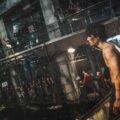
Peninsula largely fulfils the requisites for a blockbuster action/horror in a basic sense, but more depth to the narrative and more fully fledged characters rather than caricatures could have allowed it to step so much further towards the genre busting originality that drew so many of us to classic Korean cinema in the first place. [Read More]
The Closet (클로젯, 2020) review: shamanic horror meets human reality

The Closet blends supernatural horror with hi-tech shamanic ritual as a grieving father searches for his missing daughter. This wholly engaging, often genuinely creepy, horror deftly uses spiritualism in the fight of light against dark and is also a serious societal critique, the palpable poignancy of which easily raises its worthiness yet further. [Read More]
Kim Ji-young: Born 1982 (82년생 김지영, 2019) review: Cho Nam-joo’s important novel brought to the big screen

This powerful drama examines the systemic gender inequality in Korean society through the psychological breakdown of a stay-at-home mother. Kim Ji-young: Born 1982 is a deftly realised, socially aware and societally critical directorial debut of real importance that shines a much needed light on women’s issues in Korea past and present from a female gaze. [Read More]
Another Child (미성년, 2019) review: when children become the adults

While Kim Yoon-seok’s directorial debut Another Child is a fairly simple story, gentle in pacing and physical depiction, its heartfelt emotionality portrayed by an exemplary cast is its true strength throughout, thematically virtually redefining the film’s alternate title Underage in terms of familial dysfunction. [Read More]
Birthday (생일, 2019) review: a moving tribute to the personal grief of the Sewol ferry disaster

Unashamedly a tear-inducing melodrama, Lee Jong-un’s intimate debut feature is a powerful film that ultimately stands as a tribute to each and every one of the innocent victims of the tragic Sewol ferry disaster and indeed those left in abject despair by their loss. [Read More]
Illang: The Wolf Brigade (인랑, 2018) review: stunning spectacle, cardboard empathy in sci-fi actioner

While the action set pieces of Illang: The Wolf Brigade are without exception visually jaw-dropping and grippingly frenetic, it is actor Gang Dong-won’s frozen, slightly pained yet kind of blank expression regardless of what emotion is required to be conveyed that is by far Illang’s weakest link. [Read More]
The Land of Seong-hye (성혜의 나라, 2018) review: precarity, perseverance and life on the margins

This black-and-white Korean drama traces a young woman’s slow erosion under precarious work, debt and social pressure. Poignantly angst-ridden yet ultimately uplifting and life-affirming, The Land of Seong-hye is not only an intimate, contemplative tale of one young woman’s struggles and life journey but also a powerful societal critique of her land, Korea. [Read More]
Miss Baek (미쓰백, 2018) review: saving a child, saving a life

Based on a true story, Miss Baek is a harrowing yet essential exploration of domestic abuse and redemption. An exemplary film in every respect, it certainly isn’t an easy watch but it is nonetheless an absolute must-see, as grippingly important to Korean cinema as a whole as it is heartbreakingly powerful in its own right. [Read More]
The Negotiation (협상, 2018) review: a static game of cat and mouse

The Negotiation begins confidently but its early strength is somewhat marred by the later story requirement to have various seated, static characters talking repeatedly through video calls on immoveable desktop monitors, and though the film does largely succeeds in building tension, tension doesn’t always equate to exhilaration. [Read More]
The Odd Family: Zombie on Sale (기묘한가족, 2019) review – a warmly quirky zombie parody

The Odd Family: Zombie on Sale is inherently and deliberately silly but that fact in itself is a plus point in this case and any film fans (Korean or other) looking for a couple of horror/comedy hours of sheer tongue in cheek, genuinely funny zombie escapism could do a lot worse than check it out. [Read More]