

While Psychokinesis initially appears to be a whimsical entry into the superhero genre, director Yeon Sang-ho is equally interested in telling a dramatic tale about family and the struggle of powerless individuals against corporate Korea. However, the film being inspired by the real-life Yongsan tragedy raises the question of where the balance between humour and drama should really lie [Read More]
Hangul Celluloid Korean film reviews (page 3)
The DMZ (데스트랩, 2018) review: how to create a gripping action thriller without moving…

With The DMZ, director Oh In-chun has created a highly engaging, even gripping action thriller, but it is his success in bringing ‘cat and mouse’ elements to a narrative wholly centred on one character forced to stand stationary for the vast majority of the running time that is truly deserving of accolades. [Read More]
Gonjiam: Haunted Asylum (곤지암, 2018) review: a chilling found footage horror

“I shouldn’t have written my name on the wall. I’m cursed now… Did you see? The words under my name changed from ‘Let’s live’ to ‘Let’s die’. Am I going to die?…” Synopsis After two youths go missing while breaking and entering into Gonjiam asylum – a mental institution that closed more than 20 years … [Read More]
Be With You (지금 만나러 갑니다, 2018) review: a beautiful, classic, archetypal Son Ye-jin melodrama

Heartbreaking, uplifting and life-affirming at once, Be With You positively screams of classic Korean melodrama, in spite of being based on a Japanese novel… and that’s before we even consider the fact that the star of the film is New Korean Cinema’s ‘Queen of Melodrama’, Son Ye-jin. [Read More]
Heart Blackened (침묵, 2017) review: wealth, blood and deception

Heart Blackened is a visually sumptuous, multi-layered and beautifully involved tale of love, hate, sacrifice and murder. While based on a 2013 Chinese film it never feels like simply a rehash. In fact, Heart Blackened could almost be considered as a modern day re-telling of a Pansori-type tale, and as such it ultimately feels utterly Korean through and through. [Read More]
House of the Disappeared (시간위의 집, 2017) review: a haunted house, a mother’s love, and time’s dark secrets

Though based on a 2013 Venezuelan horror film, House of the Disappeared feels Korean through and through, and while the use of numerous familiar horror tropes could easily have resulted in predictable horror fare, the originality of the ultimate ‘reveal’ leaves House of the Disappeared deserving of at least a second viewing. [Read More]
Little Forest (리틀 포레스트, 2018) review: hungry for home

In a beautiful film that encapsulates a rural downshifting trend, Little Forest is a visual gourmet feast for the eyes and sumptuous cinematic food for the modern-day soul too. Yim Soon-rye takes what was originally a Japanese manga and transplants it to Korea, speaking directly to Korean cinema audiences in the process. [Read More]
The Mimic (장산범, 2017) review: Korean horror makes a welcome comeback

The Mimic is at times genuinely scary, at others deeply creepy, but it is the phenomenal performances of veteran actress Yum Jung-ah and eight-year-old newcomer Shin Rin-ah – and indeed the sheer, palpable chemistry within their interactions – that will ultimately stay with viewers long after the credits roll. [Read More]
1987: When the Day Comes (1987, 2018) review: a vital chronicle of Korea’s path to democracy
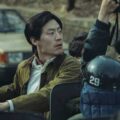
1987: When the Day Comes is an exquisitely realised, multi-layered true-life depiction of life and activism in 80s Korea, and the fact that the events portrayed are far less spoken about than the Gwangju massacre but were equally important to the ultimate democratisation of the country makes the film all the more required viewing. [Read More]
Moon Young (문영, 2017) review: a succinct and nuanced study of solitude and connection

While just 64 minutes in duration, Moon Young never feels anything less than a full feature. A nuanced, succinct yet in-depth narrative insightfully speaking of both urban isolation and connection, and exploring abusive homes and guarded identities, Moon Young is without a single moment’s unnecessary meandering. [Read More]
The Vanished (사라진밤, 2018) review: eerie morgue mystery and gripping psychological duel

Based on the 2012 Spanish film El Cuerpo, The Vanished is exemplary, gripping and unpredictable throughout to the extent that you would never for a second think this is Lee Chang-hee’s debut feature unless you were aware of that fact in advance. [Read More]
Steel Rain (강철비, 2017) review: action, politics, and trust across the Korean divide

While Steel Rain’s action set pieces are always exemplary, often visually breathtaking, it is the growing trust between the two main characters from either side of the Peninsula that is the film’s true and lasting strength; speaking of humanity’s similarities across a seemingly insurmountable divide, problems with accents and the English language notwithstanding… [Read More]
Along with the Gods: The Two Worlds (신과함께, 2017) review: a spectacular odyssey of post-mortem trials

Along with the Gods: The Two Worlds is a star-studded tale of actions and consequences, guilt and forgiveness wrapped up within a visually stunning journey through the seven Hell trials of the Afterlife. Like it or not, it’s one of the biggest box office smashes in Korean film history. [Read More]
Yongsoon (용순, 2017) review: adolescent anger, grief, and the cost of defiance

With Yongsoon, director Shin Joon presents a story of a young woman with such realism that viewers who have dealt with sometimes sullen, often surly adolescents in their own lives will almost feel they’ve actually met the titular character before… [Read More]
Sea Fog (해무, 2014) review: desperation and the fog of self-interest

Based on a real life shocking tragedy, Sea Fog is a truly dark tale both gripping and shocking, and having been co-written by Bong Joon-ho frankly guaranteed the narrative would also be thematically rich with social commentary and indeed critique. [Read More]
A Woman Judge (여판사, 1962) review: gender, power, and a pioneering voice in Korean cinema
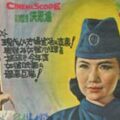
Hong Eun-won’s A Woman Judge examines a professional woman’s struggle against entrenched gender expectations in Golden Age Korea. Though tonally divided, the film remains a vital, forward-thinking work—made all the more significant as only the second Korean feature directed by a woman. [Read More]