
Drawing on an impressive array of archival sources, from colonial criminal records to historical maps and exposé journalism, this book brings to light the overlooked history of ethnic Chinese enclaves in Korea during the era of Japanese colonialism. Situated within a global circuit of Chinese migration, the Japanese empire produced a structure of anti-migrant violence … [Read More]

Booklist: Modern History
Unruly Rites: Christianity, Ritual Politics, and the Making of Religious Difference in Modern Korea, 1884-1945 [forthcoming]

When Western missionaries first introduced Protestant Christianity to Korea in 1884, Korean converts adopted beliefs and practices that defied prevailing Confucian norms, including distinct faith-based rituals. By the turn of the twentieth century, during the final years of the Chosŏn dynasty, competing cultural and religious viewpoints started to roil Korean society with frenzied—even life-and-death—controversies over … [Read More]
Song for Another Home [forthcoming]

A powerful and expansive story of one family separated by the Korean War, for fans of Pachinko and Homegoing 1950, Pyongyang. Oksoon’s father – confident that the war is over – has left for Seoul in search of opportunity. There is nothing to do but wait, until the Chinese army attacks and forces Oksoon, her mother and her … [Read More]
Profits of Queerness: Media, Medicine, and Citizenship in Authoritarian South Korea, 1950–1980 [forthcoming]

This groundbreaking, interdisciplinary study reassesses South Korea’s tumultuous period of authoritarian development (1950–1980) through obfuscated but illuminating histories of “queerness,” defined as gender variance, same-sex sexuality, and atypical anatomies, among other nonnormative expressions. Rather than primarily view these topics through minoritarian and/or liberal lenses, Todd Henry adopts a universalizing approach to examine how social conformity … [Read More]
Black Market Intimacies: The Transpacific Sexual Economy of the Korean War [forthcoming]
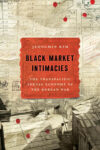
Black Market Intimacies reveals how illicit exchanges of money and commodities involving sexual encounters between Korean and Japanese women and US soldiers provided the material foundations of the regional economy across Korea and Japan during the Korean War. Against the conventional view that illicit exchanges exist outside the formal economy and legal regulations, Jeongmin Kim … [Read More]
The Promised Republic: Developmental Society and the Making of Modern Seoul, 1961-1979

In The Promised Republic, Russell Burge offers a bold new history of South Korea’s rapid development. By focusing on the experience of rural-to-urban migrants who built and lived in Seoul’s shantytowns, Burge historicizes national development as a site of struggle with the urban poor at its center. What would a society of postcolonial abundance look like? … [Read More]
The Minjung Art Movement: Decolonization and Democracy in South Korea

Emerging as multifaceted cultural activism, the minjung (people’s) art movement defined the aesthetics of the pro-democracy movements in the 1970s and 1980s in South Korea. Tracing minjung art’s history and legacy, Sohl Lee explores how artists associated with the movement mobilized images, print, and performance to build movement publics and reimagine sovereignty. Hundreds of artists questioned the … [Read More]
The Glosters in the Korean War

On 25 June 1950, the simmering Cold War suddenly turned hot when North Korea, backed by the Soviet Union, crossed the 38th parallel and invaded the South. The United Nations responded rapidly, urging member states to aid South Korea, and among the nations that committed troops was the United Kingdom. One of the British units … [Read More]
A Nation Within: North Korean Zainichi in Postimperial Japan

The presence of hundreds of thousands ethnic Koreans in Japan, or “zainichi Koreans,” is one of the visible legacies of Japanese colonialism. A surprising and influential group among zainichi Koreans that persists to this day is Chongryon, the only pro–North Korean diasporic group based in a capitalist society. Chongryon historically represented the central grassroots force … [Read More]
Representations of Japan in South Korean Cinema of the Park Geun-hye Era: Invaders, Lovers and Demons

Providing a rare example of a national cinema that has managed to overturn the prevailing global paradigm of Hollywood dominance, South Korean films are nevertheless still haunted by the peninsula’s earlier colonial history. Focussing on a series of films produced during the administration of disgraced and then pardoned President Park Geun-hye (2013–2017), this book examines … [Read More]
Death Without End: Korea and the Thanatographics of War

The Korean War was never formally declared, and no peace treaty ending the war was ever signed. The 1953 armistice did not stop the war but marked its extension and expansion into a warlike state of emergency. How did the new reality of life under armistice shape visions of the possible in North and South … [Read More]
Lyrical Translation: The Creation of Modern Poetry in Colonial Korea

Lyrical Translation is a literary history of modern Korean poetry’s origins and its development through translation. As the use of Korean became increasingly restricted during the Japanese occupation, translation was not a choice but a necessity for higher education and intellectual labor. Yet it also had an expansive, creative function: Korean poets wielded it as an … [Read More]
Martyr of Blood, Martyr of Sweat: The Letters of Saint Andrew Kim Dae-geon and Venerable Father Thomas Choe Yang-eop

Korea is remarkable as the only country on earth where the Catholic faith emerged even before the arrival of missionaries. Forming an improvised community of believers, the first Korean Catholics desperately desired priests to say the Mass and administer the sacraments. Saint Andrew Kim Dae-geon (1821-1846) and Venerable Father Thomas Choe Yang-eop (1821-1861) were the … [Read More]
The Narrowing Sea: Fukuoka, Pusan, and the Rise and Fall of an Imperial Region

In The Narrowing Sea, Hannah Shepherd examines the shared histories of Pusan and Fukuoka over the eight decades from Japan’s forced opening of Korea’s ports in 1876 to the end of the Korean War in 1953. One city was Korean, the other Japanese; one was a burgeoning colonial port, the other a provincial city buoyed by imperial … [Read More]
Imperial Entertainers: Korean Women Performers from Military to Global Stages, 1937–75

The book uncovers the untold stories of Korean women performers who navigated successive waves of conflict as cultural laborers in military entertainment, offering insight into the intersection of war, gender, and culture in East Asia. Imperial Entertainers: Korean Women Performers from Military to Global Stages, 1937-1975 uncovers the untold stories of Korean women performers who navigated … [Read More]
Triangle Republics: Cross-Border Literary Transits Between the Cold War Koreas and Japan

In Korea, the end of the Second World War in 1945 brought both liberation from Japanese colonial rule and the division of the nation by the triumphant Allies. The peninsula was not only decoupled from its former colonial metropole but also carved up into two halves that were subsequently incorporated into the rival blocs of … [Read More]