
Jayne Anne Phillips: Lark and Termite Vintage Books, 2009 Surely the most carefully crafted sentence in a novel is the opening one. So when a reader is faced with an opening sentence that would not only have the Microsoft grammar checker going crazy with those irritating green wiggly lines but which would fox a literate … [Read More]
Category: Book Reviews (page 10)
Will Samsung Electronics innovate again?
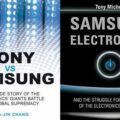
Peter Corbishley analyses two recent books on the subject of the company that epitomises Korea Inc. Samsung v Sony In 2010 Tony Michell published his long awaited work on Samsung Electronics. (1) Sea-Jin Chang wrote Sony v Samsung (2) in 2008. The opposition between the two companies seems to be stimulated by the nationalistic perception … [Read More]
Book review: Pearl Buck’s Living Reed

Pearl S Buck: Living Reed – A Novel of Korea Moyer Bell, 1990 Originally published by Methuen, 1963 Pearl Buck spent most of her childhood and early adulthood in China in an American missionary family and, mixing with local children, grew up with an unrivaled understanding of the country. Her experiences were distilled into an … [Read More]
Book review: Eugenia Kim — The Calligrapher’s Daughter

Eugenia Kim: The Calligrapher’s Daughter Bloomsbury, 2010 Eugenia Sun-hee Kim’s first novel is based in part on the life of her mother, who was born in Japanese-occupied Korea and later emigrated to America after having lived to see liberation. The key characters in the novel are Najin – born on the day that Japan formally … [Read More]
Book review: Jinhee Choi — The South Korean Film Renaissance

Jinhee Choi: The South Korean Film Renaissance Local Hitmakers, Global Provocateurs Wesleyan University Press, 2010 There seems to be an ever-growing pile of available books of Korean film, with more to come over the next two years. This is testament to the established interest in Asian film and the growth of media studies as an … [Read More]
Book review: Darcy Paquet — New Korean Cinema
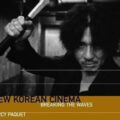
Darcy Paquet: New Korean Cinema – Breaking the Waves Wallflower Press, 2009 This brief introduction to Korean film is packed with insight based on Darcy Paquet’s unique viewpoint on Korean film. (1) Do not expect to find lots of analysis of individual films, or discussion of cinematography, lighting or editing techniques. But what you have … [Read More]
Barbara Demick’s Nothing to Envy lives up to the hype

Barbara Demick: Nothing to Envy – Real Lives in North Korea Granta, 2010 Why, when Korean Studies bookshelves are dominated by volumes about the North, about which so much less is known than the South, do we need yet another volume? Why, when we have so many defector eye-witness accounts of starvation, torture and oppression, … [Read More]
Inaugural Military History Award Goes to Book on ‘Forgotten War’
I’m a few days late on passing this on, but congratulations to Andrew Salmon for the success of his “To the Last Round”: Aldershot Military Museum, 10th November. On the eve of Remembrance Day 2010, a book on Britain’s bloodiest – but almost completely unknown – post-1945 battle won the inaugural Hampshire Libraries (Special Collections) … [Read More]
Book Review: Yin Yang Tattoo

Ron McMillan: Yin Yang Tattoo Sandstone Press, 2010 “If you’ll excuse us, we have stereotypes to explore,” says our hero, Alec Brodie, to a visiting investment banker as he heads off to a private room arm-in-arm with a Korean girl. Yes, there’s irony in the quip, but the stereotypes don’t stop with the expense-account prostitute. … [Read More]
To the Last Round – a second look

A year ago Jennifer Barclay reviewed Andrew Salmon’s then recently published To the Last Round (TTLR), an account of the epic British stand at the Imjin River in Korea, 1951. She confessed to not being a fan of military history, and though her review was polite you can tell she really didn’t enjoy it. Spurred … [Read More]
Who Ate Up All The Shinga – a critical essay by Alice Bennell

Alice Bennell, UK winner of last year’s Korean Literature Translation Institute essay contest on “There a Petal Silently Falls”, contributes her entry for this year’s competition. Who Ate Up All the Shinga is an autobiographical novel chronicling the early life of the author, Park Wan-Suh. The Japanese occupation of Korea, and events leading up to … [Read More]
Book Review: Your Republic is Calling You

Kim Young-ha: Your Republic is Calling You Translated by Kim Chi-young Harcourt, 2010. First published in Korean: 2006 Ki-yong, a North Korean agent, has lived undercover in Seoul for half his life. Inactive for the last 10 years, he is suddenly given an order to return home. Is the order a hoax? Is he being … [Read More]
Remembering the Battle of the Imjin at the KCC
“I’ve met Tom Cruise, and now I’ve met Sam Mercer. And when I met Sam I was truly star-struck. The man’s a legend.” So said a member of the audience at the Korean Cultural Centre after an instructive talk by Andrew Salmon on the battle of the Imjin on 15 July. Sam Mercer was sitting … [Read More]
Book review: Life on the Edge of the DMZ

Lee See-woo: Life on the Edge of the DMZ Global Oriental, 2008 Translated by Kim Myung-hee I’ve been dipping in and out of this fascinating though often overly complex book by peace activist Lee Si-Woo. It’s sometimes hard to tell whether the English translation – for the most part unfussy – is sometimes too literal, … [Read More]
Brief book review: Dictée – Theresa Hak Kyung Cha

Theresa Hak Kyung Cha: Dictée University of California Press, 2001. Originally published 1982. Not all books are easy to read, and it would be a dull world in which all books were. The assessment of whether to continue struggling through a difficult book is tricky: maybe it will all come together in the end – … [Read More]
Book review: Hwang Sun-won – The Descendants of Cain

Hwang Sun-won: The Descendants of Cain Translated by Suh Ji-moon and Julie Pickering East Gate / UNESCO / Routledge 1997. Originally published 1954 Novels set in post-liberation Korea, or during the Korean war, often make uncomfortable reading, particularly those set in the Soviet sphere of influence, and where the story is set in the countryside. … [Read More]