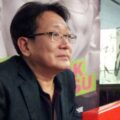
In this extensive interview, Park Kwang-su discusses his shift from overtly political cinema to mainstream filmmaking, his latest movie Meet Mr. Daddy, censorship, activism, genre, industry change, and his evolving approach to addressing social issues in Korean film. [Read More]
Category: Movie & TV features (page 6)
Sex sells… The emergence and growth of sexual content in Korean cinema

Paul Quinn traces the evolution of sexual content in Korean cinema, showing how censorship, politics, and social change shaped its portrayal, from moral warnings in the 1950s–60s, through repression and gradual liberalisation, to explicit, socially reflective, and contested depictions in modern Korean film history. [Read More]
E J-yong group interview: “driven by the desire to try something new”
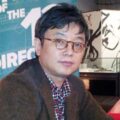
Director E J-yong reflects on his eclectic career, from the minimalist sensuality of An Affair to the stylised provocation of Untold Scandal and Dasepo Naughty Girls. In this group interview, he discusses timeless storytelling, challenging genre conventions, shifting styles, and his enduring curiosity as a filmmaker. [Read More]
Lee Myung-se interview: “the next Jacques Tati”?
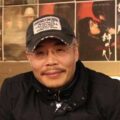
Director Lee Myung-se reflects on his career from Nowhere to Hide to Duelist and M, discussing cinematic rhythm, memory, fantasy, and balance. In this thoughtful interview, he explores how his style evolves while remaining uniquely his own, and why film should be experienced as pure cinema. [Read More]
London Korean Film Festival round-up and Ryu Seung-wan’s The Unjust
The 2011 London Korean Film Festival gave the London audience a chance to assess, and in my case reassess, the work of Ryu Seung-wan. Ryu has had several of his films released in the UK on DVD, but he is not as well-known to the viewing public as the likes of Park Chan-wook and Bong … [Read More]
Ryoo Seung-wan interview: action, justice and laughter
Director Ryoo Seung-wan discusses The Unjust, corruption and justice in Korean cinema, evolving directorial style, acting influences, working with family, and future projects including The Berlin File. An engaging interview blending insight, humour, and candid reflection. [Read More]
Oh In-chun interview: “truth is not always visible”

Director Oh In-chun discusses Metamorphoses as a hybrid of action, horror, and comedy, shaped by cinematic influences and limited resources. He explores themes of desire, hidden truth, and transformation, explains his visual and casting choices, reflects on Korean cinema’s global perception, and outlines ambitions for future genre-driven projects. [Read More]
Kim Han-min interview: history, resistance and the Korean spirit

Kim Han-min talks in depth about Arrow: The Ultimate Weapon, exploring Korean history, genre balance, sound design, and the recurring themes linking his work to Paradise Murdered and Handphone. [Read More]
Kim Kkobbi interview: Flowerain – finding the characters within herself

Kim Kkobbi talks candidly about Breathless, her approach to acting, violence in Korean cinema, working across film and theatre, and her creative life beyond acting in this wide-ranging interview. [Read More]
John H Lee interview: balancing emotion and intellect
Director John H. Lee discusses “71 – Into the Fire”, balancing ambition and budget in large-scale war scenes, the film’s global reception, and commemorating the Korean War. He also reflects on “A Moment to Remember”, casting Son Ye-jin, director’s cuts, and social themes shaping his films. [Read More]
Love, Loss and Laughter in Korean Cinema

Paul Quinn explores how Korean cinema weaves love, loss, and laughter – especially through romantic comedies – using melodrama, gender role shifts, and humour to reflect social change, historical trauma, and national identity, with films often mirroring Korea’s turbulent past alongside evolving views on romance, family, and sexuality. [Read More]
LKFF Festival Bites: Film Students are Softies

We’d just seen Jang Jin’s contribution to the Human Rights Watch short film collection If You Were Me 2: Someone Grateful (고마운 사람). In it, a student demonstrator is befriended by his police interrogator in the KCIA’s underground torture chambers in the 1980s. It’s a provocative short, because instead of railing against police brutality and … [Read More]
Mysterious Creature: Jang Jin at the London Korean Film Festival

Director Jang Jin is sometimes referred to as “The Future of Korean Cinema” but also as a “Mysterious Creature”. Nyomi Anderson tells us more. This year’s London Korean Film Festival featured a retrospective of the films of writer-director Jang Jin. Jang began his career in theatre before making his first film was The Happenings, which … [Read More]
Im Sang-soo interview: power, patriarchy and provocation in The Housemaid

Director Im Sang-soo discusses his reimagining of the 1960 classic The Housemaid, exploring the intersection of class structure and patriarchal power. He addresses the functional role of graphic sexuality in his films, the serendipitous symbolism of an actress’s scar, and his defiant stance toward commercial expectations and critical reception in the Korean film industry. [Read More]
Kim Ji-woon interview: the utter emptiness of revenge

Kim Ji-woon discusses I Saw the Devil, the controversy over its extreme violence, his approach to revenge and human darkness, casting Lee Byung-hun and Choi Min-sik, and his upcoming Hollywood project. He also reflects on scripting, genre, and how psychological and emotional truths shape his films. [Read More]
An Afternoon and Evening with Hong Sang-soo at the National Film Theatre.

Colette Balmain, editor of the upcoming Directory of World Cinema: Korea, encounters Hong Sang-soo at the screening of Hahaha on Friday 3rd September 2010, which opened the month-long retrospective of his work at the South Bank. Before the screening of HaHaHa, which was followed by a Q&A with Tony Rayns, at the NFT, I had … [Read More]