
Eugenia Kim: The Calligrapher’s Daughter Bloomsbury, 2010 Eugenia Sun-hee Kim’s first novel is based in part on the life of her mother, who was born in Japanese-occupied Korea and later emigrated to America after having lived to see liberation. The key characters in the novel are Najin – born on the day that Japan formally … [Read More]
Category: History (page 18)
Conference report: Korean War study day at Asia House

The 60th anniversary of the outbreak of the Korean War in 1950 has given rise to a number of commemorative events this year. In November it was the turn of BAKS to present their own event at Asia House – an all-day seminar entitled Reflections on War and Peace: Sixty Years after the Korean War. … [Read More]
Werner Bischof’s photos of the Korean War

Magnum photo essay on Korean War, focusing on the experience of civilians. Worth a look. A six-minute video showing the photographs of Werner Bischof with voiceover from people who experienced that time. http://bit.ly/dEz6Yw # [Read More]
Korean War: Memory and Legacy – at Asia House

The event originally scheduled for back in September is now taking place tomorrow, 1 December at Asia House. Korean War: Memory and Legacy, North and South Panellists include Daniel Levitsky and Michael Shin, chaired by Jim Hoare Wednesday 01 Dec, 2010 6:45 PM – 7:45 PM Location: Asia House Doors 18.30 The Korean war of … [Read More]
Three Korean traditions named world treasures
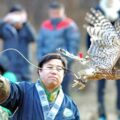
Three Korean traditions named world treasures: gagok (lyrical songs), daemokjang (wooden architectural craftsmanship) and maesanyang (falcon hunting). That UNESCO list keeps getting longer! http://bit.ly/9Ia99y # Daemokjang is Important Intangible Cultural Heritage No.74; Gagok is Important Intangible Cultural Heritage No.30 [Read More]
Korean art – two millennia of globalisation

“Why did it have to end so early?” asked a member of the audience at the conclusion of the British Museum’s study morning “Korea at the Crossroads” last weekend, 13 November. Strictly, the event had overrun by about five minutes, but you knew what she meant. More to the point would have been the question … [Read More]
Irrational exhuberance or sober restraint? The contrasting tastes of 18th century neighbours

Leaving aside the question of whether you would fork out £43 million (including taxes and buyer’s premium) for an object that a careless cat could smash to smithereens in an instant, which vase would you rather have on your mantelpiece? On the left, the exhuberant, flamboyant, labour-intensive masterpiece produced by Qing dynasty ceramic artisans (and … [Read More]
BAKS Symposium: ‘Reflections on War and Peace: Sixty Years after the Korean War’

The British Association for Korean Studies announce their 2010 symposium at Asia House: ‘Reflections on War and Peace: Sixty Years after the Korean War’ Asia House, London Saturday 20 November 2010 10:00 Opening Ceremony: Emeritus Prof. James H. Grayson, President of BAKS HE Dr Choo Kyu-Hoo, the Ambassador of the Republic of Korea, ’60 Years … [Read More]
Appeal from the Soldiers of Gloucestershire Museum

The text of a fund-raising appeal on behalf of the Glosters. Please donate generously. The 60th Anniversary of the Battle of Imjin, Korea is in April 2011 where The Gloucestershire Regiment as part of 29 Brigade fought with great distinction. To commemorate the occasion the Soldiers of Gloucestershire Museum in Gloucester will produce a new … [Read More]
To the Last Round – a second look

A year ago Jennifer Barclay reviewed Andrew Salmon’s then recently published To the Last Round (TTLR), an account of the epic British stand at the Imjin River in Korea, 1951. She confessed to not being a fan of military history, and though her review was polite you can tell she really didn’t enjoy it. Spurred … [Read More]
Who Ate Up All The Shinga – a critical essay by Alice Bennell

Alice Bennell, UK winner of last year’s Korean Literature Translation Institute essay contest on “There a Petal Silently Falls”, contributes her entry for this year’s competition. Who Ate Up All the Shinga is an autobiographical novel chronicling the early life of the author, Park Wan-Suh. The Japanese occupation of Korea, and events leading up to … [Read More]
Seal-maker deceived his Sancheong hosts

This makes me sad. Sancheong County was very proud of its association with the presidential seal. Now we discover that the seal-maker wasn’t all he promised to be. http://bit.ly/ayUI3W # [Read More]
On the Line: photo exhibition commemorating the Korean War

Press release for the upcoming exhibition at the KCC: ROK Ministry of National Defense Hosts “On the Line” Photo Exhibition in United Kingdom to Commemorate the 60th Anniversary of the Korean War 10 Renowned Korean Photographers Present their stories on the on-going war Exhibition Dates : 8 September – 25 September 2010 On September 8th … [Read More]
Five Royal Tombs. Destination: Seooreung (Goyang)
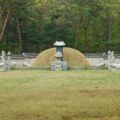
A few days ago LKL wrote about a Silla dynasty royal tomb in Sancheong County: the Last King of Kaya. Power K-blogger Chris Backe reports on a visit to five Joseon dynasty royal tombs in Goyang Just across the Seoul border rest some once-royal dead people. UNESCO certified as being significant to world culture, these … [Read More]
2010 Travel Diary #37: The Last King of Gaya

Korea is rightly proud of its heritage, and submits the most select elements of its long history to UNESCO for inscribing in the list of important world heritage items. One of the most recent items to have been so listed is the Joseon Dynasty Royal Tombs. They are beautifully peaceful places to visit. Perfectly manicured … [Read More]
Welcome back, Gwanghwamun

Welcome back to Gwanghwamun: unveiled 15 August, liberation day http://bit.ly/9KoMjZ # also in JoongAng Daily [Read More]