
Known as one of the greatest books in the history of Eastern medicine, the Donguibogam was composed by Heo Jun, a court physician in the early 17th century, and is today included as part of UNESCO’s World Heritage list. Despite the huge advances in medicine since that time, it is still referred to by doctors … [Read More]
Category: History (page 16)
The Changdeokgung’s Secret Garden – A Part of Nature

There was a series by Monty Don a while ago called Around the World in 80 Gardens. The East Asian segment was naturally devoted to Chinese and Japanese gardens. It is pity Korea was missed out, as the gardens of Korea have a distinct and unusual ethos. Koreans feel that nature has been good to them. … [Read More]
Rediscovering the Lost Kingdom of Baekje

History, according to the saying, is written by the victors. The unification of the three kingdoms of Korea under Silla in 668 AD solved the problem of constant war in the peninsula, but created a significant problem for modern day historians, in that very little of the culture and heritage of Baekje (BC 18~AD 660) … [Read More]
The Changdeokgung’s Injeong Hall – Welcome to the Rock Show!

When I visited Changdeok Palace in Seoul, my attention was naturally focussed mainly on the buildings themselves. One of these buildings is the Injeong Hall (Injeongjeon), which was used for important celebrations and ceremonies. The unassuming forecourt one walks through to enter the hall was been designed with great care, but for the unsuspecting observer … [Read More]
Live Long and Prosper – Food Advice from Old Choseon
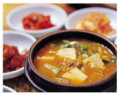
Traditional fermented dishes such as doenjang and Kimchi form the basis of the Korean diet. It is a known fact that the inhabitants of cultures and regions which have fermented milk products as part of their daily diet (e.g. the Caucasus) tend to live longer. In the case of soybean-based dishes such as doenjang, the … [Read More]
Bridge of National Defense collapses into Nakdong River

‘Bridge of National Defense’ Collapses into Nakdong River – reportedly due the Four Rivers project. The Marmot has a timely feature on some of these historic bridges: http://bit.ly/kHg19s. Photo above from Joongang Ilbo # [Read More]
China claims Arirang as its own

Why 'Arirang' isn't listed among Korea's cultural assets – and why it soon will be thanks to the Chinese. Interesting article in the Chosun Ilbo http://bit.ly/jFz2MM with a counterblast by Roboseyo (Nobody owns Arirang) # [Read More]
Is this the only modern Korea-related novel published by Penguin Classics?
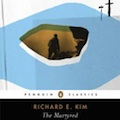
The number of Korea-related publications in the Penguin Classics list can probably be counted on the fingers of one hand, and most are by ancient Confucian sages. The publisher’s blurb below says that if you like Lee Changrae’s The Surrendered you’ll like this: Richard E Kim’s The Martyred. Lee didn’t do a good sales job … [Read More]
The Life and Teachings of Master Wonhyo
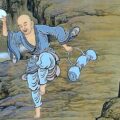
The life of Master Wonhyo (617-686 A.D.) is a typical Korean paradox. He was a scholar who composed over 100 works on Buddhist philosophy, whose influence in scholarship and teaching was felt in China and other surrounding countries. He is acknowledged today as the foremost figure in the history of Korean Buddhism. And yet, many … [Read More]
Cultural Heritage Administration is 50 this year

Taking what was achieved yesterday and handing it over to tomorrow: the Cultural Heritage Administration of Korea is celebrating its 50th anniversary this year. http://bit.ly/k5GoJt # [Read More]
Scorched Earth, Black Snow: Andrew Salmon presents his new book at the KCC

Last year Andrew Salmon presented his book To the Last Round at the KCC, in a fascinating evening. Another year, another book. To the Last Round is a great book, and it was sad that it really took the mainstream press a while to notice and appreciate it. This time round, the blogs and the … [Read More]
New Korean heritage listings at UNESCO

The Archives of the Gwangju uprising, plus the Ilseongnok (account of Joseon kings’ daily lives) have just been listed in UNESCO Memory of the World http://bit.ly/lJNKdY # The Ilseongnok is designated as National Treasure No.153 [Read More]
Lee Jung-seob: a wartime artist taking refuge in Jeju-do
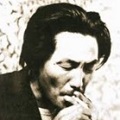
Seogwipo, Jeju-do, Saturday 7 May 2011. Lee Jung-seob (이중섭) (1916-1956) is one of Korea’s best-known post-liberation painters. His work is perhaps appreciated by artists and connoisseurs more than members of the public. His contemporary Park Soo-keun, with his unthreatening and nostalgic rustic scenes, is almost a household name. Lee’s work however is more varied, combining … [Read More]
Nammyeong Cho Shik: teacher, philosopher and inspiration for the anti-Japanese resistance armies

Sancheong-gun, Thursday 5 May 2011. Students of Korean history in the Koryo and particularly the Joseon period cannot avoid grappling at some stage with the concepts of Confucianism. Distilled down to its most digestible elements, it is portrayed in the West as a deeply conservative doctrine designed to keep people in their places: wives had … [Read More]
Book review: Chris Springer — North Korea Caught in Time

Chris Springer: North Korea Caught in Time – Images of War and Reconstruction with introductory essay by Balázs Szalontai. Garnet Publishing, 2010 (148pp) In the English-speaking world, the story of the Korean war and its aftermath, if told at all, is told first from the perspective of the US and UN combatants that came to … [Read More]
2011 Travel Diary day 2: the Changdeokgung and Biwon

Seoul, Sunday 1 May 2011. In previous years I had been foiled in my attempts to get to see the famous Secret Garden behind the UNESCO-listed Changdeok Palace. Either there were building works going on, or access was only via guided tour and I had missed my slot, or some other obstacle was put in … [Read More]