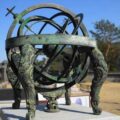
As mentioned in part 1, King Sejong presided over the zenith of Korean astronomical achievement. The construction of a large observatory at Gyeongbok Palace in 1438 – later destroyed without a trace in the Japanese invasion – played a key role in the country’s progress. On the roof were installed various astronomical instruments such as … [Read More]
Category: History (page 14)
Reading the Heavens Part 2 – World’s First Complete Star Map
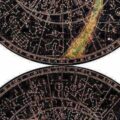
Koguryo generally has the tag of a warlike kingdom, and I always assumed that it was the least culturally developed of the Three Kingdoms of Korea. Amongst other things, however, it was responsible for the world’s earliest complete map of the stars. This planispheric star map is believed to have been produced in 1395, the … [Read More]
Reading the Heavens Part 1 – Two Millennia of Astronomy in Korea
To celebrate star-crossed lovers everywhere, Matthew Jackson starts a series of articles on Korean astronomy As we can tell from ancient monuments like the Dolmen stones and more recent buildings such as Cheomseongdae, astronomy was big in Korea. Why was this exactly? Reverence for nature was part of it, but it was in fact more … [Read More]
Rebellion in Pre-Modern Korea
Rebellion in Pre-Modern Korea: Regional Discrimination and the Musin Rebellion of 1728. Andrew Jackson talks at the London Senate House, Thursday 16 Feb at 5:30pm http://t.co/8CtqeUHR [Read More]
Blue Swallow (청연, 2005) review: a sympathetic treatment of a contested story
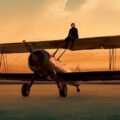
An epic film in every sense, Blue Swallow bravely tells the controversial story of pioneering Korean female aviator, Park Kyung-won. The narrative of necessity blends fact with fiction but, nonetheless, Blue Swallow boldly states that Park Kyung-won was a woman to be greatly admired, rather than vilified. [Read More]
The Front Line (고지전, 2011) review: know what you’re fighting for

While it could be said that the characterisations in The Front Line would have benefitted from having more depth and being slightly less obvious, the film nonetheless remains a far more worthy cinematic offering than any war film about a horse, Oscar nomination or not. [Read More]
Archaeology study day in Cambridge

An interesting half day this Saturday, 4 February: Study Day on the Archaeology of Early States on the Korean Peninsula AT THE McDONALD INSTITUTE FOR ARCHAEOLOGICAL RESEARCH UNIVERSITY OF CAMBRIDGE SATURDAY 4TH FEBRUARY 2012 Organised by Professor Kim Jong-Il (Seoul National University and Department of Archaeology, University of Cambridge) and Dr Simon Kaner (Sainsbury Institute … [Read More]
A look back at 2011 – part 1
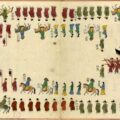
LKL’s annual look back at the stories and events of the last 12 months; this year, a multi-part piece, starting with some heritage, film, and the development of Korean food among world cuisines. Heritage The Ilsungrok (diaries of the daily lives of Joseon kings) and the written and visual logs of the pro-democracy movement in … [Read More]
Book review: Richard E Kim — The Martyred
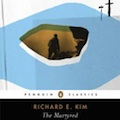
Richard E. Kim: The Martyred First published by George Braziller, 1964 Published in Penguin Classics 2011, with introduction by Heinz Insu Fenzl and Preface by Susan Choi. 199 pp Fourteen North Korean priests are rounded up by the communists just before North Korea invades the South in June 1950. Twelve of the priests are shot, … [Read More]
Taekkyeon gets UNESCO listing
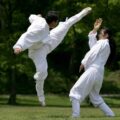
Taekkyeon beats Chinese Shaolin Kung Fu to UNESCO intangible cultural heritage listing. http://t.co/KkyDZ6tC. Tightrope walking (jultagi) and ramie weaving (mosi) also listed. [Read More]
Guilt, Nostalgia, and Victimhood: Korea in the Japanese Theatrical Imagination

Looks like a very interesting talk at the Japan Foundation on 1 December. Of course, it has to clash with something equally as compelling: a rare screening of Kim Ki-young’s Insect Woman at the KCC. The Japan Foundation hosts: Guilt, Nostalgia, and Victimhood: Korea in the Japanese Theatrical Imagination Speaker: Carol Fisher Sorgenfrei (UCLA) How … [Read More]
Mark Morris on Lee Man-hee and the flowering of Korean film in the 1960s
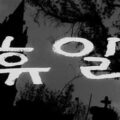
Everybody in Britain has heard of Samsung computers or Hyundai cars. However, another aspect of South Korea today is its successful export of films, music and TV dramas to neighbouring countries, known as ‘Korean Wave’ or ‘Hallyu’. In order to get a Western perspective on Korean cinema, I visited the Korean Cultural Centre in London … [Read More]
A mixed review for Lee Man-hee, the classic film director for LKFF 2011
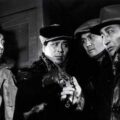
Most years, the London Korean Film Festival aims to include some classic films, usually from the 1960s, within its schedule. This is a valuable feature for UK cinemagoers, some of whom may be of the impression that Korean film started with Shiri. This year Lee Man-hee was featured, with two films: A Day Off and … [Read More]
Journey to Korea—working for the common good: at Greencoat Place

Matthew Jackson will be well-known to many LKL readers for his many articles on Korea’s heritage. Please support his talk at Greencoat Place near Victoria on 22 November: Journey to Korea — working for the common good Through screening short films, Matthew Jackson will highlight remarkable changes in South Korea since the Korean War (1950 … [Read More]
Recalling Korea Past: An Oral History of the 1950s to the 1980s
At the BAKS Korean War study day at Asia House in November last year one of the valuable sessions was provided by veterans from the war providing contemporary eye-witness recollections. So this year, BAKS have extended this idea to cover personal experiences from the post-war period. Highly recommended. Open to all. British Association for Korean … [Read More]
Jeju is provisionally a New 7 Wonder of Nature
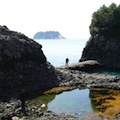
Jeju’s New7Wonders of Nature status is still provisional, but well done to the campaign team. An amazing effort. http://t.co/rHh2gIBo [Read More]