
Known as one of the greatest books in the history of Eastern medicine, the Donguibogam was composed by Heo Jun, a court physician in the early 17th century, and is today included as part of UNESCO’s World Heritage list. Despite the huge advances in medicine since that time, it is still referred to by doctors … [Read More]
Heritage Category: National Heritage (Cultural Heritage Administration) (page 4)
| Web and contact link(s): |  |
The Changdeokgung’s Secret Garden – A Part of Nature

There was a series by Monty Don a while ago called Around the World in 80 Gardens. The East Asian segment was naturally devoted to Chinese and Japanese gardens. It is pity Korea was missed out, as the gardens of Korea have a distinct and unusual ethos. Koreans feel that nature has been good to them. … [Read More]
Rediscovering the Lost Kingdom of Baekje

History, according to the saying, is written by the victors. The unification of the three kingdoms of Korea under Silla in 668 AD solved the problem of constant war in the peninsula, but created a significant problem for modern day historians, in that very little of the culture and heritage of Baekje (BC 18~AD 660) … [Read More]
The Changdeokgung’s Injeong Hall – Welcome to the Rock Show!

When I visited Changdeok Palace in Seoul, my attention was naturally focussed mainly on the buildings themselves. One of these buildings is the Injeong Hall (Injeongjeon), which was used for important celebrations and ceremonies. The unassuming forecourt one walks through to enter the hall was been designed with great care, but for the unsuspecting observer … [Read More]
China claims Arirang as its own

Why 'Arirang' isn't listed among Korea's cultural assets – and why it soon will be thanks to the Chinese. Interesting article in the Chosun Ilbo http://bit.ly/jFz2MM with a counterblast by Roboseyo (Nobody owns Arirang) # [Read More]
Poetry in Clay at the Metropolitan Museum

Poetry in Clay, the exhibition of Buncheong Ceramics from the Leeum Museum currently at the Metropolitan Museum is seriously worth a visit, with some beautiful pots. Interesting that they also juxtapose a couple of 20th century paintings. Kim Whanki’s dot paintings really do look like the dot decoration on one of the pots # Curator … [Read More]
New Korean heritage listings at UNESCO

The Archives of the Gwangju uprising, plus the Ilseongnok (account of Joseon kings’ daily lives) have just been listed in UNESCO Memory of the World http://bit.ly/lJNKdY # The Ilseongnok is designated as National Treasure No.153 [Read More]
2011 Travel Diary day 2: the Changdeokgung and Biwon

Seoul, Sunday 1 May 2011. In previous years I had been foiled in my attempts to get to see the famous Secret Garden behind the UNESCO-listed Changdeok Palace. Either there were building works going on, or access was only via guided tour and I had missed my slot, or some other obstacle was put in … [Read More]
Poetry in Clay: Korean Buncheong Ceramics from the Leeum Collection on view at Metropolitan Museum

News of an important temporary exhibition at the Met in New York. For the duration of the exhibition, the museum’s permanent display of Korean artefacts will be in storage. Poetry in Clay: Korean Buncheong Ceramics from Leeum, Samsung Museum of Art April 7 – August 14, 2011 A special loan exhibition focusing on the dynamic … [Read More]
Tripitaka Koreana is a copy, but an improvement on the original
Interesting article on the Tripitaka Koreana – an early example of Korean improvement on foreign intellectual property. http://bit.ly/fjShBC # [Read More]
Three Korean traditions named world treasures
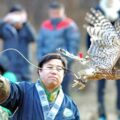
Three Korean traditions named world treasures: gagok (lyrical songs), daemokjang (wooden architectural craftsmanship) and maesanyang (falcon hunting). That UNESCO list keeps getting longer! http://bit.ly/9Ia99y # Daemokjang is Important Intangible Cultural Heritage No.74; Gagok is Important Intangible Cultural Heritage No.30 [Read More]
Five Royal Tombs. Destination: Seooreung (Goyang)
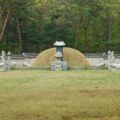
A few days ago LKL wrote about a Silla dynasty royal tomb in Sancheong County: the Last King of Kaya. Power K-blogger Chris Backe reports on a visit to five Joseon dynasty royal tombs in Goyang Just across the Seoul border rest some once-royal dead people. UNESCO certified as being significant to world culture, these … [Read More]
2010 Travel Diary #37: The Last King of Gaya

Korea is rightly proud of its heritage, and submits the most select elements of its long history to UNESCO for inscribing in the list of important world heritage items. One of the most recent items to have been so listed is the Joseon Dynasty Royal Tombs. They are beautifully peaceful places to visit. Perfectly manicured … [Read More]
Hahoe and Yangdong listed at UNESCO

Congratulations to historic villages Hahoe and Yangdong, “two of the most representative historic clan villages in the Republic of Korea,” and Korea’s latest inclusion in the UNESCO world heritage list, on 31 July. http://bit.ly/cqjKEl # The BBC has some nice photos of both villages, plus other UNESCO sites listed along with them including Reunion Island … [Read More]
2010 Travel Diary #30: Daewonsa – early morning prayers and sutra painting
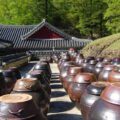
Friday 7 May. I wake up at 3 o’clock. My body seems to be ready for early morning prayers even though I hadn’t signed up for them. I wanted to hear those moktaks and chants again, so I crawl into my clothes and stumble out to the main temple courtyard to wait for the prayers … [Read More]
2010 Travel Diary #25: Heo Jun and Sancheong’s herbal heritage
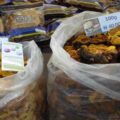
Thursday 6 May 2010. The mayor hurries off for an appointment: not only is the Sancheong Medicinal Herb Festival in full swing, but elections are approaching in a month’s time. In fact I’m amazed he has found time to meet with this foreign blogger at all. He leaves the rest of us to finish the … [Read More]