
In the second of five articles looking back over 2013, we recall some of the tourism and heritage stories that made the news. And we also take a look at some of the stories about Korean food, given the increasing popularity of Korean cuisine of Korea. Arts and Heritage Sungnyemun, the great Namdaemun gate, reopened … [Read More]
Heritage Category: National Heritage (Cultural Heritage Administration) (page 3)
| Web and contact link(s): |  |
Kimjang gets a UNESCO listing

Kimjang, the making and sharing of kimchi in the Republic of Korea, was admitted to the UNESCO register of intangible cultural heritage on 5 December 2013. Note that, like the listing of Arirang, this pan-Korean cultural item has been registered by South Korea. Links: Kimjang page at UNESCO Update 13 December: The South China Morning … [Read More]
2013 Travel Diary #34: The Gods of Land and Grain

Deoksugung, Jung-gu, Seoul, Sunday 15 September, 10:45am. By the time I reach the Deoksu Palace at 10:45am I’m already perspiring. I was wearing sunblock, but should have been wearing a sunhat and some shorts. It was going to be a hot day. This morning’s activity is a guided walk following the Sajik Daeje procession from … [Read More]
2013 Travel Diary #20: The temple of a thousand pagodas

Unjusa, Hwasun-gun, Wednesday 11 September, 3:45am. My phone wakes me up at 3:45 am, and I struggle into my trousers, splash some water onto my face, and make my way to the main shrine. I’m the first one there, and soon Kyung-sook arrives, then Wonsan himself. Later, a couple of the temple women join us. … [Read More]
2013 Travel Diary #19: Mosquitoes at Unjusa

Suncheon-si, Tuesday 10 September, 12:30pm We head back to the hotel for a quick shower and change of clothes, before lunch at a nearby eatery – a deliciously delicate clam noodle soup. The soup is brought in a large bowl full of a light broth. At the bottom of the bowl is a mound of … [Read More]
2013 Travel Diary #10: Breakfast at Beopgyesa

Beopgyesa Temple, Jirisan, Sancheong-gun, Sunday 8 September, 8:30am. Breakfast is again in the kitchen, and as usual (because I’m a foreigner unused to sitting on the floor) I’m allowed to sit with my back to the wall. I’m encouraged to stretch my legs out straight, and pummel my thighs and massage my knees, which are already … [Read More]
2012 Travel Diary #19: Beopgyesa Temple and those Japanese feng-shui stakes

Beopgyesa Temple (법게사) is the highest in Sancheong County and at least the third-highest in Korea. The good people of Sancheong believe that Beopgyesa is the highest temple in South Korea, a claim which is supported by Beopgyesa’s entry on the Cultural Heritage Administration website, where the following text is to be found: “It is … [Read More]
2012 Travel Diary #16: Silla pagodas, Korea’s first beautiful village, and Nammyeong’s tomb

Sancheong, Gyeongsangnam-do, Thursday 29 March 2012. Today is the day we start the ascent of Jirisan, but first there’s a couple of local sites of interest that I need to visit. First, the two Unified Silla dynasty stone pagodas, which are now the only remnants of Dansoksa, a temple built in the middle of the eighth … [Read More]
Kkokdu – a cortege’s colourful attendants
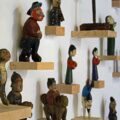
Accompanying the KCC’s exhibition of Korean funerary figures, Charlotte Horlyck gave a helpful lecture providing some historical background and context to these colourful wooden characters. The talk was particularly valuable as the introduction provided by the director of the Kkokdu Museum a few weeks previously had lacked much content. While generally admitting that not much … [Read More]
2012 Travel Diary 7: Yi Sun-shin — military genius, hero, poet

Tongyeong, Gyeongsangnam-do, Monday 26 March 2012. The brief ferry ride from Tongyeong to Hansando traverses the sheltered sound where Admiral Yi Sun-shin won a famous victory over the Japanese navy on 14 August 1592. On the day I crossed, it was difficult to imagine the tumult of a battle in which 47 Japanese ships were … [Read More]
What is the Donguibogam and what is in it?

Koreans usually have two choices when they have to visit a clinic: one is a medical clinic, employing western medicine for treatment; and the other is a traditional clinic, employing traditional medicine. There are many obvious differences between the two types, mainly concerning methods of diagnosis and treatment. Most importantly, the traditional medical clinic has … [Read More]
Buddha’s Voice – The Bell of King Seongdeok
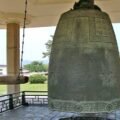
People sometimes take a jaundiced view of Korea’s estimation of the importance of its cultural heritage. In the case of the Sacred Bell of King Seongdeok, however, it was foreigner, Dr. Otto Kummel, a director at the National Museum of Germany, who suggested that the museum’s description of the bell as ‘the best in Korea’, … [Read More]
Donguibogam: Prevention before Treatment

The Donguibogam is a medical encyclopedia written by Heo Jun (1539-1615), a royal physician and renowned doctor, in the 16th to 17th century. People often say there has been no traditional Korean medicine (TKM) doctor greater than him since. The encyclopedia was registered at UNESCO as part of the ‘Memory of the World’ register in … [Read More]
Haeinsa celebrates 1,000 years of the Tripitaka Koreana

Haeinsa Temple is hosting its first contemporary art exhibition, involving 34 artists from 10 countries, to commemorate the millennial anniversary of the Tripitaka Koreana, which UNESCO has designated one of the “most important and most complete corpus of Buddhist doctrinal texts in the world.” The exhibition’s title — 通 | 통 | Tong — uses … [Read More]
Historical Korean portraiture on show at two Seoul museums

Interesting feature on two exhibitions of Korean portraiture, including a 1617 portrait of “the first Korean in Europe” http://t.co/lVN629Bx, also http://bit.ly/r9fy9g [Read More]
The many attractions of Sancheong County at the Thames Festival and beyond

This year, as for the past four years, Korea will be heavily represented at the Thames Festival. But this year, for the first time, the Korean village will host some stalls from parts of the country outside of Seoul. The regions all have particular unique characteristics to attract people to visit. Jeju-do, still in the … [Read More]