

Go, Stop, Murder gives a highly original take on classic Korean Cinema ideas and themes; feeling refreshingly different while retaining an almost unconscious familiarity. An unashamedly low budget production that deftly uses its financial limitations to greatly strengthen an already intelligently written script. [Read More]
Hangul Celluloid Korean film reviews (page 7)
Blood and Ties (공범, 2013) review: family loyalty and a faltering moral thriller
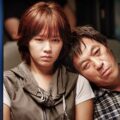
While ‘Blood and Ties’ tries to be an original take on a familiar narrative subject in its attempted dissection of familial ties, any chance of insightful commentary is marred by plot holes and predictably. Ultimately, the appearance and performances of Son Ye-jin and Kim Kap-soo are by far the strongest aspects of the film. [Read More]
Mourning Grave (소녀괴담, 2014) review: classic Korean horror with heart, humour and romance
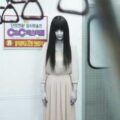
With ‘Mourning Grave’, director Oh In-chun extends his experience of blending horror and humour to include romance and melodrama; thereby not only fulfilling the almost requisite Korean cinema merging of love, loss and laughter elements in a single narrative but also resulting in the film feeling utterly classic, from the first frame to the last. [Read More]
Miss the Train (미성년, 2014) review: spirit, loss and the beauty of the journey
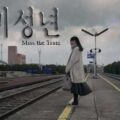
With its gently understated narrative realisation, ‘Miss the Train’ is at once a spiritual tale of destiny and a dream-like journey through love and loss, and though many will be able to anticipate its endpoint, in a film such as this the beauty and engagement of the journey itself takes precedence over any revelation at its destination. [Read More]
The Wicked (마녀, 2014) review: dark humour, shifting perceptions and creeping dread
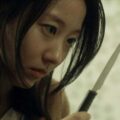
With the Korean horror genre having been somewhat in the doldrums recently – the majority of output (sadly) being rather predictable – ‘The Wicked’ comes as a breath of fresh air; refreshingly original at the same time as succeeding in being one of the most deeply creepy and wickedly humorous Korean horrors for some time… [Read More]
Thread of Lies (aka Elegant Lies) (우아한 거짓말, 2014) review: bullying, secrecy and the cost of silence

In focusing on the psychological aspects of bullying rather than the far more often seen examples of physical brutality, ‘Thread of Lies’ can delve far more deeply into the issue. An incredibly insightful and deeply poignant discussion of childhood persecution that feels utterly true to life, from start to finish. [Read More]
90 Minutes (90분, 2012) review: the price of entitlement
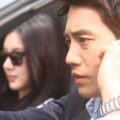
With its pulse-pounding, sexually-charged story detailing female retribution against a self-serving male guilty of flagrant sexual indiscretions and abuses, ’90 Minutes’ not only stands as an utterly gripping thriller but also serves to further the ongoing trend for depictions of strong women in Korean cinema as a whole. [Read More]
A Boy’s Sister (누나, 2013) review: rain, faith, and surrogate healing
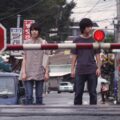
One moment moving and poignant, another brutal and difficult to watch, ‘A Boy’s Sister’ is ultimately a gripping depiction of deep-seated pain, guilt and blame and though, to my mind, one theme in particular is rather unnecessarily overstated, the film overall deftly succeeds in its goals. [Read More]
The Face Reader (관상, 2013) review: fate, power and intrigue in Joseon Korea

While The Face Reader could be said to have a somewhat simpler story overall than many of its Joseon era set contemporaries, its narrative is nonetheless as nuanced, multilayered and gripping as any; the sidestepping of any sexual/adult content serving to show that graphic sexual imagery is not a prerequisite for insightful drama. [Read More]
Killer Toon (더 웹툰: 예고살인, 2013) review: webtoon horror meets familiar ghostly vengeance

Killer Toon starts strongly – an interesting premise deftly realised with the help of exquisitely dark, stunning webtoon visuals – and though the film somewhat loses its way in its middle section, ultimately it stands as an engaging addition to the Korean horror film genre; complete with several perfectly creepy moments along the way. [Read More]
Nora Noh (노라노, 2013) review: fashion, film and a life of conviction

An enthralling documentary telling of the iconic designer’s efforts to create an exhibition to celebrate her 60 years in the fashion industry, also providing insights into post-war Korea, the changing place of women in Korean society, and the influence of Nora Noh’s designs on the Korean film industry and its stars [Read More]
Pluto (명왕성, 2012) review: fear, power and violence in Korea’s elite classrooms

While several of Pluto’s storyline elements will likely combine to bring Yoon Sung-hyun’s Bleak Night (2010) to viewers’ minds, Shin Su-won’s low budget thriller nonetheless manages to stand on its own as a dissection of fear within a dark and twisted tale laced with social commentary; ultimately feeling far more a companion piece than a derivation. [Read More]
Moebius (뫼비우스, 2013) review: fate, family, violence, and endless loops of desire

Originally given a Restricted rating by the Korean Media Ratings Board, Kim Ki-duk’s twisted tale of sex, religion, castration and incest subsequently underwent a number of cuts to gain a mainstream domestic cinema release. ‘Moebius’ is no less shocking as a result of those cuts. [Read More]
Cold Eyes (감시자들, 2013) review: a high-octane remake of a Hong Kong surveillance thriller

A remake/reworking of 2007 Hong Kong thriller ‘Eye in the Sky’, ‘Cold Eyes’ steps up scale, pace and warmth to stand on its own as a wholly engaging and thoroughly entertaining blockbuster that even largely manages to feel specifically Korean in nature, in spite of never straying too far from the original. [Read More]
The Peach Tree (복숭아나무, 2012) review: a gentle, nuanced melodrama of conjoined brotherhood

Any Korean film detailing themes of acceptance within a narrative centred on disability cannot fail to bring with it mention of Lee Chang-dong’s masterful ‘Oasis’, but ‘The Peach Tree’ largely manages to hold its own fairly well in the face of such illustrious company; albeit with one or two minor caveats. [Read More]
Jiseul (지슬 – 끝나지 않은 세월 2, 2013) review: a stark cinematic tribute to the Jeju 4:3 victims

Based on the US military-ordered ‘eviction’ of communists from Jeju Island in 1948, ‘Jiseul’ juxtaposes the mundane survival of hiding villagers with the cold duty of the soldiers hunting them. Shot in stark monochrome, the film is as intricate as it is poignant: a cinematic piece worthy of its accolades. [Read More]