One of the things we like about the London Korean Film Festival the range of different perspectives it offers us on the vibrant Korean film scene, from emerging directors to actor retrospectives via documentaries and more. One of the strands we appreciate most is the opportunity it gives us to see classic movies from the … [Read More]
Tag: Classic Korean Film (page 2)
Sweet Dream aka Death’s Lullaby (미몽 / 죽음의 자장가, 1936) review: the fallen woman in early Korean cinema
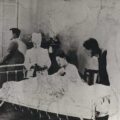
Sweet Dream uses its dark tale of a woman choosing her own needs over her familial responsibilities to critique the modernisation of Korean society in the 30s. Pulling no punches, Sweet Dream serves up a classic Korean cinema narrative arc complete with what would later become almost requisite melodramatic elements. [Read More]
Thousand Years Old Fox (천년호, 1969) review: gumiho myth and classic Korean horror

Ultimately as important as it is enjoyable, Thousand Years Old Fox takes a ‘classic horror’ tack in its depiction of a disembodied gumiho spirit taking possession of a human body to exact revenge; standing almost as a bridge between standard Asian ghost/evil spirit horror tales and the gumiho horror-romances that would eventually follow. [Read More]
Mark Morris on Lee Man-hee and the flowering of Korean film in the 1960s
Everybody in Britain has heard of Samsung computers or Hyundai cars. However, another aspect of South Korea today is its successful export of films, music and TV dramas to neighbouring countries, known as ‘Korean Wave’ or ‘Hallyu’. In order to get a Western perspective on Korean cinema, I visited the Korean Cultural Centre in London … [Read More]
A mixed review for Lee Man-hee, the classic film director for LKFF 2011
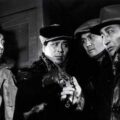
Most years, the London Korean Film Festival aims to include some classic films, usually from the 1960s, within its schedule. This is a valuable feature for UK cinemagoers, some of whom may be of the impression that Korean film started with Shiri. This year Lee Man-hee was featured, with two films: A Day Off and … [Read More]
Aigoo! Yu Hyun-mok, master of Korean realism, is so depressing
When asked to look back at his career, Yu Hyun-mok, one of the four greatest directors from the golden age of Korean film, said that he was proud of two achievements: That he was always an innovator; That he never filmed a melodramatic love story. In the latter achievement lies the key to Yu, as … [Read More]
Fallen heroes – two contrasting Korean war films

June last year at the KCC saw the screening of two contrasting Korean War films from the 21st century. This year we saw two contrasting films from the last century, with very different perspectives. Lee Man-hee’s The Marines who Never returned takes a heroic look at the South Korean forces as the allied troops move … [Read More]
The Marines who never returned screens at the KCC
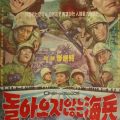
News of the screening at the Cultural Centre on 25 June, the anniversary of the start of the Korean War. Lee Man-hee’s classic war film – difficult to get to see. As usual, pre-registration is required. The Marines Who Never Returned (돌아오지 않는 해병) Director: Lee Man-hee (1963, 110 mins) Starring: Choi Mu-ryong, Chang Dong-hui … [Read More]
Korea’s least-known best films?
Mark Morris from Cambridge University’s Faculty of Asian and Middle Eastern Studies discusses two films shown at the Barbican on Sunday. The International Buddhist Film Festival (IBFF) chose the Barbican Centre for its venue between 7-17 May. Two remarkable Korean films stood out among an eclectic mix of documentary and narrative films. The 1949 Hometown … [Read More]
February is classic film month at the KCC
The Korean Cultural Centre has now been screening Korean films on a bi-weekly basis for a year now since the centre has opened. And to celebrate their year anniversary, they are delighted to present to you the Korean classic film series, which begins on Thursday 5 February with the screening of Han Myeong-mo’s classic Hyperbola … [Read More]
Aimless bullet, scary housemaid and Korea’s modern history

Two classic films from Korean cinema’s golden age provided a fascinating compare-and-contrast exercise last Monday night at the Barbican. Encouragingly, the films were better attended than the comparable double-bill last year (Madame Freedom and My Mother and her Guest). Maybe that reflects the growing literacy of UK audiences when it comes to Korean film. Or … [Read More]
Starbucks morality: a review of Han Hyeong-mo’s Madame Freedom (1956)
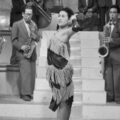
Han Hyeong-mo: Madame Freedom (1956) Round 2 of the Korean classic film double bill… In Shin Sang-ok’s 1961 film which formed the first part of the double bill on 5 November, a widow cannot talk to a man outside her family, and is expected to obey her mother-in-law. Admittedly, the film is set in the … [Read More]
Brief Encounter with Chopin – Shin Sang-ok’s My Mother and Her Guest

Shin Sang-ok: My Mother and Her Guest (1961) It was a shame to see two of the most interesting films in the London Korean Film Festival — My Mother and Her Guest and Madame Freedom — so sparsely attended. The Barbican had generously allocated its largest screen (capacity 286) in anticipation of enthusiastic interest — … [Read More]
Kim Ki-young retrospective in Paris
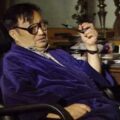
I’m afraid I’ve let you all down. There’s been a feast of film in Paris for the last few weeks at the Cinematheque: a retrospective of the great Kim Ki-young. It ends on Christmas Eve. One of the highlights would have been a round table on Kim, which included Bong Joon-ho, on 2 December. I … [Read More]