
From the publisher’s website: Here for the first time are translations of five plays by Oh T’ae-sok, Korea’s leading playwright and one of the most original dramatists and stage-directors working in Asia today. Drawing inspiration from both East and West and combining styles as disparate as ancient Korean masked dance-drama and contemporary avant-garde theater, these … [Read More]

Archives: Books (page 100)
Factory Girl Literature: Sexuality, Violence, and Representation in Industrializing Korea
From the publisher’s website: As millions of women and girls left country towns to generate Korea’s manufacturing boom, the factory girl emerged as an archetypal figure in twentieth-century popular culture. This book explores the factory girl in Korean literature from the 1920s to the 1990s, showing the complex ways in which she has embodied the … [Read More]
The Korean Presidents: Leadership for Nation Building
Dr. Choong Nam Kim has written an important and penetrating study of the Korean presidents from Syngman Rhee to Roh Moo Hyun in the context of their eras. His analysis of their influence and leadership styles is required reading in the continuing reassessment of their respective roles in the remarkable changes and development of politics … [Read More]
Twentieth Century Korean Literature
From the publisher’s website: This short volume offers essential information and a basic framework for understanding twentieth-century Korean literature. Growing out of a continuous tradition of over 2,000 years, twentieth-century Korean literature, termed “modern Korean Literature” by Korean scholars, has been shaped by profound social and political transformations on the peninsula. Those decades of great … [Read More]
Living Dangerously in Korea: The Western Experience, 1900–1950
From the publisher’s website: Korea was “discovered” by the West after World War II when it became a flashpoint in the Cold War. Before the war, however, it was home to many hundreds of Westerners who experienced life there under Japanese colonial rule. These included missionaries who opened Korea as a field for evangelism, education, … [Read More]
Plays of Colonial Korea

From the publisher’s website: During the Japanese occupation of Korea, young intellectuals like Se-dŏk Ham, eager to transform the traditional Korean ways, introduced Western arts, philosophy, and technology and styled themselves as bringing enlightenment. It was in this edgy, tumultuous world that Ham’s plays were first performed. With the end of World War II and … [Read More]
Korea’s Premier Collection of Classical Literature: Selections from Sŏ Kŏjŏng’s Tongmunsŏn

From the publisher’s website: This is the first book in English to offer an extensive introduction to the Tongmunsŏn (Selections of Refined Literature of Korea)—the largest and most important Korean literary collection created prior to the twentieth century—as well as translations of essays from key chapters. The Tongmunsŏn was compiled in 1478 by Sŏ Kŏjŏng … [Read More]
Korean Kayagum Sanjo: A Traditional Instrumental Genre

From the publisher’s website: The Korean genre of sanjo is today one of the most popular genres of traditional music, taught in schools and universities within Korea, and a staple of national and international performance tours. Sanjo comprises a set of related pieces for solo melodic instrument and drum. A number of ‘schools’ (ryu) are … [Read More]
Hwang Byungki: Traditional Music and the Contemporary Composer in the Republic of Korea

From the publisher’s website: Anyone who knows anything of Korean music probably knows something of Hwang Byungki. As a composer, performer, scholar, and administrator, Hwang has had an exceptional influence on the world of Korean traditional music for over half a century. During that time, Western-style music (both classical and popular) has become the main … [Read More]
The Orchid Door
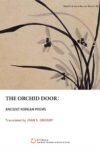
“Usually considered to be the first volume of Korean poetry in English translation ever published”: Brother Anthony gives the background to the printing of this set of translations of ancient Korean poems, a volume illustrated by Lilian Miller. As he explains, Grigsby reworked some literal translations by James Scarth Gale and others, “taking them into … [Read More]
Cry of the People and Other Poems
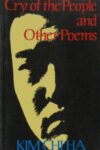
Also available from LTI Korea. No further information available. [Read More]
Voices of the Dawn
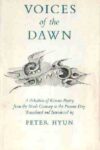
A Selection of Korean Poetry from the Sixth Century to the Present Day Also available from LTI Korea. No further information available [Read More]
Anthology of Korean Poetry from the Earliest Era to the Present
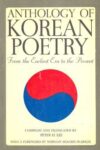
From the back cover: This is the first comprehensive anthology of Korean poetry ever published in the English language. In it Peter H. Lee, a Korean scholar, has selected and translated the verse of his country, ranging from the beginning of the Silla Dynasty, in 57 B.C., to the middle of the twentieth century. LKL … [Read More]
Poems from Korea: A historical anthology
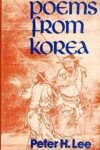
Compiled and translated by Peter H. Lee. Foreword by Norman Holmes Pearson Billed as the UNESCO collection of representative works, this volume contains works by many authors, from King Mu of Paekche onwards. According to Stanford University’s Searchworks, this collection was first published in 1964 under the title: Anthology of Korean poetry from the earliest … [Read More]
The 1728 Musin Rebellion: Politics and Plotting in Eighteenth-Century Korea
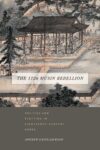
The 1728 Musin Rebellion: Politics and Plotting in Eighteenth-Century Korea provides the first comprehensive account in English of the Musin Rebellion, an attempt to overthrow King Yŏngjo (1694–1776; r. 1724–1776), and the largest rebellion of eighteenth-century Korea. The rebellion proved unsuccessful, but during three weeks of fighting the government lost control of over a dozen … [Read More]
Salvation through Dissent: Tonghak Heterodoxy and Early Modern Korea
A popular teaching that combined elements of Confucianism, Daoism, Buddhism, folk beliefs, and Catholicism, Tonghak (Eastern Learning) is best known for its involvement in a rebellion that touched off the Sino-Japanese War (1894–1895) and accelerated Japanese involvement in Korea. Through a careful reading of sources—including religious works and biographies many of which are translated and … [Read More]