
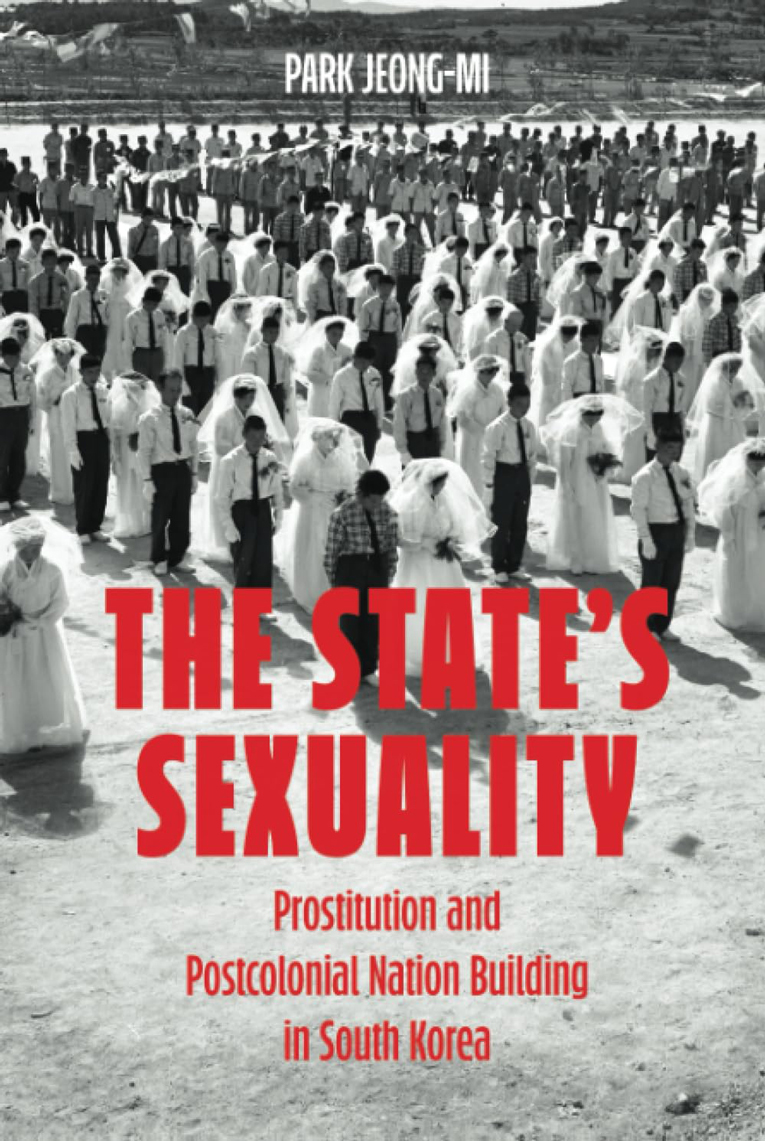
Author: Park Jeong-mi
Publisher: University of California Press, 2024
Link to online store *
The State’s Sexuality uncovers how the lives and work of women engaged in prostitution, long considered the most abased members of society, have been strategically intertwined with the lofty purpose of building South Korea’s postcolonial nation-state. Through a complicated, contradictory patchwork of laws and regulations, which Park Jeong-Mi conceptualizes as a “toleration-regulation regime,” the South Korean state did not merely exclude sex workers from ordinary citizenship; it also mobilized them for national security, national development, and the making of a gendered citizenry. In the process, the newly independent state was constructed, augmented, and consolidated. Sex workers often protested such draconian policies and sometimes utilized state apparatuses to get recognition as citizens. Based on expansive, meticulous archival research and sophisticated interpretation of historical records and women’s voices, Park rewrites the dynamic history of South Korea from 1945 to the present through the lens of prostitution.
Park Jeong-mi is Associate Professor of Sociology at Chungbuk National University, South Korea.
Contents
Introduction: Weaving Prostitution into the Narrative of the Nation-State
- The Struggle for a New Nationhood: The Liberation, Abolition Campaign, and Postcoloniality
- Hot War, Cold War, and Patriotic Prostitutes: Prostitution for National Security
- “Pivotal Workers to Obtain Foreign Currency”: Prostitution for National Development
- Ladies and Gentlemen (and Prostitutes): The Making of a National Community and Gendered Citizenry
- Feminist Attempts to Reconstruct a Moral Nation
Source: publisher’s website