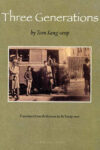
Touted as one of Korea’s most important works of fiction, Three Generations (published in 1931 as a serial in Chosun Ilbo) charts the tensions in the Jo family in 1930s Japanese occupied Seoul. Yom’s keenly observant eye reveals family tensions withprofound insight. Delving deeply into each character’s history and beliefs, he illuminates the diverse pressures … [Read More]

Booklist: Korean literature in translation (page 42)
Eyes of Dew

From the publisher’s website: Chonggi Mah represents a unique figure in Korean poetry similar to that of William Carlos Williams, but with a twist. While he is recognized as an award-winning poet in Korea, he has worked in the United States as a doctor and professor. Many of his poems reflect his work as a … [Read More]
Flowers of a Moment

“Bodhisattva of Korean poetry, exuberant, demotic, abundant, obsessed with poetic creation . . . Ko Un is a magnificent poet, combination of Buddhist cognoscente, passionate political libertarian, and naturalist historian.”—Allen Ginsberg “Korea’s greatest living Zen poet.”—Lawrence Ferlinghetti Flowers of a Moment is a treasure trove of more than 180 brief poems by a major world poet … [Read More]
Anxiety of Words: Contemporary Poetry by Korean Women

From the publisher’s website: Anxiety of Words is the first anthology of Korean women’s poetry that challenges one of Korea’s most enduring literary traditions: that “yoryu” (female) poetry must be gentle and subservient. By using innovative language, and vividly depicting women’s lives and struggles within an often repressive society, these three contemporary poets defiantly insist that … [Read More]
Abiding Places, Korea South & North
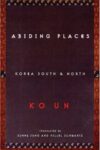
From the publisher’s website: In Abiding Places, Korean poet Ko Un has transfigured his homeland in lovely, observant, and penetrating poems uniting ancient and modern, secular and spiritual, art and politics, South and North. When his former political cellmate Kim Dae-Jung became President of Korea in 1998, Ko Un became the first citizen from the South … [Read More]
The Book of Korean Poetry: Songs of Shilla and Koryo

From the publisher’s website: “Here at last in one English-language volume is the heart and soul of the Korean lyric tradition, brought to sensuous life by a poet who is our finest all-around translator of Korean literature.”—Bruce Fulton, Young-Bin Min Chair in Korean Literature and Literary Translation, University of British Columbia Korea’s history is divided … [Read More]
Banya: The Explosive Delivery Man
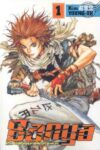
With a worldwide war raging between humans and monsters, the young delivery men of the Gaya Desert Post Office do not pledge allegiance to any country or king. They are banded together by a pledge to deliver. Fast. Precise. Secure. Banya, the craziest and craftiest of the bunch, will stop at nothing to get a job … [Read More]
Literature from the “Axis of Evil”
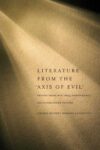
From the publisher’s website: “The governments might be considered quote unquote the enemy, but definitely not the people. These stories and poems offer an alternate view, which is very different from the politicized and polarized view of these nations.” —Azar Nafisi, author of Reading Lolita in Tehran Subject of a full-length segment on Morning Edition … [Read More]
The Dwarf
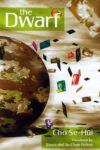
The dark side of South Korea’s “economic miracle” emerges in The Dwarf, Cho Se-hui’s enormously popular and critically acclaimed work. First published in 1978, it speaks to the painful social costs of reckless industrialization, even as it tellingly portrays the spiritual malaise of the newly rich and powerful and a working class subject to forces … [Read More]
Dead Silence
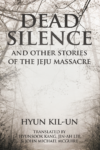
A tragic – and largely forgotten – event following the liberation of Korea occurred on Jeju Island in 1948. An event now called “The Jeju Massacre”. On April 3, 1948, an armed guerrilla uprising was suppressed by the police and military constabulary. The guerrilla attacks had begun on April 1 and by April 3 the … [Read More]
Chinatown (Jimoondang ed)
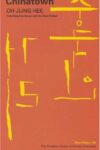
Korea was an arduous and painstaking place to live in after the nation’s civil war. Incheon, one of the war’s most famous backdrops, provides the setting for Chinatown, the story of life in one of the ubiquitous shantytown areas that dotted the Korean landscape at the time, and is a painfully real account of what … [Read More]
A Love Song for the Earnest

From the publisher’s website: For the Korean farmers of the second half of the twentieth century, Korea’s shift from a farming to an industrial society imposed hardship on their lives. Shin Kyungrim, who understood their pain and suffering, recorded their feelings in A Love Song for the Earnest, a collection of over sixty poems that … [Read More]
Sunrise over the East Sea

From the publisher’s website: This selection of Park Hi-jin’s poems includes about ninety of his poems of diverse lengths from among some two thousand poems he has published so far. Though they may not represent a fair cross section of his poetic works in content and expression, they do convey some of his more important … [Read More]
Enough to Say It’s Far: Selected Poems of Pak Chaesam
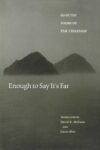
From the publisher’s website: This is the first English translation of selected poems by one of the most important and unusual modern poets of South Korea. In contrast to the strident political protests found in the poetry of many of his contemporaries, Pak Chaesam’s work is characterized by intimate portraits of place, nature, childhood, and … [Read More]
The Three Way Tavern

From the publisher’s website: Ko Un, the preeminent Korean poet of the twentieth century, embraces Buddhism with the versatility of a master Taoist sage. A beloved cultural figure who has helped shape contemporary Korean literature, Ko Un is also a novelist, literary critic, ex-monk, former dissident, and four-time political prisoner. His verse—vivid, unsettling, down-to-earth, and … [Read More]
Ten Thousand Lives

From the publisher’s website: Born in 1933 in a small rural village in Korea’s North Cholla Province, Ko Un grew up in a Japanese-controlled land that was soon to experience the horrors of the Korean War. He became a Buddhist monk in 1952, and began writing in the late 1950s. Ten Thousand Lives is his … [Read More]