
First published in 1990, this is a sensational and highly controversial novel by one of Korea’s most electrifying contemporary authors. A preposterous coming-of-age story, melding sex, death, and high school in a manner reminiscent of some perverse collision between Georges Bataille and Beverly Cleary, the narrator of this book plows through contemporaneous Korean mores with … [Read More]

Archives: Books (page 144)
Miracle on Cherry Hill

This is the story of a man named Kang Dae-su. His whole life is a miracle, rising from poverty to running a successful construction company. In his twilight years, Kang is diagnosed with a brain tumour. He returns to his childhood home of Cherry Hill. He acquires a crumbling old house in which to retreat … [Read More]
The Dog Who Dared to Dream

This is the story of a dog named Scraggly. Born an outsider because of her distinctive appearance, she spends most of her days in the sun-filled yard of her owner’s house. Scraggly has dreams and aspirations just like the rest of us. But each winter, dark clouds descend and Scraggly is faced with challenges that … [Read More]
The Hen who Dreamed she could Fly
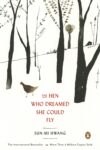
This is the story of a hen named Sprout. No longer content to lay eggs on command only to have them carted off to the market, she glimpses her future every morning through the barn doors, where the other animals roam free, and comes up with a plan to escape into the wild―and to hatch … [Read More]
Wolves

“Written in a beautifully rendered, nuanced language, Wolves is a window into a little-known world.” —Krys Lee – Author of How I Became a North Korean Jeon Sungtae’s short stories build a unique world through their consummate construction and firm roots in reality. With Mongolia as the physical background and through the perspectives of outsiders, … [Read More]
Sweet Potato: Collected Short Stories
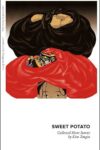
Kim Tongin (1900-1951) is one of Korea’s earliest and most respected modern writers whose naturalist fiction brilliantly depicts Korean life during a period of profound social change. Namesake of the prestigious Dong-in Literary Award, Kim Tongin’s succinct writing style can still inspire readers and provide insight into early 20th century Korea over 60 years after … [Read More]
One Hundred Shadows
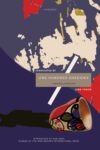
An oblique, hard-edged novel tinged with offbeat fantasy, One Hundred Shadows is set in a slum electronics market in central Seoul an area earmarked for demolition in a city better known for its shiny skyscrapers and slick pop videos. Here, the awkward, tentative relationship between Eun-gyo and Mujae, who both dropped out of formal education … [Read More]
I’ll Go On

‘That’s how it generally is with Aeja’s stories. They’re as potent as a putrid peach. Listening to her words your head starts to droop with their sticky juice trickling down your ears, until all you can do is succumb to the saccharine flow.’ From one of South Korea’s most acclaimed young authors comes the story … [Read More]
The Impossible Fairy Tale
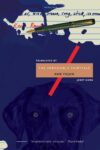
A chilling, wildly original novel from a major new voice from South Korea The Impossible Fairy Tale is the story of two unexceptional grade-school girls. Mia is “lucky”―she is spoiled by her mother and, as she explains, her two fathers. She gloats over her exotic imported color pencils and won’t be denied a coveted sweater. … [Read More]
The Republic of Užupis
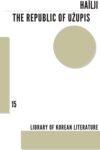
Uzupis (on the other side of the river) is, in reality, a neighborhood in Lithuania’s capital city of Vilnius, which took the peculiar step of declaring itself an independent republic in 1997. In this novel, however, it is the lost homeland of a middle-aged man named Hal, who lands in Lithuania hoping to travel back … [Read More]
The Good Son

Early one morning, twenty-six-year-old Yu-jin wakes up to a strange metallic smell, and a phone call from his brother asking if everything’s all right at home – he missed a call from their mother in the middle of the night. Yu-jin soon discovers her murdered body, lying in a pool of blood at the bottom … [Read More]
Suni Samchon (Bi-lingual, Vol 3 – Division)
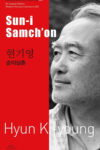
Hyun Ki-young was born on Jeju Island in 1941 and graduated from Seoul National University. He has served as the Managing Director of the National Literary Writers Association and as the President of the Korean Arts & Culture Foundation (2003). Hyun was also the director of the Committee for the Investigation of the April 3rd … [Read More]
Dead Silence
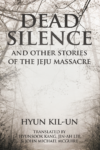
A tragic – and largely forgotten – event following the liberation of Korea occurred on Jeju Island in 1948. An event now called “The Jeju Massacre”. On April 3, 1948, an armed guerrilla uprising was suppressed by the police and military constabulary. The guerrilla attacks had begun on April 1 and by April 3 the … [Read More]
The Moving Fortress
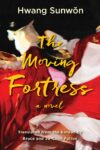
Hwang Sunwon’s The Moving Fortress (1972) is a panorama of Korea and Koreans coming to terms with the confrontation of tradition with modernity. Contemporary events, such as the demolition of a squatter neighborhood, as well as flashbacks to the Korean War, help to set the social and historical context of the novel. [Read More]
Trees on a Slope
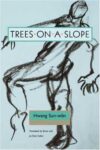
Hwang Sun-won (1915-2000) is one of modern Korea’s masters of narrative prose. Trees on a Slope (1960) is his most accomplished novel – one of the few Korean novels to describe in detail the physical and psychological horrors of the Korean War. It is an assured, forceful depiction of three young soldiers in the South … [Read More]
The Descendants of Cain

Hwang Sun-won, perhaps the most beloved and respected Korean writer of the 20th century, based this extraordinary novel on his own experiences in his North Korean home village between the end of World War II and the eve of the Korean War when Korea had been divided into North and South by its two “liberators” … [Read More]