
(Also known, in its hardback edition, as K-food: Our home cooking and street food) There’s a great buzz around Korean food right now, and it’s no surprise given the robust, addictive flavours of the cuisine. With more than 100 recipes, this book offers a great introduction, making Korean cooking easy for any cook. From Korean … [Read More]

Archives: Books (page 88)
Folk Art and Magic: Shamanism in Korea
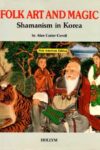
From the dust jacket: Just what are the secrets of Shamanism’s survival in Korea for over five millennia? Even after sixteen centuries of suppression, first by Buddhists for a thousand years, then by Neo-Confucianists who ruled Korea for five centuries, finally by missionaries who regarded this folk faith as “the basest demonology,” Shamanism still persisted … [Read More]
The Paintings of Korean Shaman Gods: History, Relevance and Role as Religious Icons

From the publisher’s website: This is the first comprehensive, fully illustrated study of Korean shaman gods to be published in English; it includes 130 full-colour plates of shaman gods, many dating back to the eighteenth century. In addition to the plate section, the volume comprises three texts: An illustrated introductory chapter by Christina Han on … [Read More]
Wrongful Deaths: Selected Inquest Records from Nineteenth-Century Korea

From the publisher’s website: This collection presents and analyzes inquest records that tell the stories of ordinary Korean people under the Choson court (1392-1910). Extending the study of this period, usually limited to elites, into the realm of everyday life, each inquest record includes a detailed postmortem examination and features testimony from everyone directly or … [Read More]
Marginality and Subversion in Korea: The Hong Kyongnae Rebellion of 1812
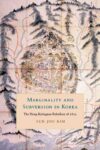
In the history of Korea, the nineteenth century is often considered an age of popular rebellions. Scholarly approaches have typically pointed to these rebellions as evidence of the progressive direction of the period, often using the theory of class struggle as an analytical framework. In Marginality and Subversion in Korea, Sun Joo Kim argues that … [Read More]
Park Chung Hee and Modern Korea: The Roots of Militarism, 1866-1945

For South Koreans, the twenty years from the early 1960s to late 1970s were the best and worst of times—a period of unprecedented economic growth and of political oppression that deepened as prosperity spread. In this masterly account, Carter J. Eckert finds the roots of South Korea’s dramatic socioeconomic transformation in the country’s long history of militarization—a … [Read More]
The Park Chung Hee Era: The Transformation of South Korea
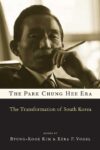
From the publisher’s website: In 1961 South Korea was mired in poverty. By 1979 it had a powerful industrial economy and a vibrant civil society in the making, which would lead to a democratic breakthrough eight years later. The transformation took place during the years of Park Chung Hee’s presidency. Park seized power in a … [Read More]
Cry Korea: The Korean War: A Reporter’s Notebook
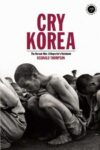
From the back cover: “Now in the twentieth century as it moves towards sanity or mad despair the slayer needs merely touch a button and death is on the wing, blindly, blotting out the remote, the unknown people.” From September 1950 Reginald Thompson reported from the frontline during the four months in which the Korean … [Read More]
Frontier Contact Between Choson Korea and Tokugawa Japan

East Asia from 1400 to 1850 was a vibrant web of connections, and the southern coast of the Korean peninsula participated in a maritime world that stretched to Southeast Asia and beyond. Within this world were Japanese pirates, traders, and fishermen. They brought things to the Korean peninsula and they took things away. The economic … [Read More]
The Cinema of Japan and Korea
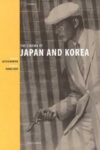
From the back cover: The Cinema of Japan and Korea provides a timely introduction to the history and continuing vibrancy of Japanese and Korean film. The 24 concise and informative essays each appraoch an individual film or documentary, together offering a unique insight into the cinematic output of these two countries. With a range that … [Read More]
Seoul Stirring: 5 Korean Directors
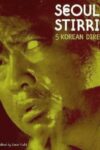
This catalogue, based on a festival held at the ICA from 21 October to 10 November 1994, provides a survey of contemporary Korean cinema and offers background information and material on 5 key Korean directors: Im Kwon-Taek, Jang Sun-Woo, Kim Ui-Seok, Lee Myung-Se and Park Kwang-Su. [Read More]
Korean Film: History, Resistance, and Democratic Imagination

Despite its rise in the global market, recent political progress, and a surging interest worldwide, Korean films are relatively unknown and rarely studied. This new work begins by investigating the history, industry structure, and trends of filmmaking in Korea, going on to examine how Hollywood films have affected both Korean mainstream and nonmainstream film industries … [Read More]
The History of Korean Cinema

From the back cover: This book is the first English edition which describes the history of Korean motion pictures. The Motion Picture Promotion Corporation is very much indebted to world film men for this book, who are deeply interested in Korean film, especially today. This fact is the same case with the author of this … [Read More]
Mixed Korean: Our Stories
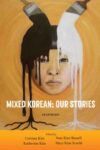
From the Mixed Race Studies website: From the struggles of the Korean War, to the modern dilemmas faced by those who are mixed race, comes an assortment of stories that capture the essence of what it is to be a mixed Korean. With common themes of exclusion, and recollections of not looking Korean enough, black … [Read More]
Free Food for Millionaires
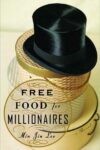
From the author’s website: In her critically acclaimed debut, National Book Award finalist Min Jin Lee introduces the indelible Casey Han: a strong-willed, Queens-bred daughter of Korean immigrants who is addicted to a glamorous Manhattan lifestyle she cannot afford. Fresh out of Princeton with an economics degree, no job, and a popular white boyfriend, Casey … [Read More]
How I became a North Korean

From the publisher’s website: Yongju is an accomplished student from one of North Korea’s most prominent families. Jangmi, on the other hand, has had to fend for herself since childhood, most recently by smuggling goods across the border. Danny is a Chinese-American teenager of Korean descent whose parents left China when he was nine; his … [Read More]