

If you’re not intimidated by the standard of last year’s Korean speech competition – see the below video clip – then get your applications in for this year’s contest, to be held on 6 June. 말 MAL – The 2nd Korean Speech Contest in the UK Let’s Speak Korean Date: 6th June 2015 14:00 Venue: … [Read More]
Category: Language (page 2)
Burberry – the favoured brand of Korean flashers
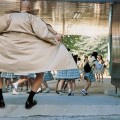
In the last decade, British fashion brand Burberry manage to rescue itself from the chav associations caused by too liberal licensing of its check design to companies it couldn’t control. But you can’t control the use to which a raincoat is put. And according to the Hankyoreh: Burberry coats have long been sought after in … [Read More]
Brighten up your hangeul typeface
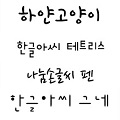
Bored with the default hangeul font on your PC? The Korea Blog has a brief article on hangeul as compared with other scripts, explaining some of the difficulties with hangeul typography. But best of all, they provide a couple of links where you can download hangeul fonts for free: Naver’s Nanum font collection (4 varieties) … [Read More]
Eating yeot, or not

Ask A Korean has a great post on the reason why a disgruntled fan might want to lob a few toffees at the returning Korean football team. He has a few explanations why “Eat Yeot” is considered an insult. The article prompted an LKL reader to add a different story about eating yeot as a … [Read More]
Koreans in America: the Slate map of the most popular language in your State

AAPI Voices say that the Slate got it wrong, but at least the Slate article on the most popular language in your State got the Korean states right. So why is it that, after Spanish and English, Korean is the most-spoken language in Virginia and Georgia? One suggestion from an LKL reader is that Virginia … [Read More]
Kim Yuna’s Lark of Emergency and other popular classics

Browsing in the Hankyoreh yesterday I came across some charming pictures of Queen Yuna. This particular one, with the famous yellow logo on the CD cover … … got me googling for Deutsche Grammophon compilations of Kim’s backing tracks. And I came across this: Scrolling down to the tracklist I find that the label hasn’t … [Read More]
No medals for the BBC’s Sochi closing ceremony coverage

As the Olympic flag was passed from Sochi to the mayor of Pyeongchang, it was time for a brief preview of the 2018 Winter Olympics Opening Ceremony. The BBC voiceover was done by sports commentator Hazel Irvine, who had been handed a press briefing but no more. Helpfully, she identified that the bird characters on … [Read More]
Some Quite Interesting Korean folk expressions

The witty comedy quiz show QI is now in its 11th series for the BBC, focusing on Quite Interesting facts connected with things that begin with the letter K. Plenty of scope for things Korean to crop up, then. In the episode that screened on 21 September, a series of Korean folk expressions came up. … [Read More]
The challenges of marketing and translating Korean literature explored at the KCC

Shouvik Datta reports from the Korean Literature Forum at the KCCUK on 15 October. It was an interesting and well-attended discussion at the London Korean Cultural Centre on October 15, well chaired by the BBC journalist Samira Ahmed. My own knowledge of Korean literature is confined to the modern classic “Three Generations”, by Yom Sang-seop, … [Read More]
Gi: some linguistic trivia
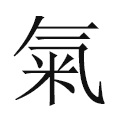
Sancheong, 13 September 2013. Browsing the Donguijeon at the Sancheong international Traditional Medicine Fair & Festival, I learned some mildly interesting linguistic trivia about the word gi. First, some words which use the word gi as a component: 기(氣)분 좋다 Feel good 공기(氣)가 좋다 Get fresh air 기(氣)가 산다 Feel energetic 온기(氣)가 있다 Be warm … [Read More]
2013 Travel Diary #27: Last day at the Expo

Donguibogam Village, Sancheong-gun, Friday 13 September, 7am. There’s still a long list of things I have to do before leaving. We have to pay a courtesy call on the mayor to say farewell, plus I want to pay a last visit to the Festival. And of course I need to gather everything together, trying to … [Read More]
What the British Say… and what they mean

This has been doing the rounds on the internet for a while, but deservedly: a very accurate dissection of the differences between what the British say, what they actually mean and what the non-native-English-speaker, or indeed anyone not British, might understand. Although the table suggests it relates to the British, it’s probably most accurate of … [Read More]
Elephant learns to speak Korean

Well almost. According to the BBC, Koshik the elephant has learnt to imitate human speech and can say five words in Korean: hello, no, sit down, lie down and good. The zoo animal places the tip of his trunk into his mouth to transform his natural low rumble into a convincing impression of a human … [Read More]
Korea – the Amsterdam of Asia?
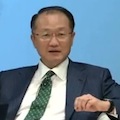
We’ve heard of the Koreans being the Irish of Asia. But in a recent video video interview in the Wall Street Journal World Bank president Jim Yong Kim says that “Koreans have expressly said they want to be the Amsterdam of Asia.” To many, that would mean Korea wants to legalise certain narcotic substances – … [Read More]
Witty Specsavers ad irritates academics

The quick-thinking Specsavers ad capitalising on the Olympic flag gaffe seems to have ruffled a feather in academic circles for being written in bad Korean. So what if “Specsavers” should be at the beginning of the sentence? Putting it there would have completely baffled the non-Korean speaking audience it’s aimed at. [Read More]
Translation and cultural uniqueness – another take on the KCC Literature workshop

I’ve long been interested in knowing more about modern Korean literature. So I learnt with interest about the Korean literature workshop (Tuesday, June 26, 5-7pm) and looked forward to it as I arrived for the event at the Korean Cultural Centre on London’s Strand. The evening began with a talk by Dr Grace Koh of … [Read More]