
From the publisher’s website: The lineage novel flourished in Korea from the late seventeenth to the early twentieth century. These vast works unfold genealogically, tracing the lives of several generations. New storylines, often written by different authors, follow the lives of the descendants of the original protagonists, offering encyclopedic accounts of domestic life cycles and … [Read More]

Archives: Books (page 110)
Neo-Confucianism and Science in Korea: Humanity and Nature, 1706-1814

Historians of late premodern Korea have tended to regard it as a hermit kingdom, isolated from its neighbours and the wider world. In fact, as Ro argues in this book, Korean intellectuals were heavily influenced by both Chinese Neo-Confucianism and the European Enlightenment in the late 18th and 19th centuries. In the late Choson period … [Read More]
Redemption and Regret: Modernizing Korea in the Writings of James Scarth Gale
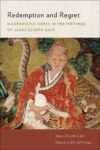
Redemption and Regret presents two previously unpublished typescripts of James Scarth Gale, a Canadian missionary to Korea for four decades (1888–1927). During his time in Korea, Gale developed into the foremost Western scholar of Korean history, language, and literature, completing the first translation of Korean literature into a Western language, the first translation of English … [Read More]
Hegemonic Mimicry: Korean Popular Culture of the Twenty-First Century

In Hegemonic Mimicry, Kyung Hyun Kim considers the recent global success of Korean popular culture—the Korean wave of pop music, cinema, and television also known as hallyu—from a transnational and transcultural perspective. Using the concept of mimicry to think through hallyu’s adaptation of American sensibilities and genres, he shows how the commercialization of Korean popular culture … [Read More]
The History of Modern Korean Fiction (1890-1945): The Topography of Literary Systems and Form
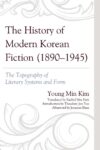
From the publisher’s website: Young Min Kim – Translated by Rachel Min Park – Introduction by Theodore Jun Yoo – Afterword by Jooyeon Rhee This book explores the history of modern Korean literature from a sociocultural perspective. Rather than focusing solely on specific authors and their works, Young Min Kim argues that the development of … [Read More]
Literature and Cultural Identity during the Korean War: Comparing North and South Korean Writing

Through an in-depth analysis of wartime essays and literary works, Literature and Cultural Identity during the Korean War considers the similarities and differences in the way that writers from both North and South Korea perceived and experienced the conflict. In this book, Jerôme de Wit examines the social impact of major themes in the output … [Read More]
Empire and Righteous Nation: 600 Years of China-Korea Relations

From the publisher’s website: From an award-winning historian, a concise overview of the deep and longstanding ties between China and the Koreas, providing an essential foundation for understanding East Asian geopolitics today. In a concise, trenchant overview, Odd Arne Westad explores the cultural and political relationship between China and the Koreas over the past 600 … [Read More]
Moms
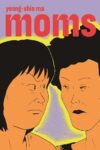
From the publisher’s website: An outrageously funny book about middle-aged women that reexamines romance, lust, and gender norms. Translated from Korean by Janet Hong. Lee Soyeon, Myeong-ok, and Yeonjeong are all mothers in their mid-fifties. And they’ve had it. They can no longer bear the dead weight of their partners or the endless grind of … [Read More]
Until Peonies Bloom: the complete poems of Kim Yeong-nang
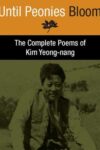
Kim Yeong-nang (1903–1950) is highly reputed in Korea for the delicate lyricism of his poems. Yet in many ways he has remained little known, even in Korea, limited to a small number of often anthologized poems. Although he was a resolute opponent of Japanese colonial rule, he did not suffer frequent imprisonment, or death, so … [Read More]
I Heard Life Calling Me
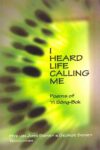
Yi Song-bok has been hailed as one of the most important contemporary South Korean poets. His first collection of poems, When Does a Rolling Stone Awaken, published in 1980, is a trenchant critique of the state of mind of Koreans and of the social and political conditions in the country at the time. His second … [Read More]
The Cabinet

Cabinet 13 looks exactly like any normal filing cabinet…Except this cabinet is filled with files on the ‘symptomers’, humans whose strange abilities and bizarre experiences might just mark the emergence of a new species. But to Kong, the harried office worker whose job it is to look after the cabinet, the symptomers are a headache; … [Read More]
Voices in Diversity: Poets from Postwar Korea

Voices in Diversity: Poets from Postwar Korea offers a selection of poems from 37 South Korean poets born in or after 1945, edited and translated by poet Ko Won. The selected poets represent the voice of a nation emerging from Japanese rule; they are witnesses to sweeping political, social and cultural developments who have distilled … [Read More]
The Magical Language of Others: A Memoir

From the publisher’s website: The Magical Language of Others is a powerful and aching love story in letters, from mother to daughter. After living in America for over a decade, Eun Ji Koh’s parents return to South Korea for work, leaving fifteen-year-old Eun Ji and her brother behind in California. Overnight, Eun Ji finds herself abandoned … [Read More]
A Lesser Love

A Lesser Love presents poems of love and departure for romantic partners, family members, and even national citizens. Raised around diasporic Korean communities, E. J. Koh describes her work as deeply influenced by the idea of jeong, which can be translated as a deep attachment, bond, and reciprocity for places, people, and things. The spirit of … [Read More]
Song of Arirang: The Story of a Korean Rebel Revolutionary in China
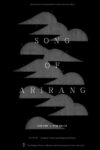
Song of Arirang tells the true story of Korean revolutionary Kim San (Jang Jirak), who left colonized Korea as a teenager to fight against Japanese imperialism and fought alongside Mao’s Red Army during the Chinese Revolution. First published in 1941, this remarkably intimate memoir (as told to the American journalist Nym Wales aka Helen Foster … [Read More]
Queer Korea
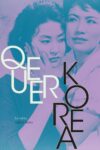
From the publisher’s website: Since the end of the nineteenth century, the Korean people have faced successive waves of foreign domination, authoritarian regimes, forced dispersal, and divided development. Throughout these turbulent times, “queer” Koreans were ignored, minimized, and erased in narratives of their modern nation, East Asia, and the wider world. This interdisciplinary volume challenges … [Read More]