From the publisher’s website: South Korea’s Education Exodus analyzes Early Study Abroad in relation to the neoliberalization of South Korean education and labor. With chapters based on demographic and survey data, discourse analysis, and ethnography in destinations such as Canada, New Zealand, Singapore, and the United States, the book considers the complex motivations that spur families … [Read More]

Archives: Books (page 64)
Korea’s Future and the Great Powers
From the publisher’s website: The eventual reunification of the Korean Peninsula will send political and economic reverberations throughout Northeast Asia and will catalyze the struggle over a new regional order among the four great powers of the Pacific—Russia, China, Japan, and the United States. Korea’s Future and the Great Powers addresses the vital issues of how to … [Read More]
Top-Down Democracy in South Korea

From the publisher’s website: While popular movements in South Korea rightly grab the headlines for forcing political change and holding leaders to account, those movements are only part of the story of the construction and practice of democracy. In Top-Down Democracy in South Korea, Erik Mobrand documents another part – the elite-led design and management of … [Read More]
Fighting for the Enemy: Koreans in Japan’s War, 1937-1945

Fighting for the Enemy explores the participation of Koreans in the Japanese military and supporting industries before and during World War II, first through voluntary enlistment and eventually through conscription. Contrary to popular belief among Korean nationalists, this involvement was not entirely coerced. Brandon Palmer examines this ambiguous situation in the context of Japan’s long-term … [Read More]
Peace Corps Volunteers and the Making of Korean Studies in the United States

From the publisher’s website: From 1966 through 1981 the Peace Corps sent more than two thousand volunteers to South Korea, to teach English and provide healthcare. A small yet significant number of them returned to the United States and entered academia, forming the core of a second wave of Korean studies scholars. How did their … [Read More]
Political Leadership in Korea

From the publisher’s website: Included in this volume are studies of the traditional leadership of the Yi dynasty as well as twentieth-century legislative, party, and bureaucratic leadership, and an evaluation of views of political leaders in South Korea, as well as two studies of the Communist system in North Korea. Dae-Sook Suh is professor emeritus of … [Read More]
International Impact of Colonial Rule in Korea, 1910-1945
From the publisher’s website: In recent years, discussion of the colonial period in Korea has centered mostly on the degree of exploitation or development that took place domestically, while international aspects have been relatively neglected. Colonial discourse, such as characterization of Korea as a “hermit nation,” was promulgated around the world by Japan and haunts … [Read More]
Cultural Nationalism in Colonial Korea, 1920-1925

From the publisher’s website: By studying the early splits within Korean nationalism, Michael Robinson shows that the issues faced by Korean nationalists during the Japanese colonial period were complex and enduring. In doing so, Robinson, in this classic text, provides a new context with which to analyze the difficult issues of political identity and national … [Read More]
Peasant Protest and Social Change in Colonial Korea

The period from 1876 to 1946 in Korea marked a turbulent time when the country opened its market to foreign powers, became subject to Japanese colonialism, and was swept into agricultural commercialization, industrialization, and eventually postcolonial revolutionary movements. Gi-Wook Shin examines how peasants responded to these events, and to their own economic and political circumstances, … [Read More]
Searching for Modernity: Western Influence and True-View Landscape in Korean Painting of the Late Choson Period
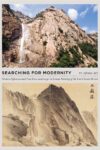
From the publisher’s website: Korean painters participated in two major cultural trends of the late Choson period in the eighteenth and nineteenth centuries: inquiry into things Korean and investigation of things Western. Departing from Chinese sources long considered authoritative, they developed the distinctly Korean mode known as “true-view” landscape painting for depicting the scenery of … [Read More]
Japanese Assimilation Policies in Colonial Korea, 1910-1945

From the publisher’s website: From the late nineteenth century, Japan sought to incorporate the Korean Peninsula into its expanding empire. Japan took control of Korea in 1910 and ruled it until the end of World War II. During this colonial period, Japan advertised as a national goal the assimilation of Koreans into the Japanese state. … [Read More]
The Origins of the Choson Dynasty

From the publisher’s website: Scholars have long held that Korea’s Choson dynasty (1392-1910) was established by a new socioeconomic class of scholar-officials of local-landlord origins who overthrew the capital-based aristocracy of the Koryo dynasty (918-1392). The Origins of the Choson Dynasty refutes that view, showing that a key feature of the dynastic transition was continuity in the … [Read More]
Over the Mountains Are Mountains: Korean Peasant Households and Their Adaptations to Rapid Industrialization

From the publisher’s website: Clark Sorensen presents a description of the economic and ecological organization of rural Korean domestic groups and an analysis of their adaption to the changes brought about by Korea’s rapid industrialization. Still one of the only book-length studies of rural, peasant Korean households, Over the Mountains Are Mountains shows how the industrialization of … [Read More]
Building Ships, Building a Nation: Korea’s Democratic Unionism Under Park Chung Hee

From the publisher’s website: Building Ships, Building a Nation examines the rise and fall, during the rule of Park Chung Hee (1961-79), of the combative labor union at the Korea Shipbuilding and Engineering Corporation (KSEC), which was Korea’s largest shipyard until Hyundai appeared on the scene in the early 1970s. Drawing on the union’s extraordinary and … [Read More]
Spaces of Possibility: In, Between, and Beyond Korea and Japan
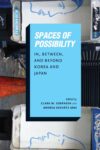
From the publisher’s website: Spaces of Possibility, which arose from a 2012 conference held at the University of Washington’s Simpson Center for the Humanities, engages with spaces in, between, and beyond the national borders of Japan and Korea. Some of these spaces involve the ambiguous longings and aesthetic refigurings of the past in the present, … [Read More]
Being Buddhist in a Christian World: Gender and Community in a Korean American Temple
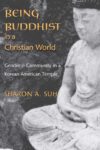
From the publisher’s website: Challenging Western notions of Buddhism as a self-effacing path to rebirth and enlightenment, Sharon Suh shows how first-generation Korean Americans at Sa Chal Temple in Los Angeles have applied Buddhist doctrines to the project of finding and knowing the self in everyday life. Buddhism, for these Buddhists, serves as a source … [Read More]