
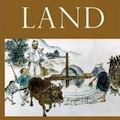
1,172 pages and still only 20% complete. Park Kyung-ni’s The Land (T’oji) translated by Agnita Tennant hits the bookshops in May http://bit.ly/hlUvmT # [Read More]
Category: Translated Korean literature (page 21)
The unstoppable “Please Look After Mother”
Not so long ago people were complaining that the Korean literature available in English translation wasn’t reaching out to a modern audience. Yes, there was a fair amount available, the argument went, but much of it lamented Korea’s travails during the colonial period, or explored the han-laden traumas of national division. Not something of much … [Read More]
More buzz about Please Look After Mom / Mother
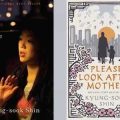
Please Look After Mom seems to be the latest hot translation. Amazon are already telling me I would like it. http://bit.ly/gPTvD3 # Guess which translated Korean novel will be BBC Radio 4’s Book at Bedtime in early June. You only get one guess. @KTLit # KTLit: lol “mom?” lklinks: Right first time. The unstoppable Shin … [Read More]
KTLit.com in the Press

Charles Montgomery of KTLit.com gets featured in the Korea Herald: Putting Korean literature on the map – http://bit.ly/h9gADi # [Read More]
Book Review: Hwang Sok-yong – The Old Garden
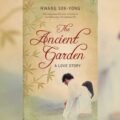
Hwang Sok-yong: The Old Garden / The Ancient Garden Originally published in 2000 English translation by Jay Oh, Seven Stories Press 2009 / Picador 2010. “More has been expected of Hwang Sok-yong than almost any other Korean writer of the past quarter century,” says Bruce Fulton (1). Having read The Guest (2002), and having watched … [Read More]
Two recent low-lights in Korea-related publishing

Two recent books to avoid: Kimchi-flavored erotica? “In Deep Kimchi” on Amazon: http://amzn.to/fB5KfN. Looks totally dreadful, particularly as it seems to be about sex with a J-pop band #. Via KTLit.com. Charles Montgomery says a new book on Dokdo Thirty Three Shouts is “A Complete Waste of Time http://bit.ly/i6RIUT # [Read More]
Two new collections of literature in translation

Two welcome new publications of Korean literature in translation: Park Ji-won’s novels debut in English after 200 years: "Translation of Overlooked Worlds" http://bit.ly/ijKbQs # "Waxen Wings: The Acta Koreana Anthology of Short Fiction" Well worth a look – at http://bit.ly/g3PeGB # [Read More]
Kim Young-ha in Amazon bestseller list

Kim Young-ha’s Your Republic is Calling You made it to #38 in Amazon’s bestseller list – the first Korean novel in the top 100. http://bit.ly/eLFkhL #. Joongang Ilbo article on Korean authors getting foreign recognition also mentions Shin Kyung-sook, Jo Kyung-ran and Hwang Sok-yong. [Read More]
Where to start in Korean literature, and five “Classics” to avoid
Charles Montgomery has a great post on where to start in translated Korean literature, and in another article shares Five Korean “Classics” To Avoid: Heartless (Yi Kwang-su, 1917) Aunt Suni (Hyeon Ki-young, 1978) Between Heaven and Earth (Yun Dae-nyong, 1996) A Man (Hwang Sun-won) and Buckwheat Season (Yi Hyo-sok, 1936). One day, I’m going to … [Read More]
Who Ate Up All The Shinga – a critical essay by Alice Bennell

Alice Bennell, UK winner of last year’s Korean Literature Translation Institute essay contest on “There a Petal Silently Falls”, contributes her entry for this year’s competition. Who Ate Up All the Shinga is an autobiographical novel chronicling the early life of the author, Park Wan-Suh. The Japanese occupation of Korea, and events leading up to … [Read More]
Book Review: Your Republic is Calling You

Kim Young-ha: Your Republic is Calling You Translated by Kim Chi-young Harcourt, 2010. First published in Korean: 2006 Ki-yong, a North Korean agent, has lived undercover in Seoul for half his life. Inactive for the last 10 years, he is suddenly given an order to return home. Is the order a hoax? Is he being … [Read More]
2010 Travel Diary #38: Return to Seoul
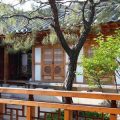
The final installments of LKL’s trip to Korea at the beginning of May Saturday 8 May 2010. We are back in Seoul in good time. At the start of the week, I hadn’t known what my Sancheong schedule was going to look like: my friend Kyung-sook had managed to secure an extra day or so … [Read More]
Struggling with all the Shinga

Well, I just finished this year's essay book (Park Wan-suh’s Who ate all the Shinga?) and it's even harder than last year. Nothing to get your teeth into. And that wasn’t meant to be a pun. Last year’s text at least gave you a challenge in trying to understand it. This year’s adds very little … [Read More]
Brother Anthony translates Until Peonies Bloom
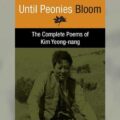
UNTIL PEONIES BLOOM: Brother Anthony brings the complete poems of Kim Yeong-Nang to an English-speaking audience. http://bit.ly/d1TdT0 # [Read More]
2010 Travel Diary #20: The House of Choi Champan

Wednesday 5 May 2010. What is authenticity? Probably, over the course of Korea’s long history, most of Korea’s precious buildings have burned down and been rebuilt. It’s a natural hazard of building from sustainable materials such as wood. Marauding invaders or revolting slaves can cause great destruction with just a single spark. The reconstruction work … [Read More]
The 2010 Essay Contest – Who ate up all the Shinga?

Last year, the Korean Literature Translation Institute launched an essay competition to encourage people to read Korean Literature in translation. The title chosen was Ch’oe Yun’s There a Petal Silently Falls – a novella which I personally struggled with. In my own feeble submission, I suggested that a colonial period novel would have been a … [Read More]