
Strangers Press, which brought us Yeoyu, a series of eight translated short story chapbooks in 2019, this week released a follow-up. The new series is entitled Iyagi and features works by both established and emerging authors – including what seems to be a posthumously published work by Park Wansuh. According to the publisher, “Each of these … [Read More]
Author: Park Wan-suh (박완서 1931-2011)

Selected publications by Park Wan-suh
- For That Which Cannot Be Restored (복원되지 못한 것들을 위하여, 1995) tr Soobin Kim, Strangers Press 2023
- Was that Mountain Really There? (그 산이 정말 거기 있었을까?, 1995) tr Hannah Kim, Kitaab International 2018
- My Very Last Possession and Other Stories tr Chun Kyung-ja, M.E. Sharpe, Routledge 2018
- Lonesome You (너무도 쓸쓸한 당신, 1998) tr Elizabeth Haejin Yoon, Dalkey Archive 2013
- Mother’s Stake I (Bi-lingual, Vol 4 – Division) (엄마의 말뚝 1), Asia Publishers 2012
- Who Ate Up All the Shinga? ( 그 많던 싱아는 누가 다 먹었을까, 1992) tr Stephen Epstein, Yu Young-nan, Columbia University Press 2009
- Weathered Blossom (bilingual) ( 마른 꽃, 1995) tr Yu Young-nan, Hollym 2006
- A Sketch of the Fading Sun (저문날의 삽화) tr Hyun-Jae Yee Sallee, White Pine Press 2002
- Three Days in That Autumn (그 가을의 사흘 동안) tr Ryu Sukhee, Jimoondang 2001
- The Naked Tree (나목, 1970) tr Yu Young-nan, Cornell East Asia Series 1995
Short stories in anthologies
- J-1 Visa (J‑1 비자, 1998) in:
- A Small Experience in:
- How I kept our house while my husband was away in:
- A Pasque-Flower on That Bleak Day in:
- Mother’s Hitching Post (엄마의 말뚝 2 , 1981) in:
- Winter Outing (겨울 나드리, 1975) in:
- In the Realm of the Buddha in:
- We teach shame! in:
- An Episode at Dusk, 2 in:
- The Crying of an Earthworm in:
- She knows, I know and God knows, but… in:
- The Dreaming Incubator in:
- Weathered Blossom / Dried Flower ( 마른 꽃, 1995) in:
- Identical Apartments (닮은 방들, 1974) in:
Selected titles about Park Wan-suh
- Keum Suk Gendry-Kim: The Naked Tree, Drawn + Quarterly 2023
- Anthology: Colonial Modernity in Korea ed Gi-Wook Shin and Michael Robinson, Harvard University Press 2001
Where to start in Korean translated literature

Note: This article was written in early 2020 at the start of the pandemic. Since then, particularly in 2021, some fantastic translated fiction titles have appeared. We give a round-up of them here. Nevertheless, as of end December 2022 the top ten recommendations below still stand. I do, however, need to edit the choices for … [Read More]
Book review: Waxen Wings
There are plenty of anthologies of Korean translated fiction available, and many of them are edited and / or translated by Bruce Fulton, usually with Ju-Chan Fulton involved in the project too. I recently enjoyed the Fultons’ collection The Future of Silence, which reintroduced me to the format after an absence of rather too long. … [Read More]
Book review: The Future of Silence – Fiction by Korean Women

The Future of Silence: Fiction by Korean Women Translated and Edited by Bruce & Ju-Chan Fulton Zephyr Press, 2016, 193pp When an unexpected book-shaped package landed on my doormat in April 2016 I eagerly opened it, wondering what was inside. I was slightly less enthusiastic when I discovered that it was a collection of short stories … [Read More]
A look back at some of the books of 2016
To cut to the chase, here are my two books of the year for 2016. For more detail, read on. Literature in translation The world of translated fiction seems to have been dominated by two names this year, one Korean and one British. The Korean name of course is Han Kang. Just as The Vegetarian … [Read More]
Book review: Park Wan-suh — Lonesome You

Park Wan-suh: Lonesome You Translated by Elizabeth Haejin Yoon Dalkey Archive, 2015, 252pp Originally published as 너무도 쓸쓸한 당신, Seoul, 1998. I came to Lonesome You with fairly neutral expectations. I had read Who Ate All the Shinga, the story of Park’s childhood in the late 1940s and through the war years. It was an interesting … [Read More]
2015 Korean Literature Nights

Here are the Korean Literature Nights scheduled for 2015 at the KCC: Wed 25 Feb The Vegetarian by Han Kang Moderator: Deborah Smith Yeong-hye and her husband are ordinary people. He is an office worker with moderate ambitions and mild manners; she is an uninspired but dutiful wife. The acceptable flatline of their marriage is … [Read More]
Talk, Tea & Books: KCC launches a new book club
An interesting new initiative from the KCC – a book discussion group. For discussion at its first meeting, Park Wan-suh’s Who Ate Up All the Shinga? in the translation by Yu Young-nan and Stephen Epstein, which many of you will remember as the subject of the KLTI’s second essay contest. The registration deadline for this … [Read More]
The outside toilet in Park Wan-suh’s childhood memories – part 2
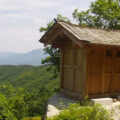
The second of two extracts from the early pages of Park Wan-suh’s Who ate up all the shinga? dealing with the memories of her childhood existence in the countryside near Kaesong in the 1930s and early 1940s, posted to coincide with the Korean garden at the Chelsea Flower Show this coming week, which features an … [Read More]
The outside toilet in Park Wan-suh’s childhood memories – part 1

To coincide with the Korean garden at the Chelsea Flower Show this coming week, which features an outside toilet, here’s the first of two extracts from Park Wan-suh’s Who ate up all the shinga? The outhouse, it seems, was much more than a place for moving the bowels. Park Wan-suh was born in 1931 and … [Read More]
Tributes to Park Wan-suh
Charles Montgomery of KTLit.com pays tribute to author Park Wan-so as she passes away at age 80: http://bit.ly/hkg4QX #. Gypsy Scholar also has a tribute. [Read More]
Who Ate Up All The Shinga – a critical essay by Alice Bennell

Alice Bennell, UK winner of last year’s Korean Literature Translation Institute essay contest on “There a Petal Silently Falls”, contributes her entry for this year’s competition. Who Ate Up All the Shinga is an autobiographical novel chronicling the early life of the author, Park Wan-Suh. The Japanese occupation of Korea, and events leading up to … [Read More]
Struggling with all the Shinga

Well, I just finished this year's essay book (Park Wan-suh’s Who ate all the Shinga?) and it's even harder than last year. Nothing to get your teeth into. And that wasn’t meant to be a pun. Last year’s text at least gave you a challenge in trying to understand it. This year’s adds very little … [Read More]
The 2010 Essay Contest – Who ate up all the Shinga?

Last year, the Korean Literature Translation Institute launched an essay competition to encourage people to read Korean Literature in translation. The title chosen was Ch’oe Yun’s There a Petal Silently Falls – a novella which I personally struggled with. In my own feeble submission, I suggested that a colonial period novel would have been a … [Read More]
Park Wan-suh’s Shinga reviewed in FT
The Weekend FT reviews Park Wan-suh's book "Who Ate Up All the Shinga?" "Lyrical … Gripping". The full review can be found here. # [Read More]